
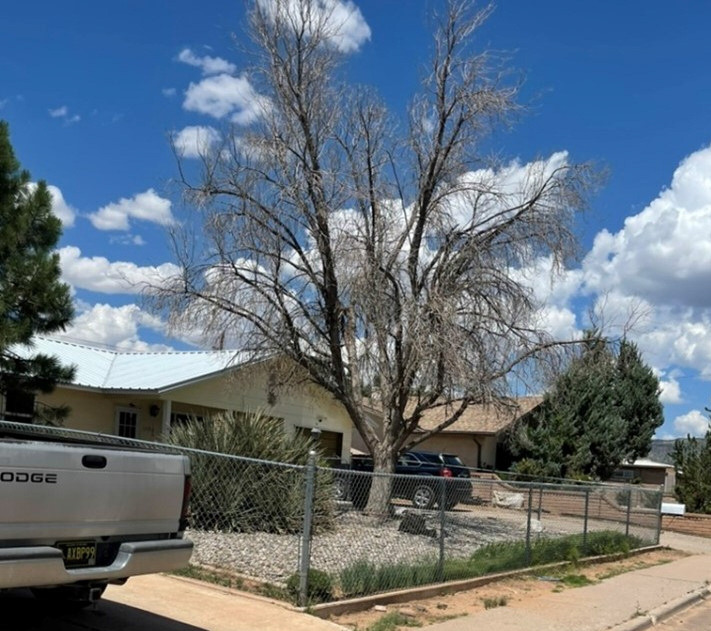
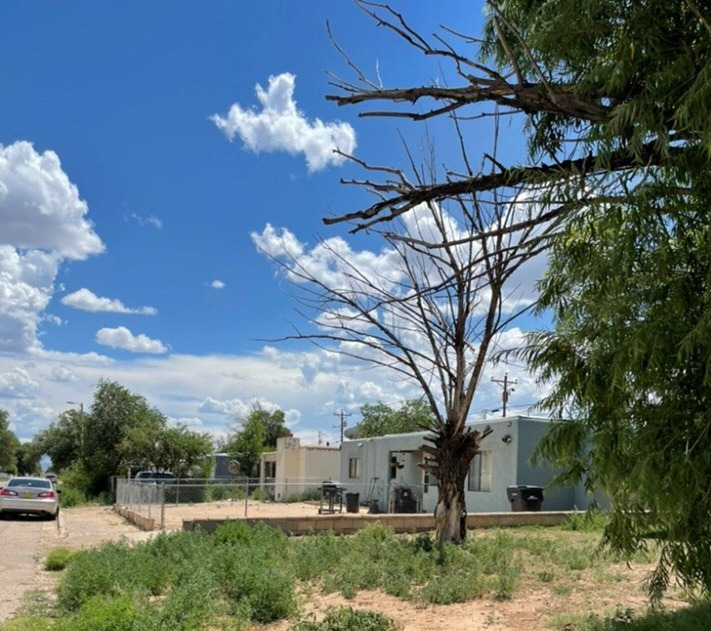
We live in a desert, but we can make our towns an oasis in the desert. It is the tree canopy that makes our desert home an oasis and decreases the effect of heat. Our climate is challenging and changing. We are getting dryer and hotter. The trees that were planted 30 years ago, in cooler times, cannot adjust to the change and are dying all around us. Drive up an asphalt street and see the heat radiate from it. Look around and you will see fewer large trees and many of those trees are skeletons. Many homes do not have any green overhead. There is concrete in our driveway and the entrance to our house. Yes, we have air-conditioned houses but if you want to enjoy the outside, you go where there is shade and trees.
We need to reverse this trend by planting the trees we have lost. Trees that will live in the hotter and drying world of the future. We need a green canopy to help decrease the effects of climate change. A large tree will cool the inside of the house and provide places outside for people and pets to rest and play. Shade decreases the air temperature 10% compared to non-shaded areas. The green from a tree absorbs the carbon dioxide that is emitted from the use of petroleum products and is another way trees slow the heating of the earth. Our lawns are green also but do not provide cooling shade from a tree and can take three times the amount of water as a tree.
The Nature Conservancy organization has used a climate modeling computer program to determine future climate zones for the United States. It is expected that Gallup and Grants climate zones will change from Zone 4-5 to Zone 7-8 (the equivalent of Albuquerque or Las Cruses). Most gardeners can tell a difference already in the setting of fruit on trees. Apricots are notorious for not producing fruit because late frosts kill the flowers. At 7,000 feet, I had not had apricots on my fruit tree the first 12 years after I planted it. We have had warmer springs for two years and I now have apricots. The Nature Conservancy along with other agencies interested in trees have put together a list of “Climate Ready Trees” for different location of the work, the USA, New Mexico, and the different individual location in New Mexico. These trees are picked for increased drought and heat tolerance and still survive our cold.
The organization, Tree New Mexico, has been active planting trees in Albuquerque since 2017. They work with the city council and focus on areas with the least trees. They have planted over 1,000 trees and their program has achieved a 5-year survival rate of 85%! This is due to their dedicated staff and the Tree Stewart program. The Tree Stewart program consists of volunteers in the community interested in trees. They are instructed in planting trees, tree care, and educating property owners. They have access to experts to assist in solving tree problems. Three members of the McKinley/Cibola County Master Gardener program are in the first class from Gallup to take the Tree Stewart program. Once the volunteers are in place, Tree New Mexico will work the city to determine the location of trees to be planted. It would take 4-5 years to get the program to Grant and Gallup, but they recently received a grant. The money and the Tree Stewarts’ participation will allow the program to be implemented sooner than previously thought. Anyone with an interest in trees is encouraged to participate. More Tree Stewarts are needed. Check out their website: Tree New Mexico to find out more about this.
Following is a list of suggested trees. Holiday Nursery in Gallup is an excellent source for local information.
Short Trees— below 40 feet suitable under power lines, front yards, and beside streets. Native to N. America—Redbud, One-Seed Jupiter, Rocky Mt. Juniper, Western Soapberry Gambel Oak, NM Locust, Oasage Orange. Non-native—Mimosa, Smoke Tree, Golden Rain Tree
Large Trees— over forty feet tall. Native to N. America—Western Catalpa, Alligator Juniper, Mexican Sycamore, multiple oaks, Shumard Oak, AZ Cypress Non-native— Ginkgo, Afghan Pine, Scotch Pine, Lacebark Elm
Fruit Trees— Quince, Fig, Apricot, Plum THINGS TO KNOW • Remember the mature height and spread of the tree. It will grow. Consider overhead and underground utilities and proximity to buildings and walkways.
• All Trees need to be watered as they put down roots the first three to five years.
• Purchase quality trees.
• Proper planting will help your tree survive. Remove all packing around the tree, trim any circling roots, and plant so the root flare is level with the soil.
• Mulch, mulch, mulch! This will help your tree retain water and protect its roots. Do not pile much on the trunk though.
Also, consider drought tolerant bushes, grasses, and flowers instead of bluegrass lawn or concrete. They decrease the effect of the heat island and do it with minimum water.
Edith Iwan is a Cibola-McKinley County Master Gardener who lives and works in Thoreau. As a Master Gardener she assists the County Cooperative Extension Service in providing accurate, research- based gardening information to county residents. If you have any gardening questions, please call the NMSU Cibola County Extension at 505-287-9266 or NMSU McKinley County Extension at 505-863-3432