
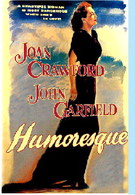
Part I: Music- a common experience. We are all musical. We all respond to music, from early childhood to the ends of our lives. Music is a means of communication as well as recreation. Music is central to our existence. It is a defining feature of our humanity. It is also an important feature of the film “Humoresque”. This musical term means “a short, lively piece of music typically whimsical or fanciful”. “Humoresque” is one of the few movies made, that features classical music in a key role. Yes! Although the movie is a romantic drama, it is set in the world of classical music. The world of classical music is defined as music in European tradition from medieval times to the present day. You’re familiar with classical music. You hear it on TV ads and programs. You hear it in movies. You hear it in video games. You hear it on current CDs. Music is a language, but it is not a foreign language. Like drama, music works on an emotional level. A composer takes the listener on a musical journey in much the same way as the playwright constructs a plot.
Strings is one of the four main sections of an orchestra. Violins are the highest pitch, and percussion instruments are the lowest. There are approximately 600 violins made by Italian craftsman, Antonio Stradivari, still in existence. Last year, one was sold for $10 million at Sotheby’s Auction House. Violin concertos are excerpted throughout “Humoresque”. Finally, the movie’s soundtrack was nominated for an Academy Award in 1947.
Romance, drama, and music are found in “Humoresque”, shown in the NMSU Library on Friday, May 1st at 1 pm. Enjoy.