
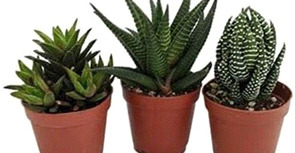
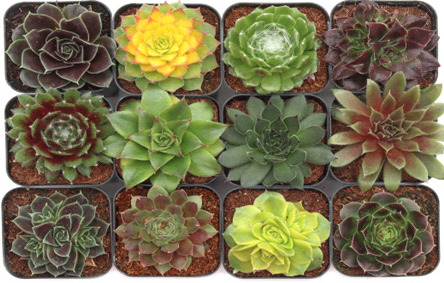
If you are looking for variety in your house plants, take a look at the Succulent Family. You will go “WOW, I had no idea there were so many types. That’s what I did when I started this research.
Succulents are plants that store water in their thick, fleshy, stems or roots. Their ability to retain water makes them drought tolerant. They are heat tolerant also which makes them good plants for hot areas. Most are not tolerant of freezes so there are few that can be left outside in our winters. To me they are house plants that can be put outside during the summer.
Succulents have several benefits as house plants:
• Low Maintenance – They require minimal watering compared to other plants.
• Air Purifiers – Succulents improve air quality making you house healthier.
• Space Friendly – Perfect for small houses or rooms.
• Aesthetic Appeal – Their unique forms and vibrant colors cheer up your home.
TIPS TO GROWING SUCCULENTS: Watering: For succulents, watering the right way is extremely important. Water only when your succulent’s soil is completely dry. You can use a moisture meter or simply use a chopstick. Stick the stick up the drainage hole of the pot. If the dirt on the chopstick is still moist, it is not time to water yet. Once dry, water deeply until it drips out the drainage hole. Do not water the leaves of the succulent but only the soil. Empty extra water because succulents do not like to set in water. Also, in winter you will find your plant’s soil will still be damp two weeks or more after watering. It is not unusual to decrease watering to once a month. Overwatering leads to mushy leaves, root rot, and plant death. Signs to look for are: leaves that are wrinkled and yellow and roots that are mushy.
Soil: This is the next important need. Use a soil mix made for succulent and cactus. Succulents need soil that drains easily. You cannot use regular potting soil and definitely not the soil from your yard. Both are a recipe for plants dying.
Fertilizer: Succulents don’t need much fertilizer, but ½ strength (20-20-20) fertilizer once a month in spring will encourage growth and flowering.
Containers: Choose a breathable pot with a drainage hole. Many succulents do fine in plastic or ceramic pots but they do best in terra cotta clay pots. If you are having a problem with a succulent, try changing to a clay pot.
Light: Most succulents thrive on 4-6 hours of bright indirect light. Many succulents don’t like direct sun and will show it by leaves that are scorched brown, white, or orange. If they are not getting enough sun, the leaves will turn pale and often have a widening space between the leaves. It may take several trials of moving a plant to different locations to find the perfect place.
Easy Succulents to Grow: The following succulents are all listed as easy to grow because they tolerate more shade and all are non-toxic to animals and children.
• Haworthia: They can tolerate more shade than a lot of succulents. Cannot tolerate frosts.
• Echeveria: Look like Hen & Chicks but rounded with smooth leaves. Cannot tolerate frosts.
• Sempervivum: The true Hen & Chicks. They have pointed leaves and fine teeth but are cold hardy.
• Sedum Donkey’s Tail and others: They come in many shapes and some are cold tolerant and others not so check labels when you purchase them.
Enjoy exploring the many types of houseplants as they enrich your life and brighten up your house!
Edith Iwan is a Cibola-McKinley County Master Gardener who lives and works in Thoreau. As a Master Gardener she assists the County Cooperative Extension Service in providing accurate, research-based gardening information to county residents. If you have any gardening questions, please call the NMSU Cibola County Extension at 505-287-9266 or NMSU McKinley County Extension at 505-863-3432