
Ground cover plants give your landscape transition areas between rock or concrete to taller plants. I gave information about the Pineleaf Penstemon last week which is a great Xeric ground cover. There are a number of flowering ground covers that grow well here and I hope you will consider them for your drier areas.
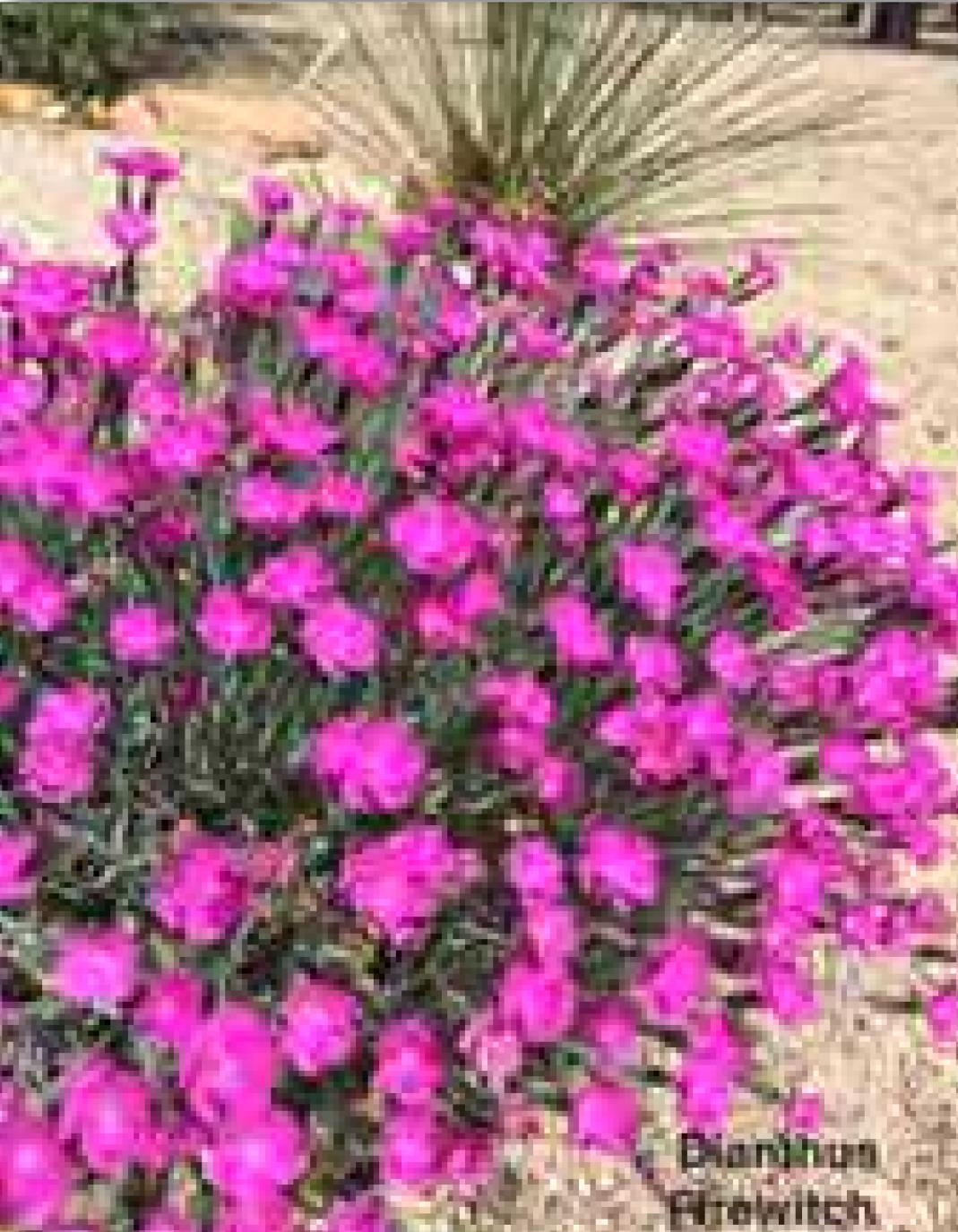
Most gardeners know of the dianthus family of flowers. They include the pinks and carnations. Within this family a lone drought tolerant plant stands out, Firewitch Dianthus. It blooms a bright pink with clove scented flowers in early summer and sporadically through the Fall. The grass-like foliage stays neat and green all winter. The flowering height is 10 inches and it spreads about one foot. Cold tolerate to hardiness Zone 3, there is no worry about it tolerating cold winters. Plant it in full sun or partial shade and welldraining soil. It can rot from too much water and does not tolerate being wet and cold in the winter.
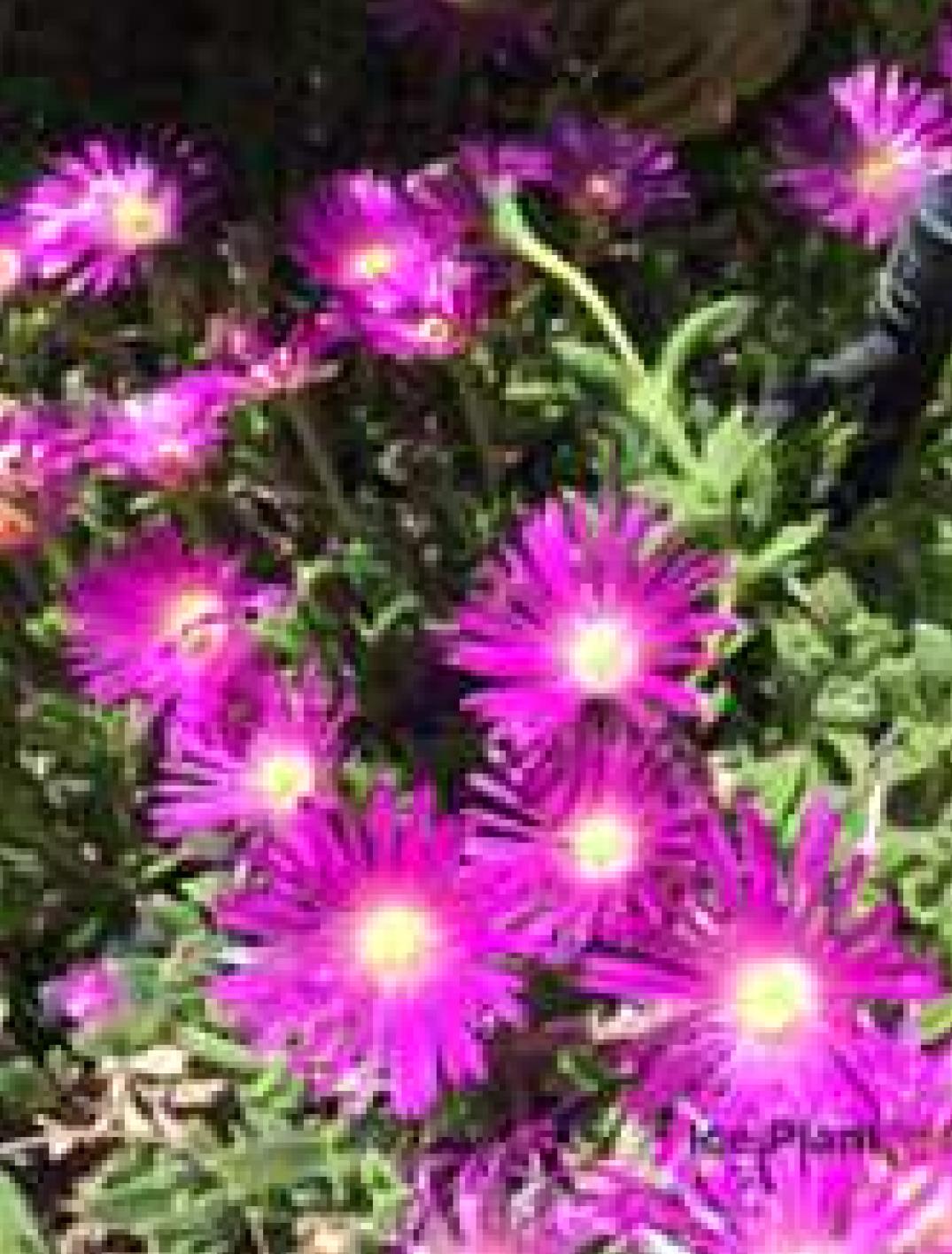
Another favorite ground cover is Ice Plant (Delosperma). They come from south Africa and get their name from the way sunlight makes the flowers that come in a wide variety of colors glisten, and they bloom all summer. Growing from three to six inches high they can spread two feet and drape down inclines so they are good for preventing erosion. Most are cold tolerant to Zone 5 or 6 so if you live in a cold spot, look for more cold tolerant varieties. They like sun and dry, poor soil but will grow any place there is good drainage.
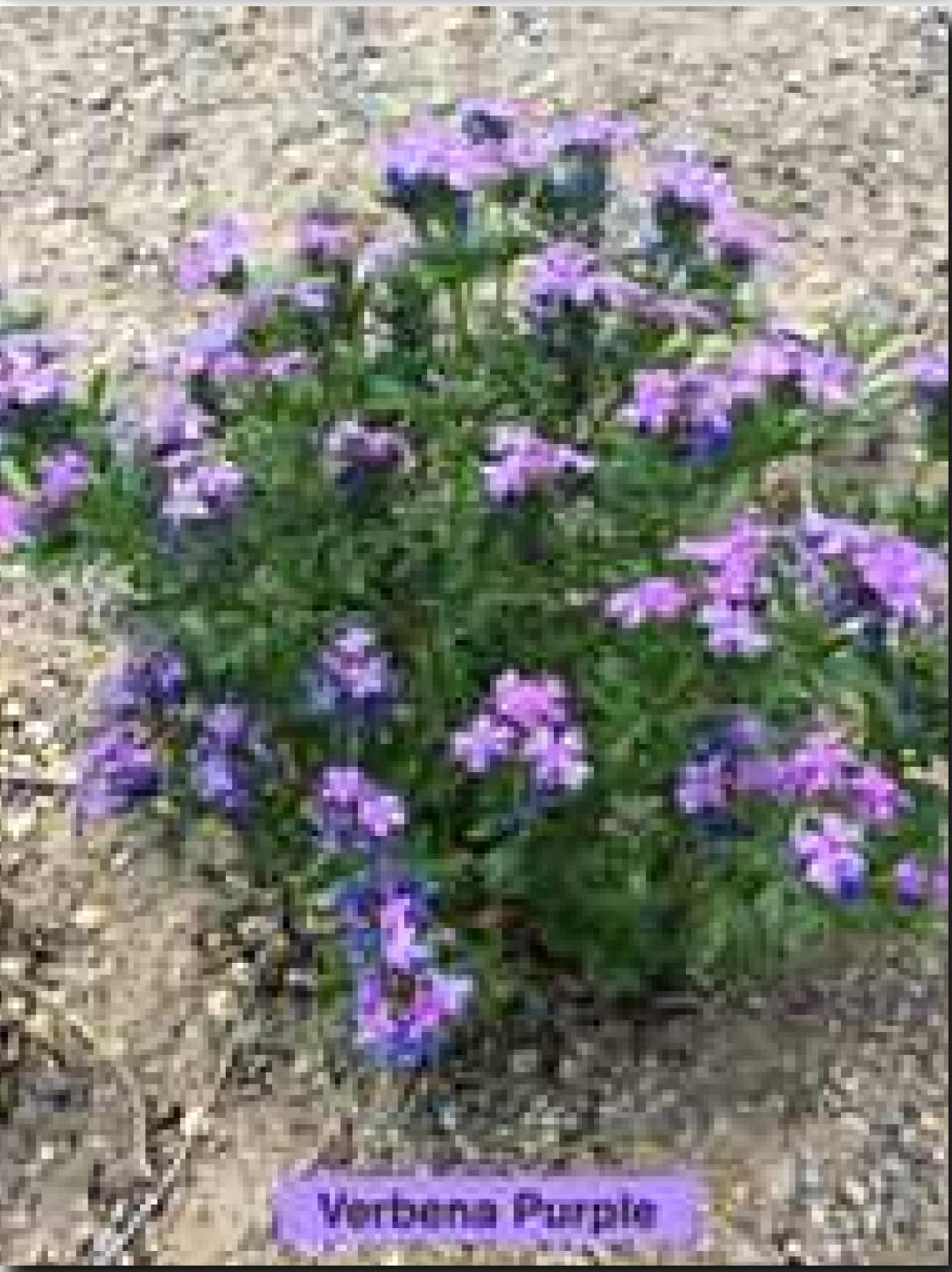
Prairie Verbena (Glandularia bipinnatifida) is another ground cover that blooms all summer. It will grow in almost any soil, needs little water, grows in full sun or partial shade and gets six to 10 inches high and 12 inches wide. A native of the southwest, it flowers in a cluster generally purple but can be shades of pink. These plants are deer resistant and attractive to butterflies and bees. They are a short-lived perennial in hardiness Zone 6, but will self-seed and continue brighten your landscape year after year.
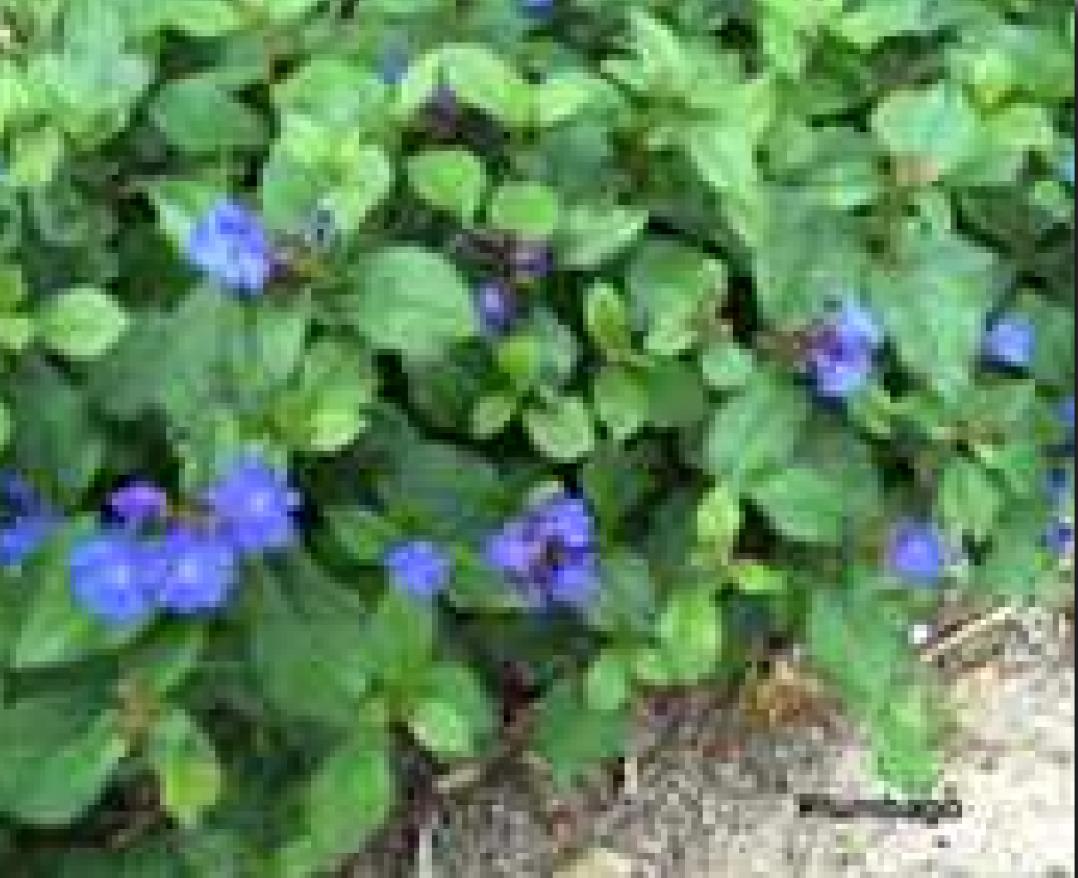
The last Xeric groundcover I find useful in certain areas is Plumbago (Ceratostigma plumbaginoides). I say certain areas because if placed where the soil is enriched and it has ample water, its underground roots take off and choke out other plants. It is hardy in Zone 5 and has done well for me in my Zone 4-5 Thoreau. Plumbago has sky blue flowers in early fall and while still blooming the leaves turn burgundy red. It is 6-8” tall and spreads 18” wide, tolerates full sun to full shade and occasional watering. While it is not good next to other plants, it does well under trees and bushes, and when contained by buildings and pavement. The other important thing to know about Plumbago is that it greens up very late in spring. I have heard of gardeners planting spring blooming bulbs in with the Plumbago for color before the Plumbago wakes up. Bulbs planted 6” deep are not bothered by the Plumbago roots.
With such a variety of colorful plants to choose from, we can all enjoy the beauty of flowering plants and at the same time cut back on use of water.
Edith Iwan is a Cibola-McKinley County Master Gardener who lives and works in Thoreau. As a Master Gardener she assists the County Cooperative Extension Service in providing accurate, research-based gardening information to county residents. If you have any gardening questions, please call the NMSU Cibola County Extension at 505-287-9266 or NMSU McKinley County Extension at 505-863-3432