
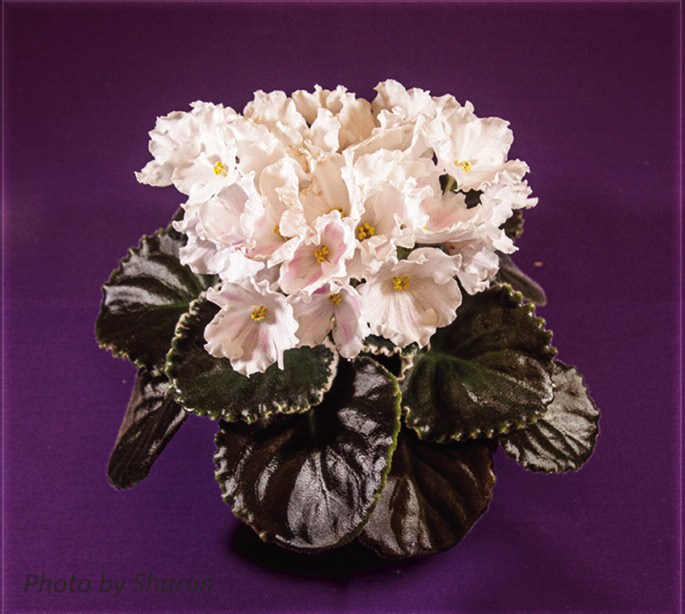
African Violets are one of the most popular houseplants in America for several reasons.
First, they are compact so they can be grown in the smallest apartment.
Second, they flower continuously if given the care they want.
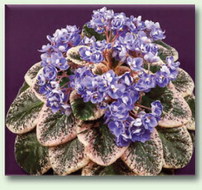
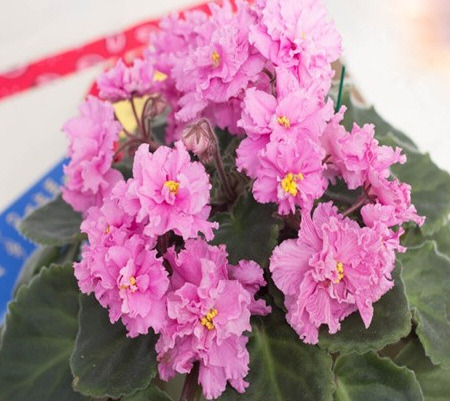
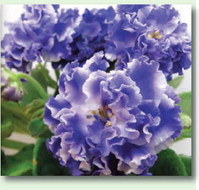
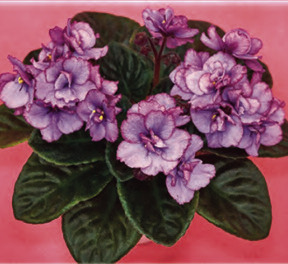
Third, there are so many varieties to grow! Flowers are single or double, pink, white, blue, purple, and bi-colored with edges that can be smooth, ruffled, or frilled. Leaves are thick and fuzzy and can be green, bronze, pink, white, or variegated. The leaves create a base for the flowers that bloom just above the foliage. The plants are usually 6-9 inches wide but miniatures are 3 inches wide and large ones can reach 18 inches.
The botanical name for African Violet is Streptocarpus sect. Santpaulia. Discovered by Baron Walter von SaintPaul, he found it in tropical rainforests of East Africa. This beautiful violet was growing on the sides of rocky cliffs in where moisture trickled down from a stream across their roots.
You may have heard they are hard to grow. There are a few simple rules to follow that will give you the pleasure of success and provide years of beauty to your house.
• Light: African violets like bright sun but not direct sunlight. They do well in north windows. In east, south, or west windows, use a curtain. Another option is to use grow lights. Place them 12-15 inches above the leaves and set a timer for 14-16 hours a day.
• Soil is very important: too wet or too dry will lead to an unhappy plant. They need a pot with one or more draining holes and a well-draining potting mix. A local nursery or internet search will have “African Violet” potting mix. Adding extra perlite (a volcanic plant product) will give extra insurance against soil that is too wet.
• Water is the elusive ingredient. Some recommend an automatic watering pot but they can still keep the soil too wet. A water meter is a better way of making sure the plants are getting enough water. The best and cheapest watering trick is to get to know your plants. Before you water, poke your finger in the top inch of soil and if it is still dry, water. Get to know the weight of the pot when it is dry and the extra weight when it is wet. Give the plant enough water so it comes out the bottom of the pot. Don’t allow the plant to sit in water more than two hours.
• Temperature and humidity: African Violets like a warm, humid environment. They like the room temperature 70 degrees. It can be warmer during the day but do not let the temperature to drop below 60 degrees at night. For humidity, a room or plant humidifier works. Also, use a tray filled with wet gravel with the plant above the gravel. Do not spray African Violet with water! Their fuzzy leaves will develop brown spots and be unsightly.
• Fertilizer: Feed your plants with African Violet fertilizer every other week during the spring and summer. Follow the instructions on your container for the amount to use.
Just remember: not all of your plants will prosper. Even the most experienced gardeners have failures. Some plants do well one year and die the next year. Some are sensitive to the change in sun variations from season to season. I move my plants around when they don’t look happy and often it helps. The tips above will give you a good chance of success with African Violets. With success comes confidence to try another plant. When you try a new plant look up what it needs to grow. That will go a long way to help you be a successful gardener.
If you want to know more about growing African Violets and where to purchase great plants check out the Albuquerque African Violet Club. They meet at the Albuquerque Garden Center, 10120 Lomas Blvd. NE on the 2nd Tuesday of each month at 1:00 pm. Their annual sale of African Violets is the 3rd week-end in April. Contact Michael Garcia for information at 505-3851527.
Edith Iwan is a Cibola-McKinley County Master Gardener who lives and works in Thoreau. As a Master Gardener she assists the County Cooperative Extension Service in providing accurate, researchbased gardening information to county residents. If you have any gardening questions, please call the NMSU Cibola County Extension at 505-287-9266 or NMSU McKinley County Extension at 505-8633432 The pictures come from a member of the Albuquerque African Violet Club, Sharon Shannon.