

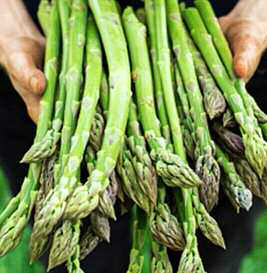
It is April and time to make a decision on planting asparagus. Please read my article about asparagus from last week for my tips. Asparagus grows well in New Mexico: Lots of sun, warm days, cool nights, low humidity, and is drought and salt tolerant. All things we have in spades.
You can buy asparagus seeds or crowns in stores, on line, and in gardening catalogues. Varieties that do well in New Mexico include: Hybrids are plants that produce only male flowers that produce no seed: Jersey Giant, Jersey Knight, and Jersey Supreme. They have high yields, tend to live longer, and produce more spears. There are also heirloom varieties that are open pollinated which means they produce flowers and seeds: Mary Washington and Martha Washington do well here. They are very cold tolerant and produce larger but less spears. The seeds they produce will germinate at random, which can be a benefit or a nuisance. You can buy asparagus seeds or crowns in stores, on line, and in gardening catalogues. The crowns are sold in bundles of ten or twelve which is a good size for a family of two or four people.
When you decide where to put your asparagus patch, it is time to prepare the bed. In May, or when your ground has warmed to around 50 degrees, you can plant the asparagus you bought. Dig a trench where the crowns will be planted. If you have clay soil, make it six inches deep and if you have sandy soil, go twelve inches. Place the dirt to the side as it will be returned to the trench as the ferns grow. Allow 12 inches between crowns and three feet between rows. You can plant a single row that is 10 feet long for 10 asparagus plants or several shorter rows each three feet apart. Plant the crowns along the trench either “head to toe” (bud to root tip) or spread the crown out in the middle of the trench like an octopus. (Just don’t put the crown upside down. That will delay growth). Adding a fertilizer at the time of planting will ensure good growth. Use an organic balanced fertilizer(10-1010) or compost that has no fresh manure that may burn tender roots. Cover the crown with 3-4 inches of the soil that was removed from the trench. The rest of the soil will be added gradually as the ferns grow. Make sure you don’t bury the thin stalks or break them off from hard soil clods. After planting, water the buried asparagus crowns well. The narrow spears will start coming up in two to three weeks. Keep your asparagus growing well by watering at least one inch of water every week if no rain. If soil is sandy, water more often. Control weeds because they will compete with the asparagus for water and nutrients. It is important not to damage the asparagus roots. Remove weeds by hand or shallow hoeing. You can also use cover crops or mulch.
There are two ways to plant asparagus seeds. One way is to plant 2 to 8 seeds in pots that are 4-5 inches deep. Cover with ½” of seed starting soil, wet well, and cover with plastic wrap or a tray top to keep the soil from drying out. Keep the pots at 70 ℉ either with bottom heat or a warm room. The seeds will germinate in 2 to 4 weeks. Once they start germinating, remove the cover and put them in bright light. When the weather has settled in early summer, plant the asparagus that is several inches tall into the same trench you would dig for crowns. You will have to be more careful about adding the dirt as they grow. Asparagus seeds can also be planted directly in the garden. Prepare an area for babies to grow their first year. It should be level, have sandy soil, and will need one foot between rows with seeds spaced 2 to 3 inches apart. Wait until the soil is 70 ℉ and water daily until germination. The plants stay in this bed until next spring when you dig the plants in early April and move them to their permanent location.
For established beds: Fertilize in early spring before the spears come up. Harvest spears as directed above. In July, fertilize again and continue watering and weeding during the summer. In October, as the ferns start to turn yellow, decrease watering which will signal the plant’s roots to shut down and harden off for winter. When the stalks are brown, cut them down at the surface and remove them to reduce overwintering sites for insects and diseases. This is a good time to add two to three inches of compost to give protection to the crowns in winter and an extra start in the spring.
Now for the eating! Pick the spears when 6 to 8 inches high while the top is still closed. They will stay fresh in the refrigerator for 7 to 10 days. Wash the spears of dirt and eat them raw like carrots or in salad. Place them on a cutting board and starting from the bottom end, cut at 1” sections until the spear turns tender and the knife meets little resistance. Also, you can cut off 1” of the bottom and shave the outer layer with a vegetable peeler for more tender spears. Steam or cook asparagus in ½” water for three to four minutes. If they turn dull green, you cooked them too long. Asparagus is great on the grill. Puncture the spears several times with a fork and soak them in a salt solution for 15 minutes. Dry them off, have the grill temperature low, and cook them for 10 minutes. Check out the internet for other ways to cook asparagus.
Enjoy your asparagus. Plan for the future. PLANT ASPERAGUS!
Edith Iwan is a Cibola-McKinley County Master Gardener who lives and works in Thoreau. As a Master Gardener she assists the County Cooperative Extension Service in providing accurate, research-based gardening information to county residents. If you have any gardening questions, please call the NMSU Cibola County Extension at 505-287-9266 or NMSU McKinley County Extension at 505-863-3432