CIBOLA COUNTY Drought conditions in Cibola County have reached a critical level, with data showing rapid deterioration over the past two months, putting livestock, property, and life at risk. The latest data from the federal government shows most rapid increase in drought severity this century, with even Zuni/Bluewater River Basin’s Rice Park reporting only one inch of snowpack.
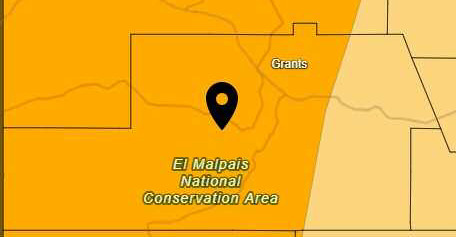
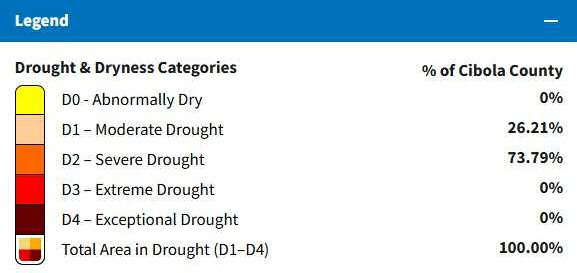
According to the latest report from the National Integrated Drought Information System (NIDIS), 100 percent of Cibola County is now classified as being in drought, with 73.79 percent of the area experiencing severe drought (D2) as of March 10. This represents a significant and alarming escalation from February, when only 50.3 percent of Cibola County was in drought.
This is the fastest recorded increase in severity for Cibola in modern data records.
The increase in drought intensity is stark. On February 11, just over 13,676 people were affected by drought conditions. By February 20, that number had risen to 18,786, and by March 5, it had surged to 27,213—a staggering 7460.8 percent increase from the previous month. As of March 10, every resident of Cibola County is now living in drought conditions.
Data from the federal government about the impact of drought on local agriculture and livestock like cattle and sheep reflects the growing severity of the crisis.
In early February, 225 acres of hay were affected by drought. By March 5, that number had doubled to 448 acres before falling sharply to just 48 acres on March 10. Significant declines in acreage is a common issue with the NIDIS system, the Cibola Citizen has requested clarity on these numbers.
Meanwhile, haylage, another feed resource, has remained at 30 acres affected throughout the past month.
Cibola’s livestock numbers show a crisis in the making.
On February 11, 5,167 cattle and 1,521 sheep were in drought-affected areas. By March 5, 10,281 cattle and 3,026 sheep were experiencing drought conditions. These figures have remained unchanged in the latest report.
Snowpack and Water Reserves
Cibola’s drought situation is exacerbated by a historic lack of snowfall.
The Zuni/Bluewater River Basin’s Rice Park monitoring station reported just one inch of snowpack as of March 10, representing only seven percent of the normal snowpack for this time of year. Snow water equivalent levels—used to measure how much water will be available when snow melts—have also dropped to 30 percent of the normal level.
Temperatures in the region have fluctuated wildly.
On March 10, the Rice Park station recorded a high of 54°F, with overnight lows dropping into the mid-20s. With warm weather expected to continue, rapid snowmelt with little replenishment is a serious concern.
Cibola County is no stranger to drought, but few periods have seen such a rapid escalation in severity.
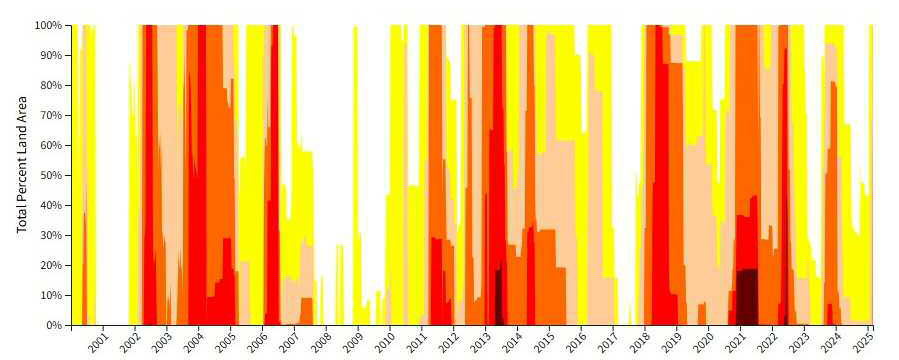
The county experienced its worst drought in recorded history in May 2022, when Cibola was designated as being in Exceptional Drought (D4), the highest level recognized by federal authorities. The dry conditions contributed to the Cerro Bandera Fire, which scorched nearly 1,000 acres in the Zuni Mountains.
Cibola also faced a prolonged period of Exceptional Drought from May to June 2023, when 40 percent of the county was impacted. However, unlike the current crisis, both the 2022 and 2023 droughts saw gradual increases in severity over several months.
Analyzing Cibola drought data registered by NIDIS from Jan. 1, 2000, to March 10 of this year, the speed of the Februaryto- March escalation in 2025 is virtually unprecedented.
Local Response and Growing Concern
The worsening drought conditions have put increased pressure on local officials and emergency response teams. At a March 6 Coffee with the Managers event, Village of Milan Manager Candi Williams warned residents not to be deceived by occasional rainfall— stressing that Cibola is still in a drought.
With fire season approaching, local officials are urging residents to take preventive measures. Cibola County Fire Marshal Dustin Middleton, Grants Fire Chief Mike Maes, and Milan Fire Chief Daniel Urioste have encouraged homeowners to clear dry vegetation from around their properties and to avoid open burns.
City of Grants Manager Andrew Valencia and Milan Manager Candi Williams warned Cibola residents that despite the recent snowfall, the lack of sufficient moisture combined with increasing winds could create prime conditions for wildfires in April and May.
Cibola’s leaders are encouraging increased vigilance from all residents and visitors this fire season.