GRANTS, N.M. – Cibola County, like much of New Mexico, stands at the intersection of federal policy and local impact as President Donald Trump’s recent executive order on immigration shakes communities nationwide. The January 20 order, titled 'Protecting the American People Against Invasion,' rescinds federal protections for locations of sanctuary like schools, churches, hospitals, and courthouses, leaving local leaders and families uncertain about what comes next.
In New Mexico, 9.1 percent of the population is foreign-born, according to the American Immigration Council, and over 5.9 percent of residents live with at least one immigrant parent. Immigrants make up 11.3 percent of the state’s labor force and contribute $1.4 billion annually in taxes while wielding $4.6 billion in spending power. They are not just neighbors but critical drivers of industries like construction, where they account for 22.1 percent of the state workforce.
Sanctuary No More?
In his executive order, President Trump is making good on promises he made the American people during his election campaign: A mass deportation of illegal immigrants. Law enforcement efforts have begun in some U.S. cities like New York and Chicago, but as of press deadline, there were no confirmed reports of any such “raids” by the Department of Homeland Security or Immigrations and Customs Enforcement in New Mexico, according to several Albuquerque-based immigrant rights advocates the Cibola Citizen spoke
with.
In overseeing this mass deportation, President Trump’s executive order has two particular sections that eliminate sanctuary protections for typically
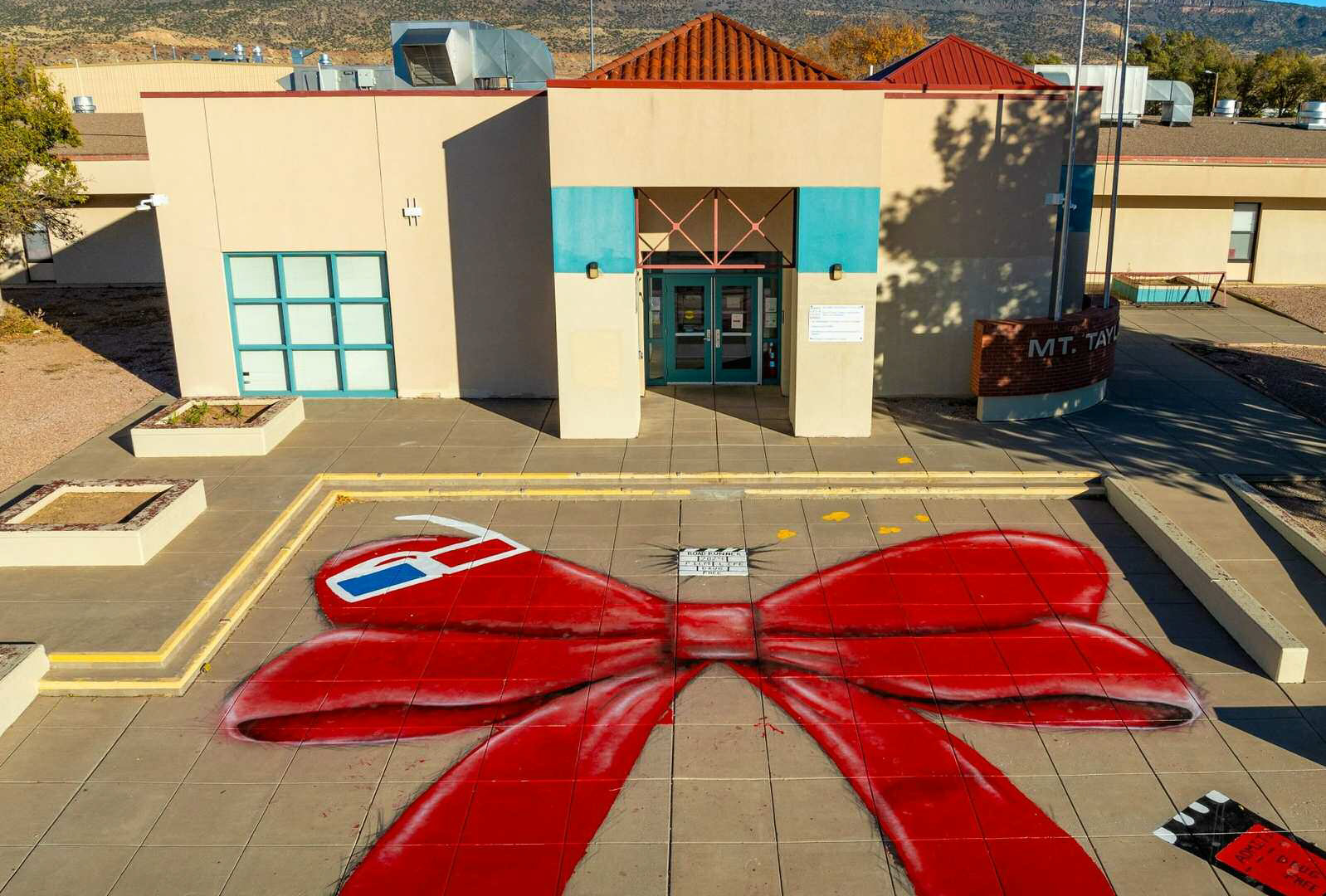
Photo by Matt Fletcher protected locations:
Section 3. Faithful Execution of the Immigration Laws: Subsection (b) states that executive departments and agencies are to revoke prior memoranda, guidance, or policies based on earlier executive orders, including those that established protections or priorities for sensitive locations. This effectively nullifies policies that treated places like schools, churches, and hospitals as off-limits for immigration enforcement.
Section 17. Sanctuary Jurisdictions: This section directs the Attorney General and the Secretary of Homeland Security to 'evaluate and undertake any lawful actions to ensure that so-called ‘sanctuary’ jurisdictions, which seek to interfere with the lawful exercise of Federal law enforcement operations, do not receive access to Federal funds.' By linking this with rescinded guidance, it removes protected status from specific locations like schools and hospitals that were previously safeguarded under policies of prior administrations
Grants Cibola County School District
Lane Widner, superintendent of Grants Cibola County Schools (GCCS), is one of Cibola’s leaders attempting to navigate these changes.
As superintendent, Widner manages the school district – it’s staff, students, student results and postsecondary outcomes, and he does this while reporting to and fulfilling the wishes of the governing School Board of Education, which is made up of elected members who set all the policy and goals for the district.
“At this time, GCCS does not have specific policies regarding ICE or records requests from ICE,” Widner explained. “However, we do not permit ICE to enter our schools unannounced or to search our students. We are deeply committed to protecting the safety and wellbeing of our students.”
Widner’s assurances reflect the larger legal landscape in New Mexico regarding searches of schools by law enforcement. On January 20, the NM Department of Justice reaffirmed that state law and the US Constitution’s 10th Amendment do not obligate local agencies to enforce federal immigration law.
According to NMDOJ guidance, ICE warrants do not carry the same authority as judicial warrants, meaning immigration officers cannot access nonpublic areas of schools or student records without prior consent, or a court order.
Whatever happens in Washington D.C., New Mexico’s laws remain clear: all children, regardless of immigration status, have the right to a free public education. This is enshrined in the New Mexico State Constitution Article XII which states in Section 1: “A uniform system of free public schools sufficient for the education of, and open to, all the children of school age in the state shall be established and maintained.”
“Education is the cornerstone of our community,” Widner added. “We must ensure our schools remain reliable and safe places for all families” Cibola’s Law Enforcement
While schools grapple with the implications of these federal changes, local law enforcement agencies are equally under pressure to clarify their roles.
The village’s management team, including Manager Candi Williams, Police Chief Carl Ustupski and Mayor Felix Gonzales, requested an extension to address the policy changes, citing the complexity of the situation: “We greatly appreciate your inquiry and are committed to providing a thorough response,” the village’s response stated. “This issue requires careful consideration to ensure our approach balances community trust and public safety.”
The Cibola Citizen contacted Chief Maxine Monte and Mayor Erik Garcia of the City of Grants, and Cibola County Sheriff Larry Diaz and Undersheriff Jeff Marez asking for their department’s stance on these issues. The same questions were asked of each local law enforcement agency. Grants acknowledged receipt of the request and requested supplemental information about the immigration information from state sources. The newspaper has yet to hear from CCSO as of press time.
This balancing act is a critical challenge for local law enforcement.
According to NMDOJ, cooperating with federal immigration enforcement carries risks, including a diversion of local resources from their primary public safety duties and a potential erosion of trust among immigrant communities. Without clear communication, NMDOJ warned that victims of crime and witnesses may fear coming forward at risk of deportation, further jeopardizing community safety.
Immigration enforcement in Cibola County is not only a question of federal policy but also a local reality embodied by the Cibola County Correctional Center. Positioned in the Village of Milan, the privately- operated facility, owned by CoreCivic, holds contracts to incarcerate both local inmates and ICE detainees. Over the years, it has become a flashpoint for immigration advocates, lawmakers, and community members grappling with its role and impact on the region.
Immigration in Cibola
For many in Cibola County, the question is not just how to respond to federal pressure but how to preserve a sense of community.
According to the U.S. Census Bureau, Cibola’s population is 47.9 percent American Indian or Alaska Native, and 33.5 percent Hispanic or Latino. This diverse population shows the need for policies that protect vulnerable residents while ensuring that public institutions like schools and police departments maintain their trust.
Immigrant entrepreneurs make up 15.4 percent of New Mexico’s business owners, driving innovation and providing jobs. Their contributions are particularly vital in rural areas like Cibola, where every business and every worker plays an outsized role in sustaining the local economy.
T he economy is a major concern. ICE recently revealed plans to expand detention capacity at facilities in Cibola and Torrance counties. Advocacy groups, including the ACLU of New Mexico and the New Mexico Immigration Law Center, have criticized these expansions as unnecessary and harmful. According to property records, CCCC, located at 2000 Cibola Loop in Milan, contributes significantly to the local tax base, with a taxable value of over $20 million. For a rural county with a declining population—down 1.5 percent since 2020—this revenue stream is critical.
As Superintendent Widner noted, “This is a complex topic that will require further discussion with our school board to determine the best way to proceed, particularly in light of recent developments.”
All of Cibola’s governments are tasked now with steering Cibola forward in the face of federal pressure. For now, the future of immigration enforcement in Cibola remains uncertain.