CIBOLA COUNTY, N.M. – With Cibola County still 100 percent in drought and much of the region classified in Severe Drought (D2), federal land managers are preparing to use a tool designed to lower wildfire risk: prescribed fire.
The Cibola National Forest and National Grasslands announced on Jan. 23 that crews are preparing to implement multiple prescribed fire projects in the coming weeks, with work expected to continue through the remaining winter months into spring as conditions allow.
The agency said exact ignition dates will depend on wind, weather, fuel moisture, and required approvals. If those factors are not favorable, burns will be delayed.
Prescribed fire—also called Rx fire—is used to reduce overgrown vegetation and hazardous fuels so future wildfires are less likely to burn as intensely near communities, infrastructure, and key natural resources.
What’s Planned near
Cibola County
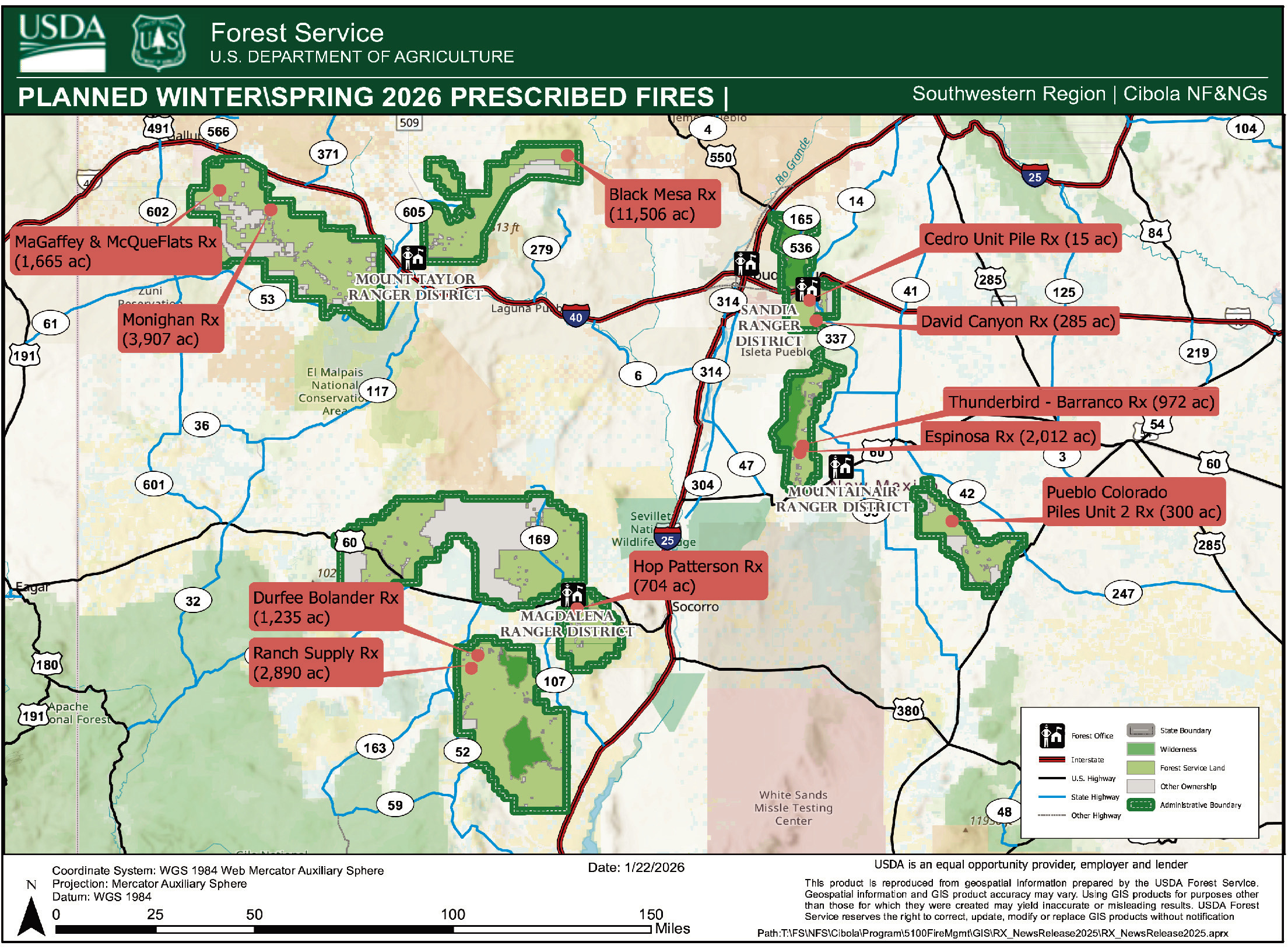
All three projects listed below are on the Mt. Taylor Ranger District, and officials said smoke may be visible across a wide area, depending on wind.
Monighan Rx Fire — 3,907 acres
A broadcast burn on the Bluewater Project, located about 27 miles west of Grants and 13 miles southeast of Fort Wingate, within the Zuni Mountains. Smoke may be visible near Ramah, Gallup, Thoreau, Bluewater, Grants, and Milan.
Black Mesa Rx Fire — 11,506 acres
A broadcast burn on the Black Mesa Wildlife Habitat Improvement Project, about 20 miles north of Grants, within McKinley and Sandoval counties on the Cibola National Forest. Smoke may be visible near Grants, Albuquerque, Cuba, Jemez, along NM 550, and potentially near I-40 depending on conditions.
McGaffey and McQue Flats Rx Fire — 1,665 acres
A broadcast burn on the Bluewater Project, about 63 miles from Grants and 13 miles southeast of Fort Wingate, within the Zuni Mountains. Smoke may be visible near Ramah, Gallup, Thoreau, Bluewater, Grants, and Milan.
What Residents Should Expect
Because these fires are planned around weather windows, residents may see short-notice smoke or active burning on days conditions align. Even when flames aren’t visible from town, smoke can travel, especially during overnight and early-morning inversions.
People in smoke-sensitive groups such as those with asthma, COPD, heart conditions, or young children— should consider planning ahead. According to the US Forest Service, residents with health issues can protect themselves by keeping inhalers handy, having N95-style masks available, and being ready to limit outdoor activity on smoky days.
Drivers should also be prepared for reduced visibility in areas where smoke rests along roads, particularly during early morning hours. If smoke is present on roadways, slow down, use low beams, and increase following distance.