Smoke possible in Grants, Milan, Bluewater, Thoreau; operations contingent on weather
CIBOLA COUNTY, N.M. — Two burns are prescribed to start within the next two weeks in Cibola, bringing smoke and “wildfire fuel” reduction.
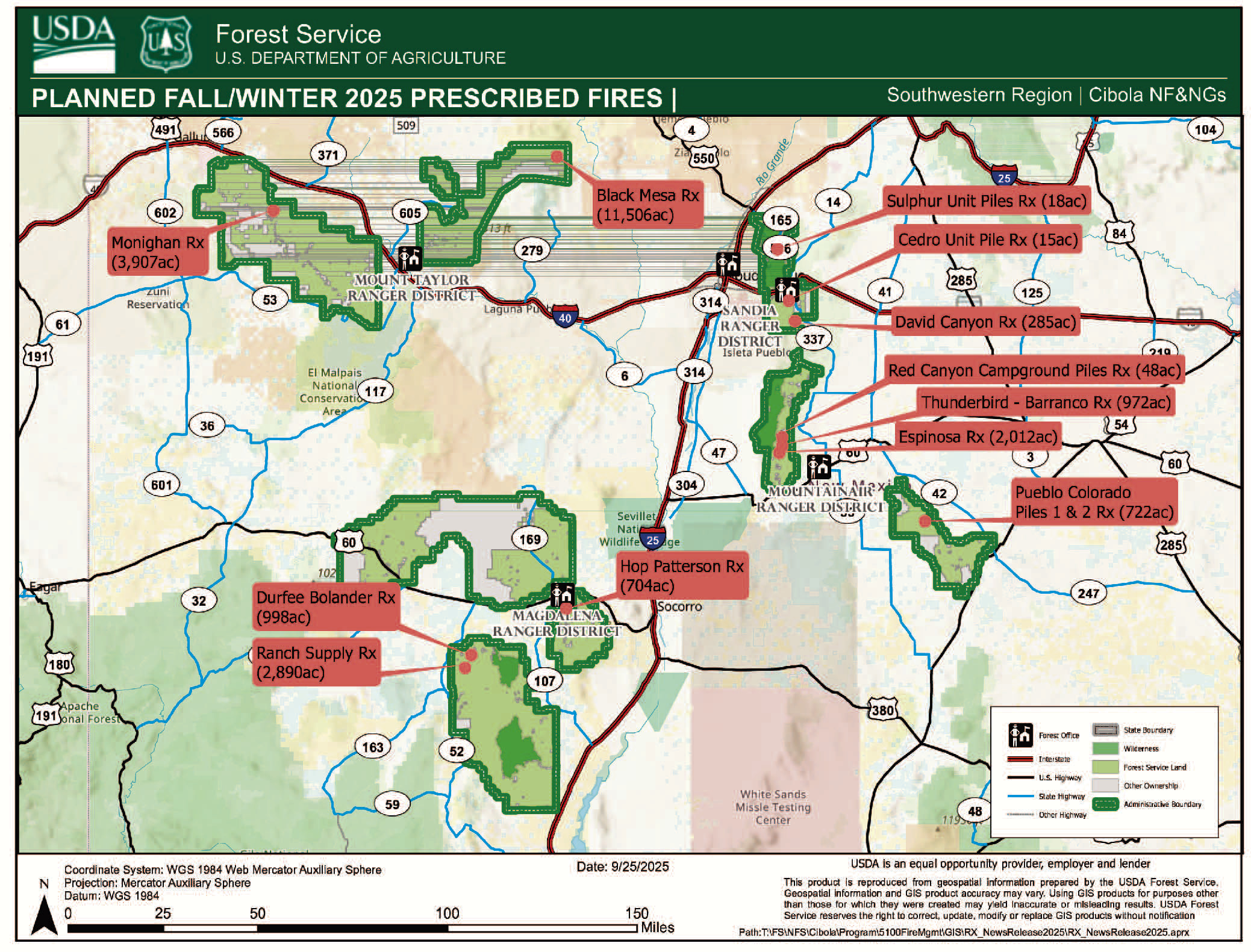
The Cibola National Forest & National Grasslands will launch a slate of prescribed fire projects this fall, with the most significant activity slated for the Mount Taylor Ranger District from as early as October 13 through December, pending weather and final approvals. Forest officials say the work—planned during cooler temperatures, steadier winds, and higher nighttime humidity—aims to reduce hazardous fuels, improve forest resilience, and lower the risk of catastrophic wildfire.
The Mt. Taylor operations center on two large, landscapescale burns.
The Monighan Prescribed Fire, part of the Bluewater Project in the Zuni Mountains, is planned across 3,907 acres approximately 27 miles west of Grants and about 13 miles southeast of Fort Wingate. Smoke from that burn may be visible in Ramah, Gallup, Thoreau, Bluewater, Grants, and Milan.
Farther north, the Black Mesa Prescribed Fire will treat 11,506 acres on the Black Mesa Wildlife Habitat Improvement Project about 20 miles north of Grants, spanning portions of McKinley and Sandoval counties. Depending on wind and inversions, smoke could be visible from Grants and along regional corridors as far as Albuquerque, Cuba, the Jemez area, NM 550, and possibly I-40.
During burn windows, visitors should anticipate short-term closures around active units for public and firefighter safety. Drivers encountering smoke are urged to slow down, increase following distance, and use headlights. Those sensitive to smoke can monitor conditions and plan outdoor activity using the real-time map at fire.airnow.gov.
Officials emphasize that prescribed burning proceeds only when humidity, wind, and fuel moisture meet strict criteria designed to keep fire behavior within planned boundaries.
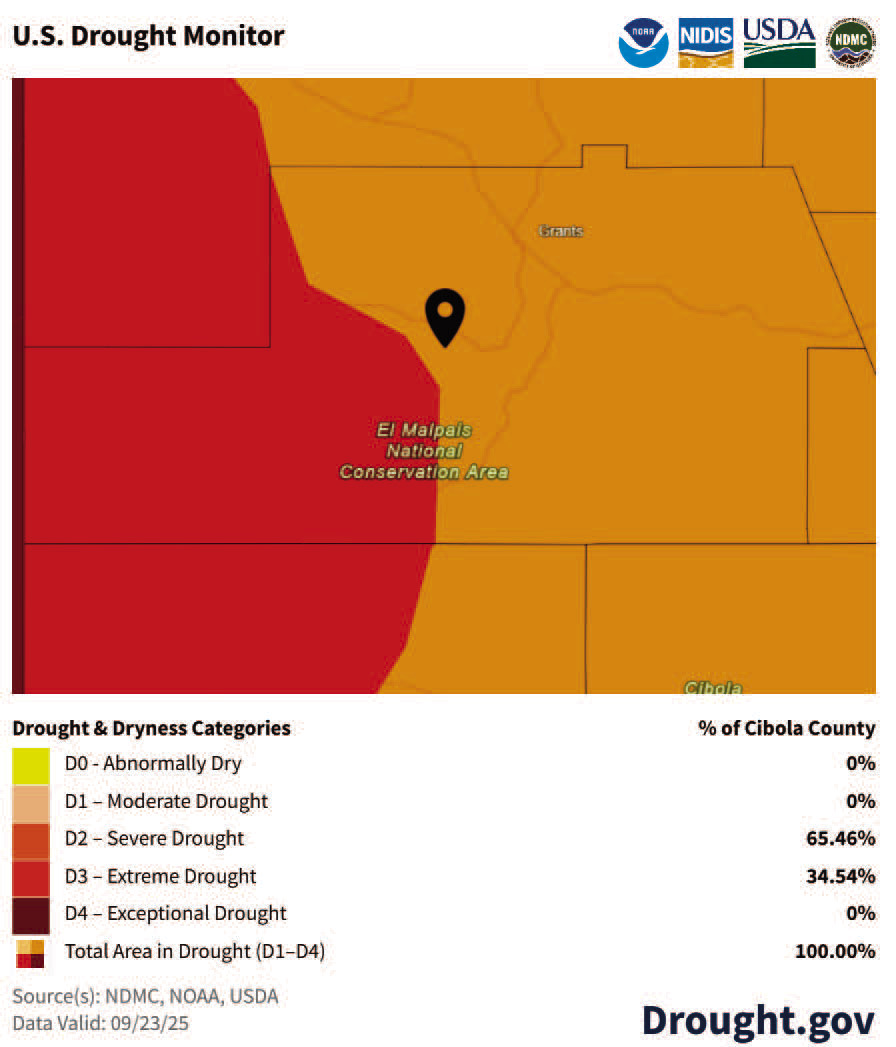
Drought in Cibola as of September 30
The timing aligns with persistent dryness across Cibola County.
As of September 30, all of Cibola remains in drought, with 65.46 percent of the county in Severe Drought (D2) and 34.54 percent in Extreme Drought (D3).
The past week precipitation across the county but most areas remain markedly drier than average over the last 60 days—conditions that have left fuels dry and receptive heading into October, according to federal drought monitoring data from the USDA, NOAA, and USGS.
Local leaders and residents have fresh memories of how quickly fire can move under dry, windy conditions. In late April, the Alamo Fire in Grants destroyed six homes and injured two firefighters before crews stopped the blaze that night. While prescribed fires are fundamentally different from wildfires in their planning and control measures, officials say proactive fuel reduction is one of the most effective tools for preventing fastmoving, high-severity events near communities.
The Cibola National Forest is also planning prescribed fire on other ranger districts this fall, including Magdalena, Mountainair, and Sandia, as well as on the Kiowa & Rita Blanca and Black Kettle & McClellan National Grasslands.
For Cibola County residents the Monighan and Black Mesa projects on Mt. Taylor are the operations most likely to influence local skies, trail access, and travel.
Residents can look for updates and day-of ignition notices on InciWeb, New Mexico Fire Information, and the Cibola NF & NGs website and social channels. The Forest Service will notify county emergency management officials when burning begins and post warning signs near active areas.
The Cibola Citizen will continue to track ignition dates, smoke impacts, and any related closures as the fall burn season progresses.