
CIBOLA COUNTY, N.M. — The summer sun’s grip shows no sign of loosening across Cibola County, where drought conditions remain firmly in place, river and lake levels continue to drop, and wildfires—both within county lines and just beyond—are a constant reminder of the heightened risks in this dry season.
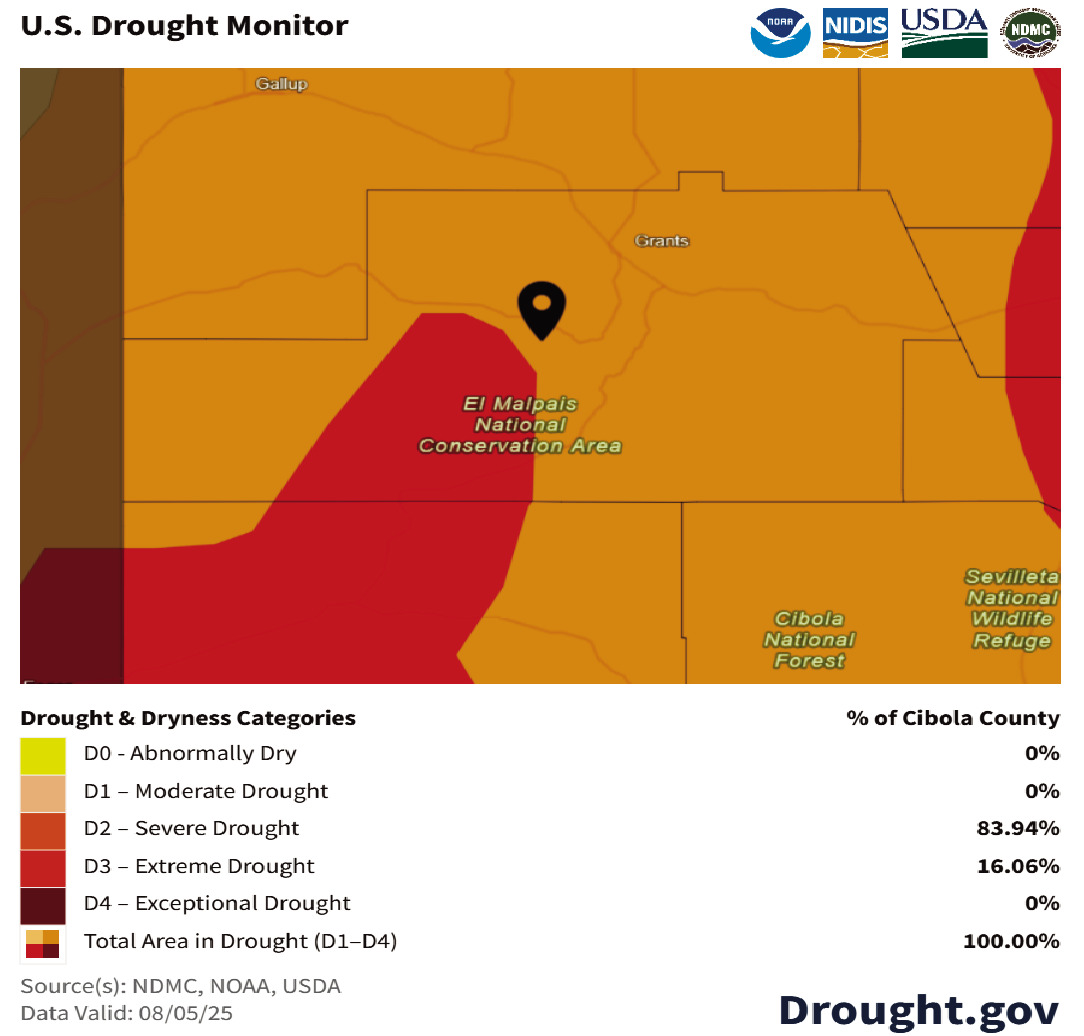
As of August 5, every square mile of Cibola County is in drought, according to the U.S. Drought Monitor.
Severe Drought (D2) covers 83.94 percent of the county, while Extreme Drought (D3) has now taken hold in the remaining 16.06 percent. The numbers have not shifted in weeks, nor have they changed since last month. That means all of Cibola County’s residents are living under drought conditions.
Agriculture continues to feel the strain, with an estimated 448 acres of hay and 30 acres of haylage affected, along with 10,281 cattle and 3,026 sheep grazing on stressed land.
Although June ranked as the 31st wettest June in the past 131 years—coming in 0.36 inches above normal precipitation—the year-to-date story is far less encouraging. From January through June, Cibola has seen 1.24 inches less precipitation than average, placing 2025 as the 43rd driest start to the year in more than a century.
For the first time, the Cibola Citizen is including Rio San Jose measurements as part of ongoing drought coverage. From August 4 through August 11, the river’s gage height ranged between 2.05 and 2.20 feet, with the most recent reading showing 2.07 feet at 11:45 a.m. on August 11. While provisional, these readings offer a close-up view of how local waterways are responding— or failing to respond— to this prolonged dry period.
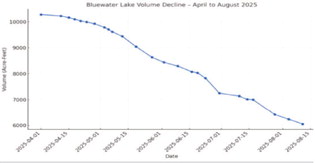
Bluewater Lake, another vital local water resource, continues its seasonal decline following springtime highs, with the loss driven by evaporation, limited inflow, and downstream demand. Bluewater Lake’s volume has steadily declined from more than 10,000 acrefeet in early April to just over 6,000 acre-feet by mid-August 2025, according to U.S. Geological Survey data. The chart illustrates the cumulative impact of seasonal evaporation, reduced inflow, and sustained water demand across the summer months. While boating conditions remain excellent and the lake continues to support fishing and recreation, the sharp drop— representing a loss of nearly 40 percent of its springtime volume.
Wildfires Across Cibola
On the wildfire front, two recent incidents inside Cibola County were small but telling reminders of how easily fire can spark in current conditions.
The Bluffs Fire burned a quarter- acre of grass and brush near Cubero before being contained on July 29 by the National Park Service at El Malpais National Monument.
The Navajo Fire, reported south of Pinehill, scorched one acre of snag fuels and was fully contained by August 7 under the New Mexico State Forestry Division’s Bernalillo District.
These follow a season of notable earlier blazes, including the April 27 Alamo Fire in Grants, which destroyed six homes and injured two firefighters; the Laguna Mason Fire, also on April 27, which burned 63 acres near Timberlake; the Cinder Cone Fire in May, which was contained at 7.2 acres; the La Mosca Springs Fire later that month, which burned 0.25 acres on Mt. Taylor; and the Sapa Fire in June, a 0.01-acre escaped prescribed burn near the Zuni Bandera Trailhead.
Just outside of Cibola in the Mount Taylor Ranger District, the Vereda Blanca Fire in the Mt. Taylor Ranger District northeast of Grants has grown to 1,000 acres and remains at zero percent containment as of August 10. This fire is not burning in Cibola County, but USFS resources use Grants as the nearest city to highlight the fire. The fire is burning in Sandoval County, near the McKinley County line.
Burning in pinyon-juniper and ponderosa pine, the Verda Blanca Fire is in remote terrain that has challenged ground crews, with flames spreading off the mesa into drainage areas and generating short-range spotting. No communities are currently at risk, but cultural sites may be threatened. Smoke from the fire may be visible in Grants, Milan, and surrounding areas, and federal, state, and contracted crews remain on scene under a full suppression strategy.
Rainfall and Heat Across Cibola
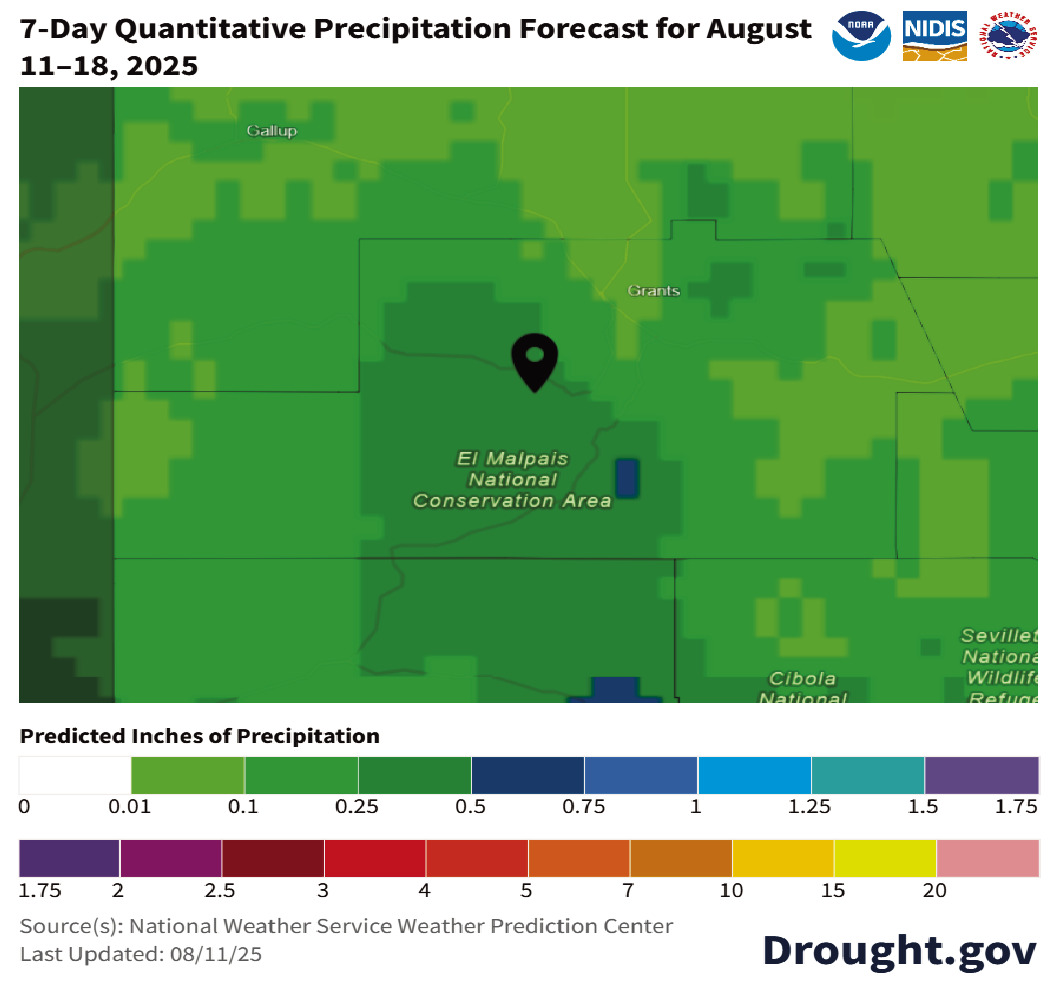
According to the Northern Oceanic Atmospheric Agency, the week ahead offers some hope for moisture in Cibola.
The National Weather Service’s seven-day forecast from August 11 to 18 shows much of Cibola County could see between a quarter- and a half-inch of rainfall, with isolated areas possibly receiving slightly more. While any rain will help dampen fuels and provide short-term relief, officials note that such amounts will not meaningfully ease drought conditions without sustained precipitation over many weeks.
Beyond the day-to-day numbers, this summer’s heat and drought are part of a broader pattern.
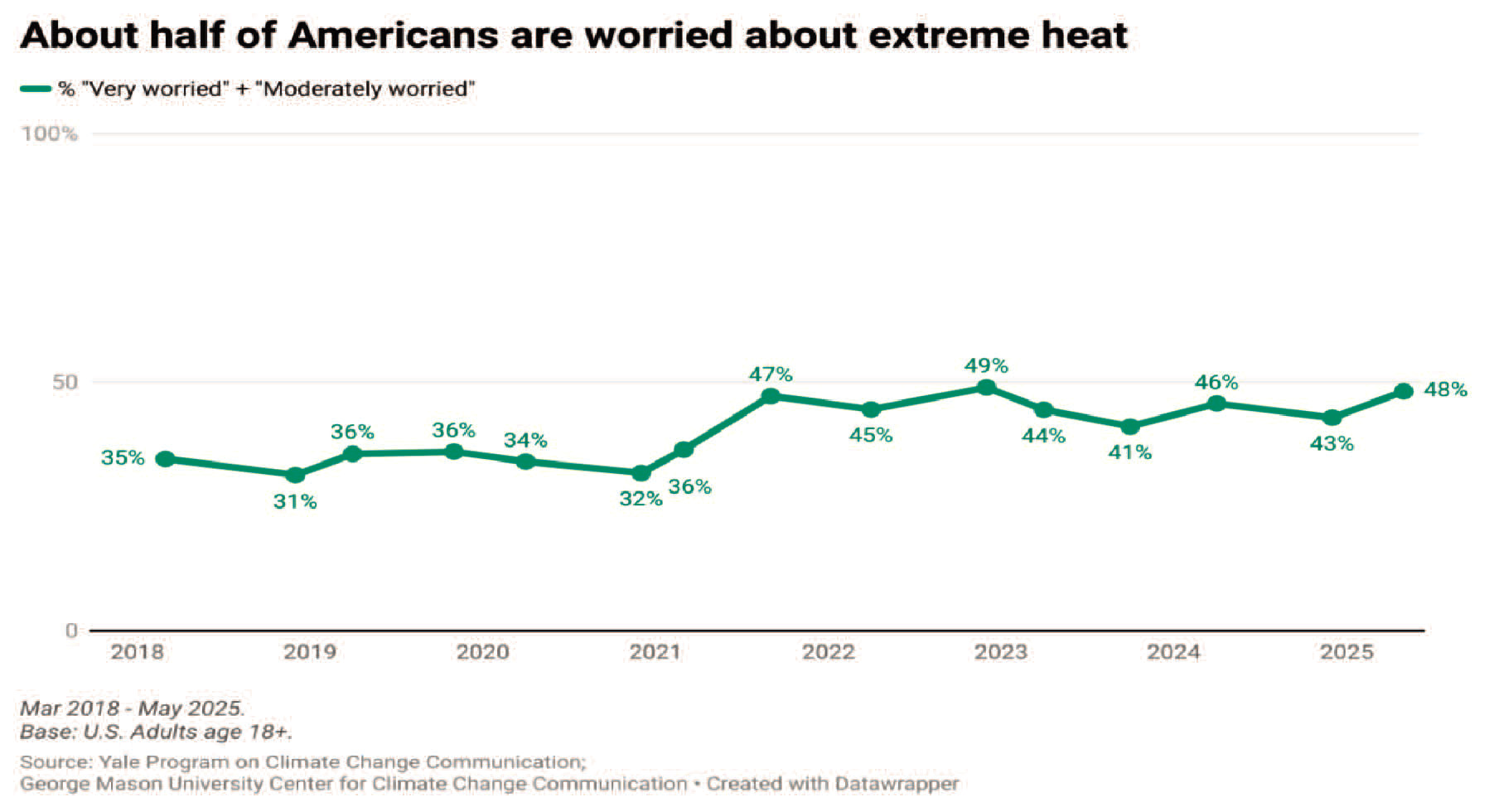
The Yale Program on Climate Change Communication reports that nearly half of Americans are now moderately worried that extreme heat could harm their local area, with concern in the Southwest rising sharply. Scientists say extreme heat is one of the most direct and measurable effects of climate change, and that these periods offer a critical opportunity for public understanding. In the past decade, the share of Americans who believe heat stroke from extreme heat waves will become more common in their communities has tripled.
As a result of the heat and drought, fire restrictions remain in Cibola.
Stage II fire restrictions remain in effect for parts of the region, banning the use or maintenance of campfires, charcoal burns, and open flames in undeveloped areas. Officials urge residents to clear brush and debris from around homes, roughly a six-foot battier, and to avoid all outdoor burning, and report signs of smoke immediately.
Through monitoring, reporting, and awareness— whether in the daily river readings, the steady decline of Bluewater Lake, the tracking of fires big and small, or the recognition of the link between heat and climate—Cibola County can remain vigilant in the face of what has been a long, hot summer.