
City says years of water, infrastructure and budget problems left Grants’ public course struggling
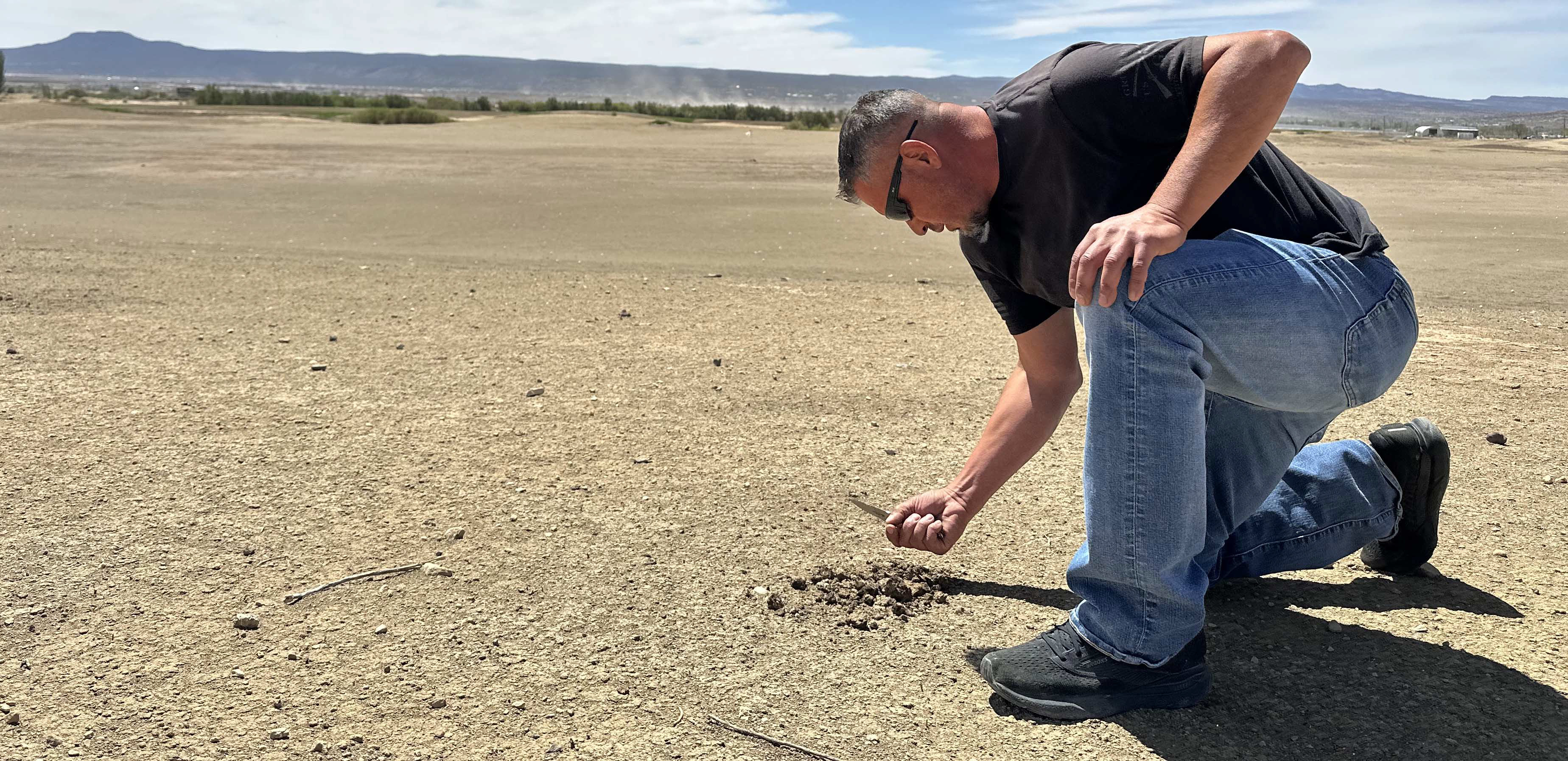
GRANTS, N.M. – The back nine at Coyote del Malpais Golf Course is closed, the putting green is a shadow of what many residents remember, and large sections of the course show the strain of mismanaged years and deeper problems.
To golfers and passersby, the most obvious sign of degradation at the golf course is the grass. It’s dry in places, thin in others, and visibly stressed across one of Grants’ best-known recreation assets.
City officials say the decline at Coyote del Malpais cannot be explained by bad turf alone.
According to Grants Mayor Erik Garcia, the struggles at Coyote del Malpais are tied to a complicated mix of aging infrastructure, poor-quality discharge water, too little water volume and years of budgeting that, in his view, put too much of the burden on the golf course itself instead of the wastewater system that supports it.
“This golf course has a problem that did not start yesterday,” Garcia said during a recent tour of the golf course. “It didn’t happen overnight, and it’s not going to get fixed overnight.”
That challenge has become increasingly visible to the public as part of the course has gone out of play.
Budgeting Responsibilities
According to Mayor Garcia, one of the problems at the Coyote del Malpais Golf Course is the relationship between the clubhouse and the wastewater treatment system that supplies non-potable water for irrigation.
Garcia said the city has determined that many of the costs long treated as golf course expenses – including piping, pumps, overgrowth management of ponds and other infrastructure tied to water discharge – should be handled differently.
According to the mayor, that structure which required the golf course to pay for infrastructure only drained resources from the golf course budget over multiple years, leaving less money available for the course itself.
“The golf course should be [responsible for] the clubhouse, the food, the carts, the liquor,” Garcia said. “What comes out of that wastewater system and gets discharged over here – that’s not supposed to be the golf course’s burden.”
Garcia said the city is now working through a reorganization of how those costs are budgeted, with the expectation that more of the discharge-related work will be reflected on the wastewater side while the golf course side focuses more narrowly on operations, clubhouse functions and course-specific upkeep.
Garcia said this change in administrative structure will allow the city to seek grants and better use wastewater funds that will support infrastructure at Coyote del Malpais and the wastewater plant.
“Under the city’s wastewater discharge permit, approved through the New Mexico Environment Department, Grants is allowed to discharge non-potable water through a system that ultimately feeds fields in El Malpais. Garcia said the city now believes much of the infrastructure tied to moving and dissipating that water across the golf course should be handled on the wastewater side of the budget. If those costs are shifted there, he said, the city will be in a better position to support both the discharge system and the course itself.”
But even Garcia acknowledged that budget changes alone will not restore Coyote del Malpais.
Ammonia in the Water
The second major issue, Garcia explained, is the water itself.
The course relies on treated wastewater discharge rather than potable city water. When pond levels are low, older buildup and more concentrated sludge remain in the ponds, which Garcia said warms the water and worsens its quality.
In simple terms, Garcia explained, the course is not always getting enough water – and the water it does get is not always of sufficient quality to support healthy turf.
He described the problem as both a volume issue and a quality issue.
“There’s not enough water, and the water we do have is hot,” Garcia said, referring to years of accumulated wastewater and ammonia concentrated in the ponds as levels drop.
The result, he said, is a course that can still be watered but the soil will continue to struggle.
Garcia argued that this is why the course’s problems cannot be solved simply by turning on more sprinklers or applying more fertilizer. He said the city also has to improve the quality of the water being discharged onto the course and begin rebuilding the health of the soil itself.
In Garcia’s description, parts of the course have effectively been pushed into survival mode.
He said that years of stress, repeated fertilizer use and poor water have left some ground compacted, nutrient-poor and unable to respond the way healthy turf should. He pointed to isolated greener spots around sprinkler heads as evidence that some life remains in the soil, but said broader remediation will take significant work.
That work could include improving irrigation, treating or better managing pond water, cleaning out built-up material in the ponds and gradually rebuilding soil conditions in affected areas.
“It’s a lot,” Garcia said. “You have soil remediation; you’ve got water remediation.”
The back nine holes of Coyote del Malpais, Garcia said, was closed in part so the city could work on the ground, irrigation and other conditions there rather than continue trying to present it as playable while the underlying problems remain unresolved.
He also said the course’s aging “Argus” irrigation system represents another major long-term cost. Garcia estimated that fully addressing irrigation on the front and back nines could take millions of dollars, a scale of investment well beyond a simple maintenance fix.
For now, he said, the city’s immediate work is more modest and more practical: restructure the budget, improve how responsibilities are assigned, stabilize the water quality as much as possible and continue looking for funding to support larger infrastructure repairs.
Coyote Clubhouse Upgrade
That includes trying to make the golf course function more like a self-supporting public amenity on the clubhouse side.
Garcia said the city has already begun improving kitchen equipment and other aspects of the clubhouse operation, with the goal of making the course more attractive not only to golfers but to people looking for food, events or a nice place to gather.
He spoke about faster food service, upgraded equipment and a long-term desire to make the driving range and clubhouse more inviting. But even as he outlined those ideas, Garcia acknowledged that such improvements depend on first getting the broader structure correct.
In Mayor Garcia’s view, Coyote del Malpais did not simply fall apart because of drought or neglect. It declined because a public golf course with limited revenue was expected to carry responsibilities that should have been treated as part of a broader wastewater discharge system.
For now, what remains undeniable is the condition of the course itself.
For many in Grants, Coyote del Malpais is more than a patch of struggling grass. It is a long-standing public recreation space, a point of civic pride and a place where residents remember greener days.
The city says it has finally begun to identify what went wrong. What golfers and taxpayers will be watching now is whether the city’s diagnosis and plans can turn into greener fairways, healthier water and a course that feels like Coyote del Malpais again.