CIBOLA COUNTY – An apparent discrepancy in drought designation data for Cibola County has raised concerns among residents and local officials, as tree mortality across the state continues to climb and wildfire risks remain elevated.
On April 18, the U.S. Department of Agriculture (USDA) issued a press release formally designating several New Mexico counties, including Cibola, as natural disaster areas due to drought. Because of this designation, Cibola’s farmers and ranchers are eligible for disaster funding to help mitigate damage from the drought; just visit: https://www.farmers.gov/pr otection-recovery/disastertool and answer the questions, verifying status as a drought impacted farmer/rancher.
The disaster designation allows the USDA Farm Service Agency to offer emergency loans to producers affected by natural disasters, including drought. However, when viewing Cibola County's profile on the National Integrated Drought Information System (NIDIS) website, a green USDA banner currently indicates the county is 'not designated as in drought' by the agency.
The inconsistency prompted the Cibola Citizen to contact the USDA for clarification.
Amanda, a USDA press representative who did not include their whole name or title in the signature of their email, responded from an official USDA email by confirming that both the NIDIS and U.S. Drought Monitor websites currently list 100 percent of Cibola County under D2 drought, or 'Severe Drought' status. However, the USDA has not yet provided an explanation for the green indicator on the NIDIS site, which conflicts with their own disaster declaration.
The confusion comes amid worsening environmental conditions.
On April 16, the New Mexico Energy, Minerals and Natural Resources Department released the 2024 Forest Health Conditions Report, which states that tree deaths in the state more than doubled from the previous year.
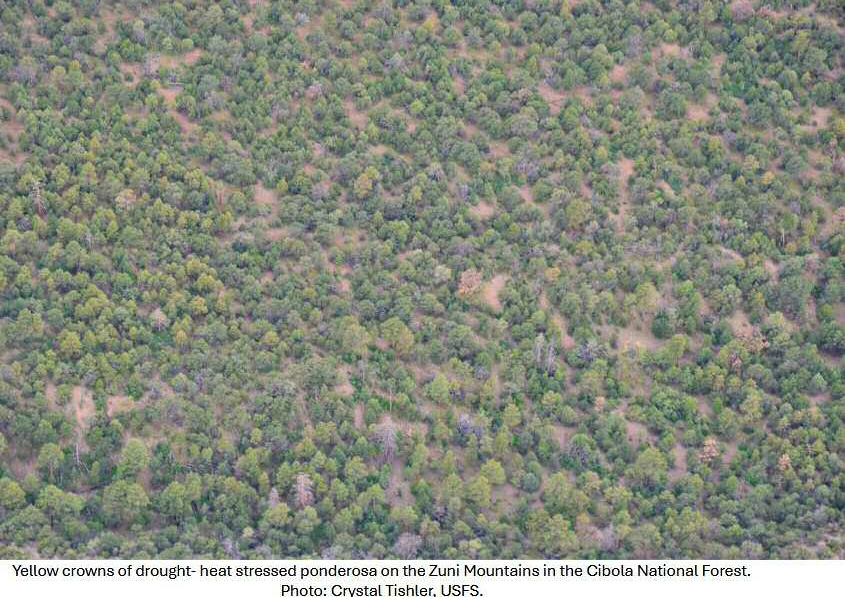
According to the report, 70,000 acres of conifer trees died in 2024, up from 33,000 acres in 2023. In total, 406,000 acres were damaged by insects, disease, or harsh environmental conditions, an increase of 12 percent over last year. Additionally, state officials documented a 39 percent increase in trees losing needles, leaves, or changing color due to stress.
Victor Lucero, Forest Health Program Coordinator with the New Mexico Forestry Division, attributed much of the damage to ongoing drought and elevated temperatures. In a press release, Lucero said native insects like the Douglas-fir tussock moth and piñon needle scale were primary drivers of damage due to their increased activity in warm, dry environments.
The Forestry Division report further noted that 2024 was the second warmest and 44th driest year on record for New Mexico. The mean temperature rose to 56.3°F, up 1.8°F from the previous year. While precipitation was 0.9 inches below the state average of 13.75 inches, total rainfall still exceeded 2023 levels by 2.1 inches.
Bark beetles and other insects were reported in high concentrations near burn scars from large wildfires in 2022. Lucero explained that trees in these areas were particularly vulnerable to attack and may continue to see elevated mortality rates in the coming years.
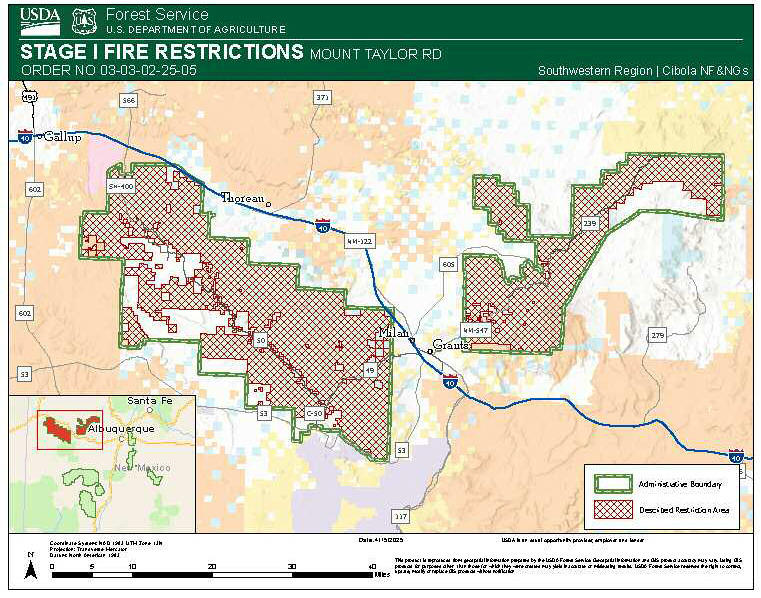
At the April 3 'Coffee With the Managers' meeting, a Cibola County resident expressed concern about fire prevention and the risk posed by dead and downed trees on federal land. The resident claimed she had seen open flames and still-smoldering fire pits in forest campsites and urged officials to take action. County, city, and village officials responded that while they are committed to assisting state and federal agencies in fire response, they do not have jurisdiction to conduct enforcement actions on federal land, despite an active burn ban in the county and all municipalities.
Cibola County contains significant stretches of federally managed land, where many residents live in close proximity to fire-prone areas. With increasing tree mortality and inconsistent messaging about drought status, concerns about wildfire risk continue to grow.
The full April drought report will be published in the April 30 edition of the Cibola Citizen. For more information about tree health, residents are encouraged to visit the New Mexico Forestry Division's Forest Health webpage or contact Victor Lucero at Victor.Lucero@emnrd.nm.g ov for more specific details.