
Cibola is Experiencing Seventh Worst Drought in History
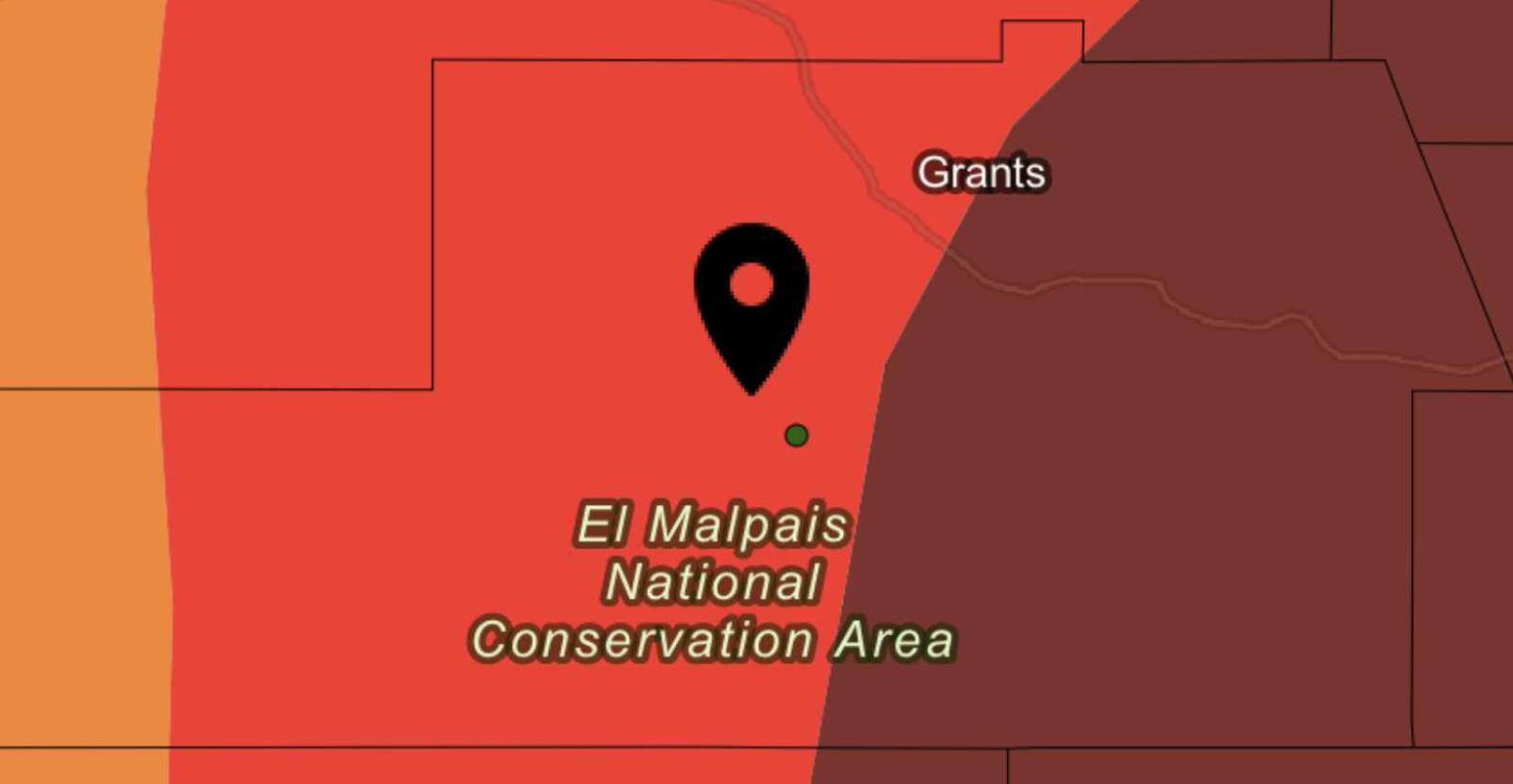
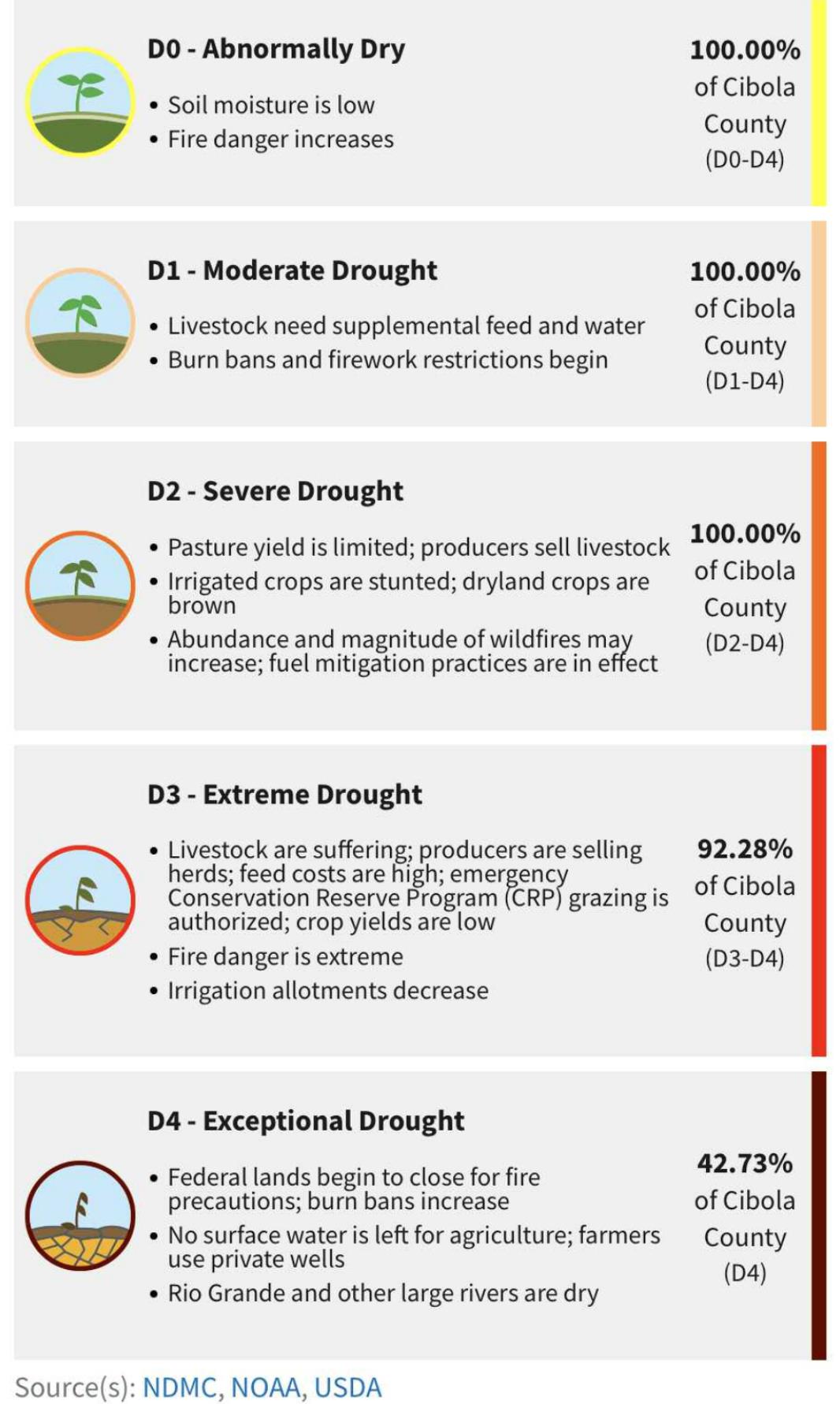
Despite a torrent of recent rain, Cibola County is currently experiencing its seventh worst drought in recorded history. 43 percent of Cibola County is suffering an “Exceptional Drought,” the highest level of drought recognized by the United States federal government. The rainfall did create disaster situations across Cibola, taking out the only access road to Moquino, a small village in the far outskirts of the county’s east side; the incident stranded around eight residents who, as of press time, do not have access to leave the village.
Despite recent rain, Cibola is still in a drought – it will take years of steady rain to bring Cibola out of this heavy drought the county is experiencing, according to Cibola Fire Marshal Dustin Middleton.
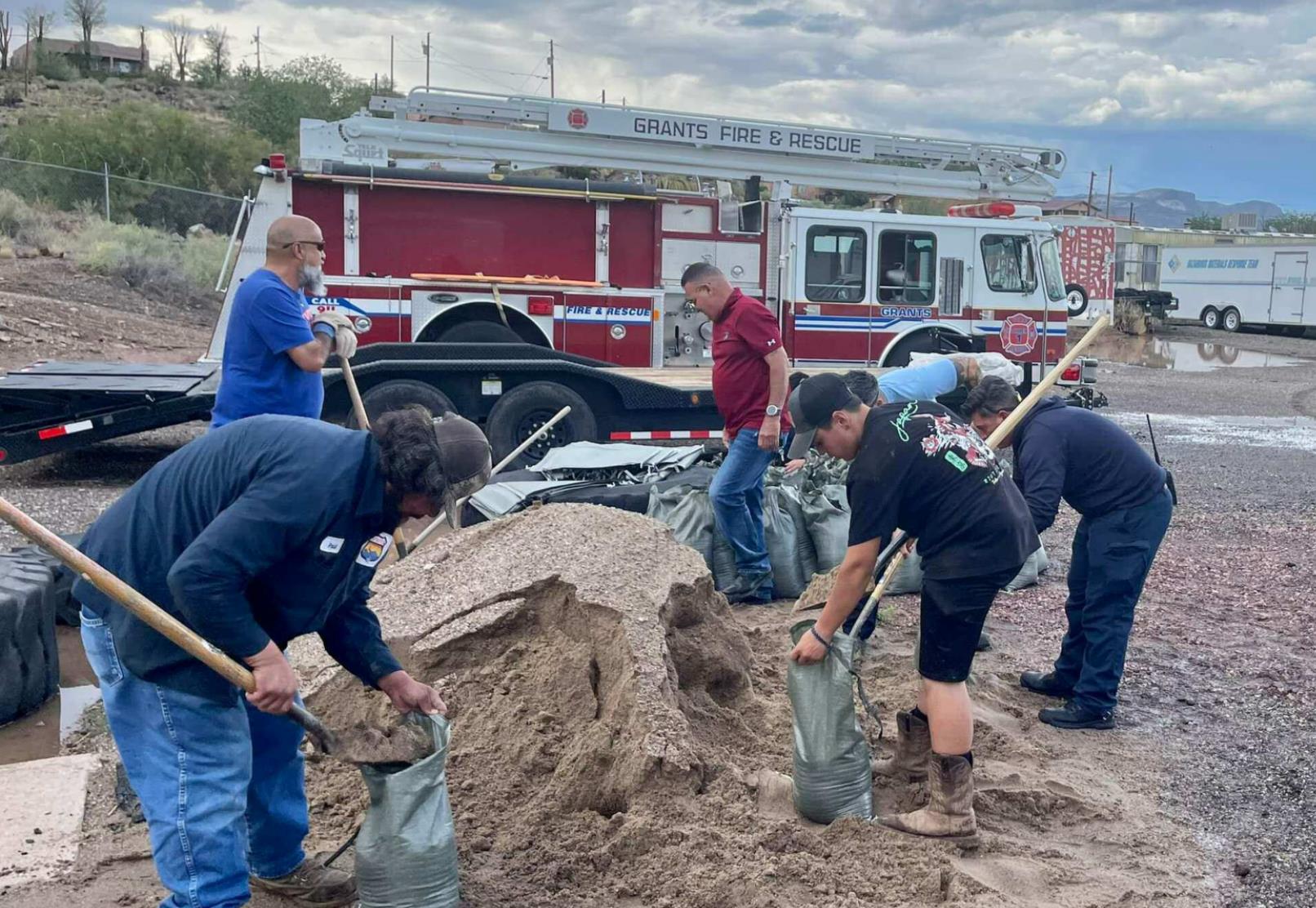
Over the weekend of June 18 and 19, Cibola experienced significant flooding. The flood waters closed First Street in Grants for two days, creating a wall of water that was impassible for lower clearance vehicles. The Fifth Street underpass in Grants was completely inaccessible as water completely took over the road. Grants Fire and Rescue put out an alert, informing residents that they need to be on the alert for water. As a cautionary measure, GFR, Milan Fire Department, and the Cibola
Roads Department filled bags with sand and dirt and offered them to the public to help keep water damage at a minimum and protect homes.
Many residents in Grants reported water going inside their homes and workplaces, with even the Cibola Citizen, located on 200 W. Santa Fe Avenue, having water come inside the building.
Trapping Moquino
As rain came crashing down on Cibola County – a much needed commodity in the area, days after the Cerro Bandera Fire ravaged the Zuni Mountains – parts of the county were completely unprepared.
The village of Moquino has – as of press time – around eight families who are stranded. During the torrential rain on June 19, the single access and exit point for Moquino was washed out. The bridge out of the village was a two-culvert system that was overwhelmed by floodwaters, destroying the entire road system.
The Cibola Roads team immediately went to assess damage and help as much as possible. A plan has been devised for the meantime: In the event of a medical emergency in Moquino, a helicopter or air support will be necessary.
“A lot of county roads were washed out with the heavy rain,” Cibola County Sheriff Tony Mace said, “Water likes to take the path of least resistance, and that includes the roads we travel on.” Through the course of the flooding, there were no instances reported of injuries in the county. “It’s an inconvenience when this happens, but there is a whole team of people looking at ways to fix this situation and how to solve the problem that was caused by the heavy rain.”
Moquino was not the only effected village. Villages all across the county suffered when the heavy rainfall came, and many roads were completely washed out as heavier-than-expected rainfall overwhelmed Cibola’s drainage systems.
Historic Drought
Cibola is experiencing the seventh worst drought in county history. The Cibola National Forest is currently closed as the drought continues to worsen, the closures came as a precaution to potential fires, but are continuing due to the current status of fire danger in Cibola. Surface water is evaporating across Cibola. This is creating a situation where farmers must use private wells to supply water for their crops.
Fire danger is exceptional across Cibola – meaning it is at the highest recognized level of danger by the federal government – and livestock may begin to suffer from the lack of water access.
According to the US Department of Agriculture, there are 10,281 cattle in Cibola County. There are 3,026 sheep in Cibola County. There are 448 acres of hay in Cibola County. Every animal and every acre of land is currently suffering through drought.
As of press time, 42.73 percent of Cibola is suffering exceptional drought, which means that nearly half the county is in a situation where agriculture is going to suffer. Dryland crops are already growing more brown than normal, if the conditions persist it will stunt the growth of these crops.
Monsoon rains promise to lessen the effects of drought on Cibola, with a high probability of abovenormal precipitation expected to come to the county over the next month, according to data from the US Climate Prediction Center, an arm of the National Weather Service.