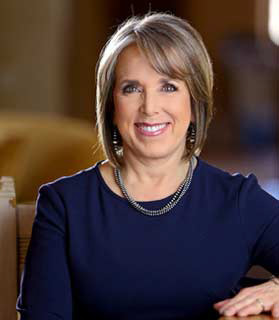
Gov. Michelle Lujan Grisham has called a special legislative session beginning Oct. 1 to address the fallout from federal budget cuts signed by President Trump. The session will focus on protecting Medicaid, rural health care, and food assistance programs across New Mexico.
SANTA FE, N.M. — Governor Michelle Lujan Grisham announced Friday that she will convene a special session of the New Mexico Legislature starting October 1 to respond to sweeping federal budget cuts signed into law by President Donald Trump this summer. The governor’s move—her seventh special session as governor—sets up an intense political showdown over Medicaid, food assistance, rural health care, and the role of state government in absorbing federal fallout.
At the center of the crisis is H.R.1, the federal budget package signed July 4, which slashes Medicaid and SNAP funding, strips away public broadcasting support, and shifts the burden of key services to the states. New Mexico is projected to lose billions in federal support over the next decade, with rural and Indigenous communities among the hardest hit.
“This is not about politics,” Lujan Grisham said in a statement. “This is about protecting the people of New Mexico from the consequences of a reckless federal budget. We won’t sit back while Washington rips food off the table and health care out from under our families.”
The special session will focus on five core proposals:
• Stabilization grants to rural hospitals through the Rural Health Care Delivery Fund;
• Measures to make marketplace health insurance premiums more affordable;
• New investments in food assistance for seniors and children;
• Expanded funding for New Mexico PBS and local public broadcasting;
• Support for the Health Care Authority’s transition and enrollment work.
Notably, the governor’s call does not include a bill that has the power to stop Cibola County’s contract with CoreCivic, the operators of Cibola County Correctional Center. According to the governor’s office, “During discussions with our office, Democratic leadership emphasized their preference for a scaledback special session agenda that did not include the immigrant detention center bill,” the office stated. “Gov. Lujan Grisham wants to ensure New Mexico will not be complicit in discriminatory mass immigration enforcement or unconstitutional federal overreach. Recent federal court decisions show judges are pushing back, and New Mexico should make its position equally clear.”
The announcement comes amid growing local fears about the erosion of rural health services and food insecurity in places like Cibola and McKinley Counties, where Medicaid and SNAP participation rates are among the highest in the state.
Republican Backlash:
“Political Theater”
Republican leaders swiftly condemned the governor’s decision.
Amy Barela, chairwoman of the Republican Party of New Mexico, issued a fiery statement calling the special session “political theater” and “another attempt to rewrite the governor’s failed legacy.”
“New Mexico has had record revenues,” Barela said. “If health care, food access, and rural development were true priorities, they should’ve been addressed years ago—not now, under the cover of emergency.”
Barela went on to blast the legislatures attempts to shutdown the ICE detention centers across New Mexico and framed the administration as putting “the needs of those here illegally above the rights of New Mexico citizens.”
“If you really want to fight crime, bring in the National Guard,” Barela added.
Her comments come just five months after Lujan Grisham did deploy the National Guard to assist Albuquerque police, citing rising juvenile crime and the fentanyl epidemic.
A Legislature on Edge
While Democratic leaders back the governor’s call, privately many lawmakers acknowledge the timing is delicate. The 2026 election cycle is already heating up, and Republicans are expected to aggressively campaign on the special session’s costs and focus.
Speaker of the House Javier Martínez (D-Albuquerque) defended the move.
“We’re not going to allow Trump and the radical right to take food off people’s tables or strip away their Medicaid. We’ve done the work. Now we’re ready to fight back.”
Senate Majority Leader Peter Wirth added, “This is about survival— rural hospitals, public schools, Medicaid recipients. The special session is our firewall against federal negligence.”
What is a Special Session?
In New Mexico, most legislative action happens during the regular sessions held at the state capitol every year—60 days in odd-numbered years like 2025 (when lawmakers can introduce and debate just about anything), and 30 days in even-numbered years (when the focus is limited mostly to budget matters and items approved by the governor).
But sometimes, urgent issues arise outside of those windows—issues that can’t wait until next January. That’s where the special session comes in.
A special session is an extraordinary legislative meeting permitted by the New Mexico Constitution. It can only be called by the governor, and when it’s called, the governor has the sole authority to determine what gets put on the agenda.
That means lawmakers can’t just show up and file whatever bills they want—they're limited to the specific topics outlined in the governor’s official “call.”
In this case, that includes counteracting federal Medicaid and SNAP cuts, stabilizing rural health care, lowering insurance premiums, and funding public broadcasting, among other crisis-response measures.
The last time New Mexico held a special session was in 2022, when lawmakers returned to Santa Fe to pass inflation relief checks as gas prices and food costs soared nationwide.
Special sessions aren’t cheap.
Each time the Legislature reconvenes, every lawmaker is entitled to per diem payments to cover lodging, travel, and meals. The total cost of a special session—depending on its length—can run into the hundreds of thousands of dollars, all of it paid by taxpayers.
Still, proponents argue that cost is worth it when the issues are urgent. For rural counties like Cibola, where Medicaid supports clinics and hospitals and SNAP helps families feed their children, the alternative to inaction may cost far more.
When lawmakers return to the Roundhouse on October 1, it won’t be business as usual. It will be a focused, high-stakes scramble to protect services, plug budget holes, and, perhaps, redefine the state’s response to a crisis many say was made in Washington, not Santa Fe.