
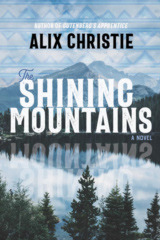
This is a story about forced emigration and European colonization in North America. This book is based on family records and letters of the MacDonald clan, treaties, and nineteenth century newspaper accounts of Anglo fur traders and settlers.
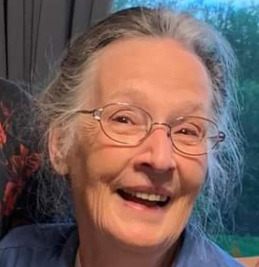
Author Alix Christie, a fifth generation ScottishAmerican, wrote this novel about interracial marriage (historically known as miscegenation), Anglo-American misogyny (ingrained prejudice against women), and the life of a Scottish/ Nez Perce family in the northwestern region of present day America.
First, a little background about why one of Christie’s forebears emigrated.
British landlords evicted crofters (tenant farmers in the Scottish Highlands and Hebrides islands) from 17501860 to make way for more profitable sheep farming. Impoverished crofters often relied on poaching for survival.
Angus MacDonald fled his homeland in 1838 after poaching a stag on a British lord’s holdings. Conviction for poaching included fines, imprisonment with hard labor for up to two years, or penal transportation for seven years to one of the British colonies.
The novel is written in three sections; each includes a detailed map of where the younger brother of the author’s great-great-great-grandfather lived. Book 1 is dedicated to Pierre’s Hole, (present-day Idaho), 1840-51; Book 2 is the Oregon and Washington territories, 1852-70; and Book 3 is the Montana territory, 186778, and features detailed information about the Flathead Indian Reservation.
Christie’s book begins with Angus’ arrival in North America and his career as a Hudson Bay Fur Company employee. Angus kept meticulous records as a fur trader and was a prolific correspondent with numerous officials.
He develops long-lasting trade relationships with many of the Native American tribes. His interactions with the Nez Perce [Nmiipuu] result in his marriage to Catherine Baptiste, niece of Chief Flint Necklace [Apash Wyakaikt].
Catherine brought to their marriage the Nez Perce reverence for Mother Earth - she was an exceptional hunter, a talented equestrian, and often relied on her herbal skills for treating illnesses and injuries.
Angus hires a tutor to ensure that Catherine and their children are well educated and proficient in English. She is reluctant to move to Fort Connah (present day Montana) when Angus is promoted.
Catherine recalls repeated encounters with misogynistic Anglo officials who dismiss her opinions because “they don’t see her.” Catherine adopts some Catholic religious practices to protect their children from Anglo prejudices.
Angus often mused aloud about his grandmother Margaret MacDonald of the Glencoe MacDonalds. Her grandfather John, age 12, was the only survivor of the 1692 Glencoe Massacre that resulted in the death of 38 members of the MacDonald clan, who were staunch Roman Catholics. The attack was punishment for the MacDonalds’ refusal to pledge allegiance to William III, the new Protestant king. Angus and his descendants would not exist if John had failed to escape that massacre.
Angus recognized many similarities between his Scottish forebears and Native American tribes including customary hunting practices. The 1855 Indian treaties expressly permitted traditional hunting on ancestral lands but Anglo settlers refused to acknowledge this right.
The U. S. 7th Cavalry Regiment, formed in 1866, participated in some of the largest battles of theAmerican-Indian Wars.
These military encounters dramatically escalated following the 1876 Battle of the Little Bighorn where Lakota Sioux, Northern Cheyenne, and Arapaho warriors soundly defeated the 7th Cavalry at the Little Bighorn River, Crow Reservation, southeastern Montana. The regiment was led by Lieutenant Colonel George Armstrong Custer.
The next year Catherine and their son Duncan traveled to the site of the 1877 Indian War and performed traditional burial rights for the remains of the approximately 100 Nez Perce men, women, and children who were killed as they attempted to migrate to Canada.
In 1890 the 7th Cavalry slaughtered 250 women, men, and children during the Wounded Knee Massacre, Pine Ridge Indian Reservation, South Dakota.
“The American claim [to Oregon] is by the right of our manifest destiny to overspread and possess the whole of the continent which Providence has given us for the great experiment of liberty and … selfgovernment entrusted to us,” John L. O’Sullivan, NewYork Morning News, Dec. 27, 1845.
Native Americans vehemently disagreed; they had been routinely tricked into signing treaties that ceded their ancestral lands to Anglos.
“I made enemies among the whites, because I corrected them about their stories,” wrote Duncan MacDonald in January 1928. Duncan wrote extensively about the Nez Perce wars. His articles were published in the New North-West newspaper, Deer Lodge, Montana, in 1878-79.
He is the third child of Catherine and Angus. Duncan was named after his paternal grandfather. He returned to the Flathead Reservation, the place of his birth, as a young man. He and his wife, Louise “Quilsee” Schumatah, are buried at St. Ignatius, Flathead Reservation, Montana.
(The American Indian Wars began with the 1609 arrival of European immigrants. Hostilities officially ended in 1924.)
SIDEBAR
Alix Christie (1959 - ) grew up in California, Montana and British Columbia, Canada. Christie attended Vassar College, Poughkeepsie, N.Y., UC Berkeley, California, and earned a Master of Fine Arts, St. Mary's College, Moraga, California.
She is a prize-winning journalist and author of novels and short stories. Her journalism career includes contributing to print publications such as the San Francisco Chronicle, the Washington Post, and Salon.com. She has been a foreign correspondent for The Guardian of London, England.