
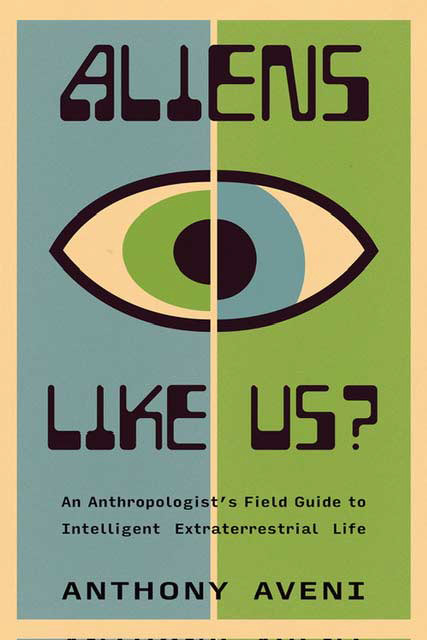

“Give me a man or woman who has read a thousand books and you give me an interesting companion. Give me a man or woman who has read perhaps three and you give me a very dangerous enemy indeed,” Anne Rice, American author, 19412021 What are the odds that we are not the only sentient beings in the Universe? The idea of extraterrestrial life has fascinated humans for centuries. That possibility exploded into worldwide fascination in the 20th century.
In 1958 during the Cold War, the U.S. established NASA to study aeronautics and space exploration focused on our galaxy, the Milky Way. The NASA Apollo 11 mission achieved the first human moon landing on July 20, 1969. This event sparked international interest in expanding exploration of the Milky Way - a massive, barred, spiral galaxy containing hundreds of billions of stars.
“There are unidentified flying objects,” commented American cultural anthropologist Margaret Mead in 1974. “We can only imagine what purpose lies behind the activities of these quiet, harmlessly cruising objects that time and again approach the Earth…” The 1982 film “ET” intensified the general public’s curiosity about extraterrestrial life. That internationally acclaimed movie won four Academy Awards: Best Original Score, Best Sound Effects, Best Sound Effects Editing, and Best Visual Effects.
Since 1998, the Astrobiology Institute of NASA has explored a diversity of philosophies relating to alien life in the Milky Way with the goal of providing a scientific framework for future space flight missions.
In 2016, the Astrobiology Institute concluded that tens of billions of technospecies exist in this universe, according to author Anthony Aveni. A 2017 survey reported that 47 percent of the seventeen hundred Americans respondents said that they believe UFOs are real; 39 percent thought that aliens have visited Earth in the past.
“The number of UFOs sightings across the world has doubled to seven thousand since 2010 - and you can’t blame it all on COVID leisure-time skywatching,” explained Aveni. “When the longawaited US Intelligence Final Report - unidentified aerial phenomena (formerly called UFOs) - appeared in September 2021, it concluded that alien threats to national security cannot be ruled out.”
Aveni, a distinguished astronomer and anthropologist, is widely considered one of the pioneering founders of archaeoastronomy and cultural astronomy.
This book offers a synopsis of the wide-ranging topics that NASA has researched during the past two and a half decades. The author explores an array of opinions about the possibility of intelligent life within the Universe.
Aveni examines aspects of the science of astrobiology, which combines the knowledge and techniques of astronomy, biology, chemistry, geology, atmospheric science, oceanography and aeronautical engineering.
The eleven chapters include ET fever, the concept of evolution and the complexity of the evolutions within the universe, opposing theories of why humans believe we have “earned the right to dominate other species,” religious naturalism, lessons from the field of anthropology, the study of Ufology, and related topics.
The author stated that people in the Western Hemisphere view the natural world based on “the idea of progress and the ownership of property [which] are all rooted in the West’s Classical Judeo-Christian heritage, overlain by the European Renaissance and the Age of Enlightenment.”
Aveni cites 21 sources to support his conclusions.
“Today first contact with intelligent extraterrestrials - even if they don’t look like us - is no longer considered science fiction. It’s viewed as a natural, inevitable event in human history, with most of us standing a decent chance of seeing it happen in our lifetime,” concluded Aveni.
Considering the current state of international affairs, I personally find it oddly comforting that we may not be alone in the Milky Way.
SIDEBAR:
Anthony Franci Aveni (1938 -) is an American academic anthropologist, astronomer, and author.
He earned a Bachelor of Arts in 1960 from Boston University, Massachusetts, a leading private research institution, and a PhD in 1965 from the University of Arizona, Tucson, a public landgrant research university.
Aveni is recognized for his influence on the development of archaeoastronomy and cultural astronomy and has specialized in the study of ancient astronomical practices in the Americas, especially historical astronomy of pre-Columbian Mesoamerican cultures. He has written/edited more than 34 books.
Aveni serves as the Russell Colgate Distinguished University Professor of Astronomy, Anthropology, and Native American Studies Emeritus at Colgate University, Hamilton, New York.
Title: “Aliens Like Us? An Anthropologist's Field Guide to Intelligent Extraterrestrial Life” Author: Anthony Aveni Published: 2026 Paperback, 284 pages ISBN: 978-0-8263-6947-5 Publisher: University of New Mexico Press, unmpress.com