
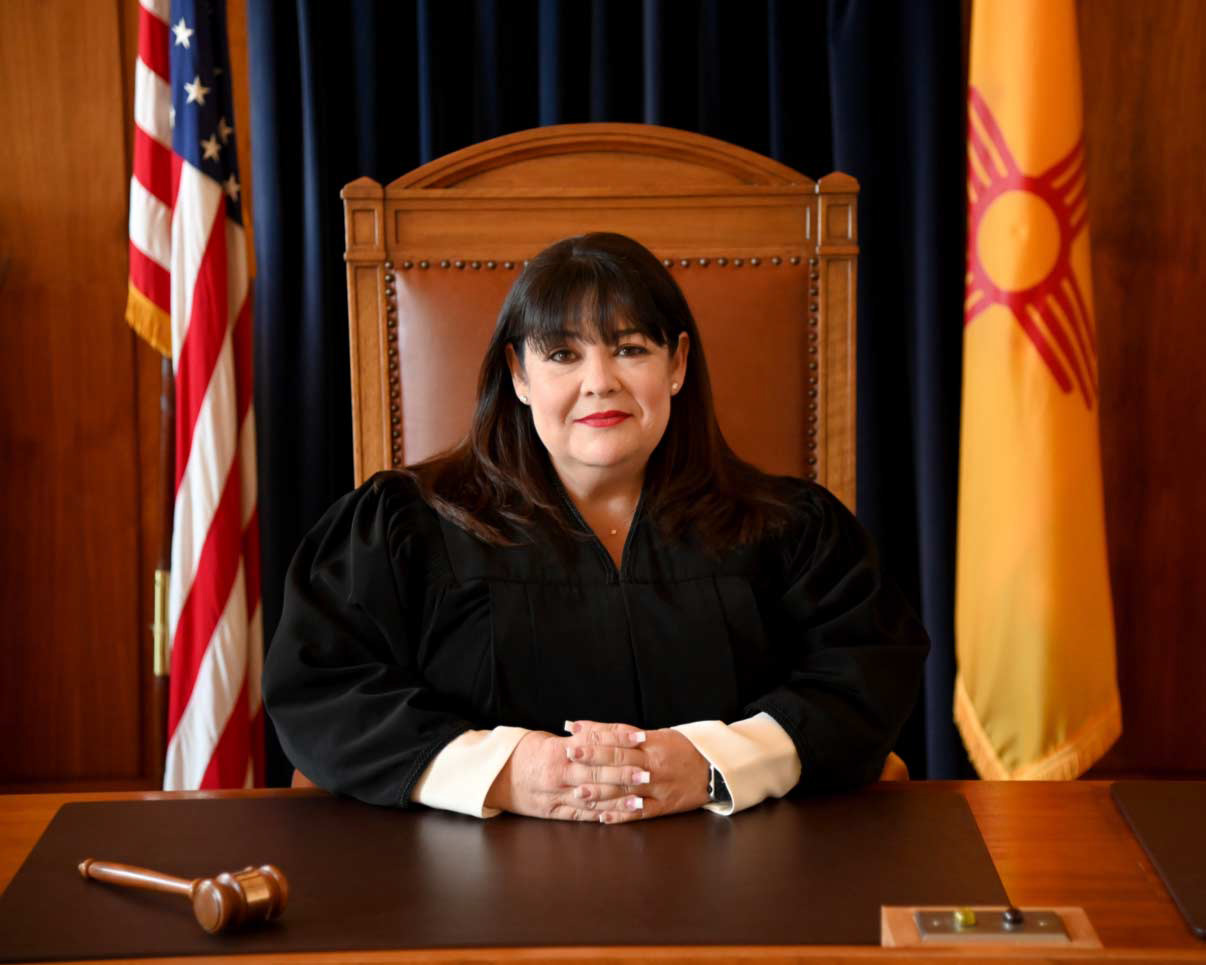
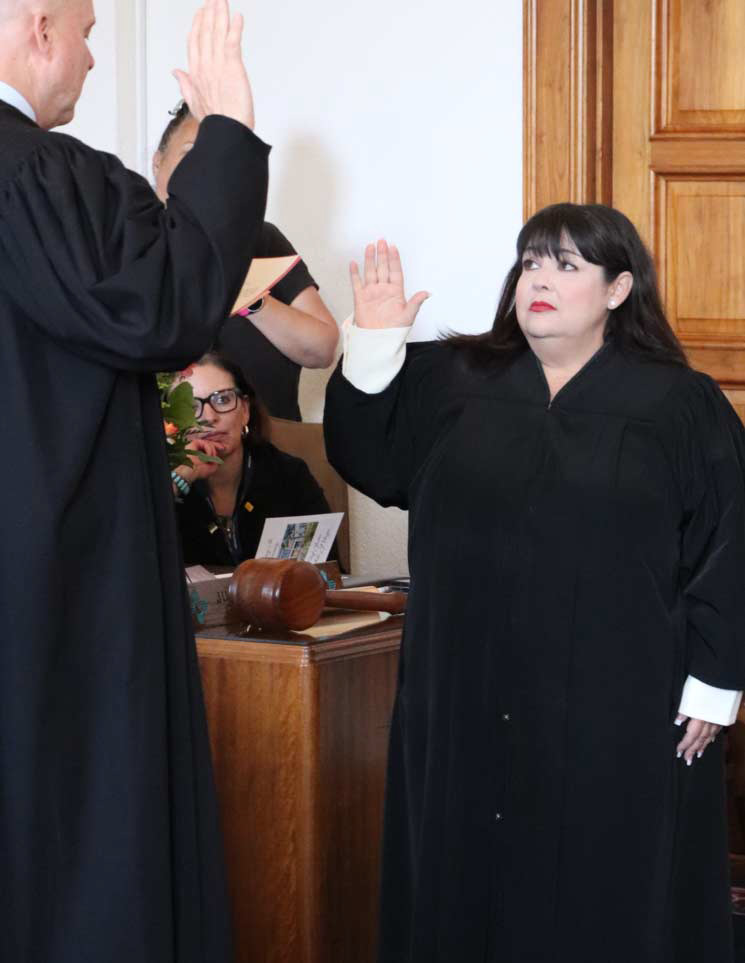
SANTA FE, N.M. – Justice Julie J. Vargas today became Chief Justice of the New Mexico Supreme Court.
Chief Justice Vargas was sworn into office after being elected by her colleagues on the Court to a two-year term. She is the 44th person to serve as Chief Justice of the state’s highest court. She succeeds Justice David K. Thomson, who had been Chief Justice since 2024.
“It is a great privilege and honor to serve the people of New Mexico in leading the state’s judicial branch of government,” said Chief Justice Vargas. “I look forward to working with our dedicated judges, court staff and others in the legal community to expand access to justice, particularly in rural areas where there are few attorneys.”
Chief Justice Vargas has been serving as the chairperson of a judicial committee considering alternatives to the current bar examination process for lawyers to become licensed to practice in New Mexico. She will continue to work with ethics and professional responsibility committees to support and promote professionalism in the conduct of attorneys and judges.
The Chief Justice presides over Supreme Court hearings and conferences, and serves as the administrative authority over personnel, budgets and general operations of all state courts. The Chief Justice also acts as an advocate for the Judiciary on legislative and other matters.
Chief Justice Vargas joined the Supreme Court in 2020, and before that served four years on the state Court of Appeals. She previously spent 23 years in the private practice of law, handling real estate and commercial litigation and representing many small businesses and landowners. Chief Justice Vargas received her law degree in 1993 from the University of New Mexico, where she was editor of the New Mexico Law Review. She earned an undergraduate degree in history and English literature from Brown University in 1990.
The judicial branch of New Mexico is made up of the Supreme Court, Court of Appeals, 34 district courts and 43 magistrate courts in 13 judicial districts, the Bernalillo County Metropolitan Court, 33 county probate courts, and 78 municipal courts serving the people of New Mexico. The Supreme Court exercises supervisory control over those