Firefighters Keep Multiple Starts Small as Drought and Fire Restrictions Remain in Effect
CIBOLA COUNTY, N.M. – A series of thunderstorms that swept across central New Mexico last week left more than rain in their wake. Lightning ignited multiple wildfires across Cibola County and the Mt. Taylor Ranger District, keeping firefighters busy as they worked to extinguish new starts before they could grow into larger incidents.
Since June 25, at least five wildfire starts have been reported in or near Cibola County, with the largest reaching just 4 acres. Forest officials’ credit rapid detection and aggressive initial attack for preventing the fires from spreading despite persistent drought conditions.
The largest of the recent fires is the Rivera Canyon Fire, discovered June 27 in the southeast Zuni Mountains west of Forest Service Road 50 and north of N.M. 53. The lightning-caused fire burned approximately 4 acres in ponderosa pine and oak.
According to the U.S. Forest Service, the fire has shown no additional growth since crews arrived. Firefighters continue mop-up operations by turning over soil, extinguishing smoldering material, and cooling remaining hot spots with water from wildland engines. Officials said residual smoke is no longer expected to be visible.
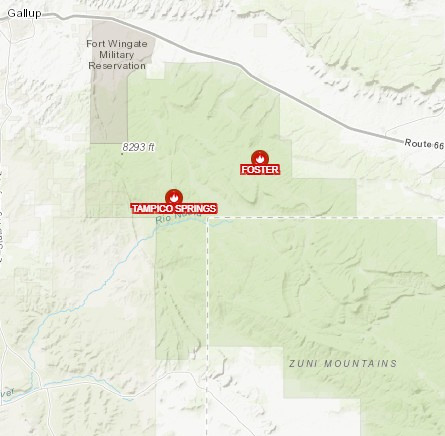
The Foster Fire, reported June 25 in Foster Canyon of the northeast Zuni Mountains, burned 1 acre before reaching 100 percent containment. The incident has transitioned to monitoring status.
The Trough Fire, discovered June 26 in the southern Mt. Taylor Mountains, was limited to 0.1 acre. Firefighters remain on scene completing mop-up operations, and the Forest Service has issued its final public update unless conditions change.
State wildfire reporting systems have also documented several additional small wildfires starts in Cibola County over the past several days, including the Hole in the Wall Incident, which burned an estimated 3 acres, along with the Sandy Hill Incident (0.2 acre) and the West Canyon Incident (0.1 acre). Public information on those incidents remains limited, and containment information has not been released.
Lightning Season Meets Drought
The cluster of fires illustrates a common pattern during New Mexico's summer thunderstorm season. While storms can produce beneficial rainfall, they also generate lightning capable of igniting dry vegetation, particularly when rainfall is scattered or limited.
To locate additional lightningcaused fires before they can spread, the Forest Service deployed infrared aircraft across central and northern New Mexico. These specialized flights detect heat signatures that may not be visible from the ground, allowing firefighters to find and suppress new fires while they are still small.
Drought Continues Across Cibola County
The recent fire activity comes as 100 percent of Cibola County remains in drought.
According to the latest U.S. Drought Monitor, 64.48 percent of the county is classified in Extreme Drought (D3) while the remaining 35.52 percent is in Severe Drought (D2). All 27,213 residents of Cibola County are currently living under drought conditions.
Although recent thunderstorms have brought localized rainfall, officials say fuels remain dry enough for lightning and human-caused ignitions to spread quickly.
Fire Restrictions Remain
Stage II fire restrictions remain in effect on the Mt. Taylor Ranger District, while Stage I restrictions remain in place on other portions of the Cibola National Forest and National Grasslands.
Firework restrictions for all parts of Cibola County except the boundaries of the City of Grants are in effect.
Forest officials continue to urge residents and visitors to avoid activities that could spark a wildfire, stay away from active fire areas, and never fly drones near wildfire operations.
Rapid reporting remains one of the most effective tools in preventing small fires from becoming large ones. Residents who see smoke or fire are encouraged to report it immediately to local authorities.