Grants officials call for preservation, public benefit and meaningful Tribal consultation as BLM considers ending the 10-mile mineral withdrawal
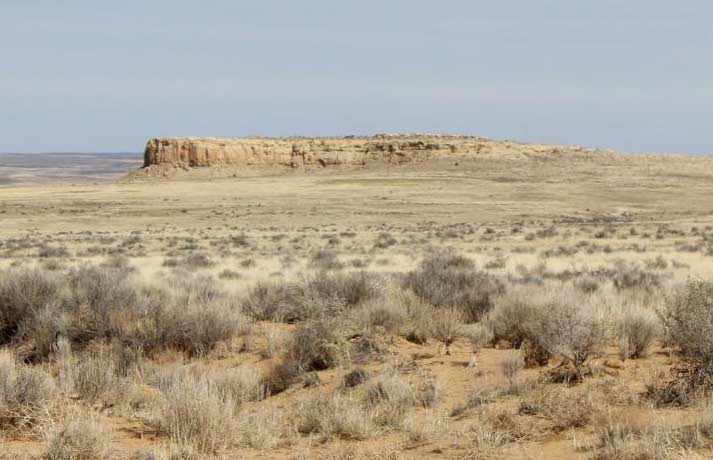
GRANTS, N.M. – As the federal government considers removing protections from more than 336,000 acres surrounding Chaco Culture National Historical Park, local and congressional leaders are pressing for more time, meaningful Tribal consultation and a clear accounting of what Western New Mexico would gain—or lose—under the proposal.
The Bureau of Land Management released a draft environmental assessment July 15 recommending full revocation of Public Land Order No. 7923. The 2023 order withdrew approximately 336,404 acres of federal land within 10 miles of the park from new mineral leasing and mining claims for 20 years, subject to valid existing rights.
The BLM is evaluating three alternatives: keeping the existing 10-mile withdrawal, revoking it in full or retaining a five-mile buffer while reopening federal lands farther from the park.
The public comment period closes July 29. After that, the agency is expected to review the comments, complete its environmental analysis and forward the matter for a decision by the secretary of the Interior or another designated official. The BLM has not announced a firm date for that decision.
For Cibola County, where the Pueblos of Acoma and Laguna have deep cultural connections to Chaco, the federal review has become both a local and national issue.
Grants Mayor Calls for Preservation and Public Benefit
Grants Mayor Erik Garcia said Chaco is part of the history and identity of New Mexico and should not be treated as simply another location for extraction.
“There are still some places you need to preserve because that’s our legacy,” Garcia said.
Garcia said he supports resource development when it produces meaningful economic benefits, but he drew a line at damaging cultural sites or placing development immediately next to Chaco.
“I wouldn’t want to see derricks right next to that place,” he said. “Tearing up your heritage— there’s a fine line there.
You just don’t do it.”
At the same time, Garcia said the discussion should include the severe infrastructure needs faced by rural and Tribal communities. He pointed to the continued lack of running water, medical services, emergency response facilities and other basic infrastructure in parts of the region.
“If the government wants to come in here and do something like that, there has to be legitimate public benefit,” Garcia said. “One of our biggest needs on reservations is infrastructure. We need infrastructure. We need medical. We need EMS stations.”
Garcia said any proposal involving additional development should explain how nearby communities would benefit, particularly those whose residents still haul water.
“They want water,” he said. “Hauling water is hard.”
His comments reflected the tension at the center of the Chaco debate: how to address economic hardship and infrastructure needs without sacrificing a cultural landscape that holds spiritual and historical importance for multiple Indigenous nations.
Grants Councilwoman Michael Opposes Opening Chaco
Grants City Councilwoman Beverly Michael took a firmer position against revoking the withdrawal.
“Chaco Canyon is a very important historical site in New Mexico, of particular significance to our Indigenous people,” Michael said. “Opening up publicly protected sites to extractive industries goes against the protections our Native people have fought hard for.”
Michael also criticized the 14-day public comment period, saying the short timeline places Tribal communities at a disadvantage.
“Allowing only two weeks for public comments is simply making it easy for industry and harder for tribes who are fighting to protect this sacred site,” she said.
Michael noted that the current federal withdrawal does not prohibit owners of private mineral interests from leasing or selling those rights.
“We should respect the rights and wishes of the Tribal and Pueblo people in our state,” she said.
Vasquez Supports Permanent Protection
U.S. Rep. Gabe Vasquez, whose 2nd Congressional District includes much of Western and southern New Mexico, including Cibola County, said Chaco should be permanently protected.
“Chaco Canyon is sacred to Tribal communities and vital to our understanding of the Southwest’s cultural and environmental heritage,” Vasquez said in a statement provided to the Cibola Citizen. “I’m proud to stand with leaders across New Mexico to permanently protect this irreplaceable site from future drilling and destruction.”
Vasquez said federal officials have a responsibility to listen to Indigenous leaders and preserve the landscape for future generations.
“We have a responsibility to honor the voices of Indigenous leaders, safeguard our public lands and preserve Chaco’s legacy for generations to come,” he said.
The Cibola Citizen has also learned that members of New Mexico’s congressional delegation are preparing a letter to Interior Secretary Doug Burgum seeking an extension of the public comment period from 14 days to 90 days and calling for genuine government- to-government Tribal consultation.
Acoma Says Process is Rushed
The Pueblo of Acoma has sharply criticized the proposed revocation and the process used to consider it.
“For Acoma, Chaco is not a distant place or an abstract policy question. It is part of who we are,” Pueblo of Acoma Gov. Charles Riley said.
Acoma officials said they have repeatedly asked Burgum and other decision-makers to visit Chaco and meet directly with Pueblo leaders. According to Riley, those requests have gone unanswered.
“Consultation is not a briefing,” Riley said. “It is not a meeting where we are told what has already been decided. It is a government speaking with a government, before the decision is made, with the authority to be affected by what it hears.”
The Pueblo contrasted the current process with the years of review that preceded the 2023 withdrawal. That earlier effort included a 90-day comment period, five public meetings, government-togovernment consultation and a broader environmental review. The current reconsideration began with a seven-day scoping period and was followed by the present 14-day comment window.
Fourteen Projected Wells, Thousands of Cultural Sites
According to Acoma’s summary of the draft assessment, full revocation could lead to an estimated 14 new oil and gas wells over the next 20 years. The assessment reportedly projects no new wells within five miles of the park under any of the alternatives.
The document also identifies at least 7,552 known historic properties and 145 traditional cultural properties within the existing 10-mile withdrawal area. Acoma said the actual number is likely higher because much of the landscape has never been fully surveyed.
“We are being asked to accept the permanent loss of a landscape our ancestors built, walked and prayed in, in exchange for fourteen wells,” Riley said. “That is not an energy strategy.”
Riley said approximately 90% of the San Juan Basin is already leased and argued that the existing withdrawal does not stand between the country and its energy needs.
“It is what connects this generation of Pueblo people to our ancestors and the ones that come after us,” he said.
What Happens Next
Public comments are due July 29. Once the comment period closes, the BLM will review public and Tribal input, determine whether revisions are needed and complete the environmental assessment.
The final decision could leave the 10-mile withdrawal in place, reduce it to five miles or revoke it entirely. No date has been announced for when the Interior Department will choose among those alternatives.
Acoma has said it will submit formal comments and continue supporting the proposed Chaco Cultural Heritage Area Protection Act, which would make protections permanent.
Nearly 500 Acoma citizens submitted comments during the earlier seven-day scoping period, according to the Pueblo. Youth canvassed the community, and Pueblo officials organized forums for residents who lacked dependable internet access.
“Two weeks is not enough time. It was not meant to be enough time,” Riley said. “We will use every hour of it.”
He encouraged people to explain in their own words what Chaco means to them.
“That is what carries weight,” Riley said, “and that is what the record will show.”