
Haaland is the first Native American Cabinet Secretary
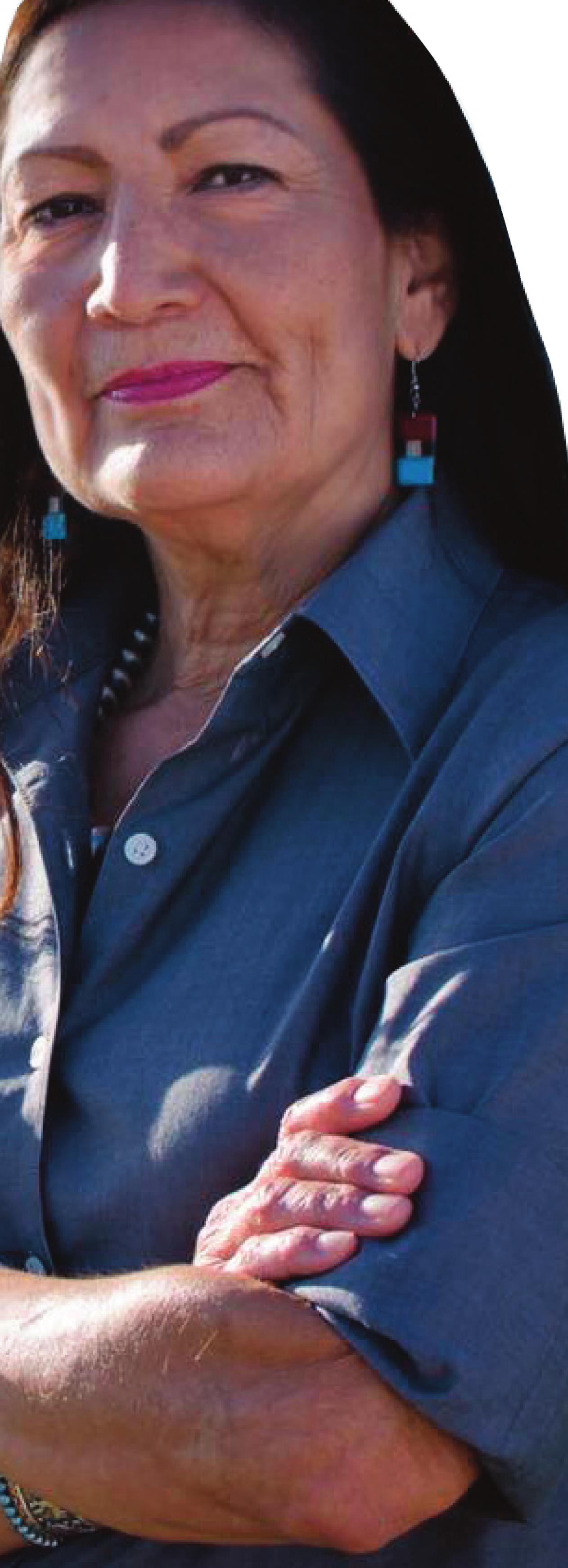
PUEBLO OF LAGUNA, N.M. – Daughter of the Pueblo of Laguna, United States Representative Debra Haaland (D-NM) has been confirmed as Secretary of the Interior.
“If I am confirmed as secretary, I would be serving at the pleasure of the President and it would be his agenda that I would move forward,” Haaland told the United States Senate during the confirmation debate. Throughout the nomination process, Haaland told the Senate that she would reach across the aisle and speak with both Republicans and Democrats, recognizing that her responsibilities are to all the people of the country.
New Mexico’s Junior Senator Ben Ray Lujan wore a turquoise Zia necklace while he presided over the March 15 hearing, dropped the gavel, and read, “The yeas are 51, the nays are 40. The nomination is confirmed.”
“Thank you to the U.S. Senate for your confirmation vote today. As Secretary of [the Interior], I look forward to collaborating with all of you. I am ready to serve,” Haaland said in a statement on Twitter following the historic vote.
“The Pueblo of Acoma celebrates the appointment of the first Native American Cabinet Secretary in U.S. history,” said Pueblo of Acoma Governor Brian D. Vallo in a March15 press release.
“‘Dawee’ (Thank You), Secretary Haaland, for setting a strong example for every Native American, every child, and all women and girls, that even the biggest dreams and greatest aspirations can be achieved. There is a brighter future for people of every race, religion, and culture because of today’s momentous confirmation of Secretary Debra Haaland. Be Fierce!”
Making history
Haaland is now the first Native American cabinet secretary in history. This is not, however, the first glass ceiling she has broken in her life. Haaland made national news in 2018 as one of the first female Native American elected to the U.S. Congress; Rep. Sharice Davids (D-Kansas) won her congressional seat the same year.
Haaland is now one of only two Native Americans to serve in a high station of federal government. The first was former Vice President Charles Curtis, a Republican from the Kaw Nation who served under former President Herbert Hoover from 1929-33, almost 100 years ago.
“The historic nature of my confirmation is not lost on me, but I will say, it is not about me. Rather, I hope this nomination would be an inspiration for Americans -- moving forward together as one nation and creating opportunities for all of us,” Haaland said.
Getting to the vote
The confirmation process for Secretary of the Interior was long and grueling for Haaland. It began with the Dec. 17 announcement by then-President-Elect Joe Biden that she was his pick to lead the Department of the Interior and Haaland accepted the nomination. Because of the political upheaval in the nation’s capital, several cabinet nominees were not confirmed before the January presidential inauguration. Usually, numerous cabinet confirmation hearings are completed before the first week in January following the November elections.
The Secretary of Interior nomination proceeded following a simple majority vote by the Senate Committee on Energy and Natural Resources hearing held on February 23 and 24. This committee is structured with 20 voting members, 10 Republicans and 10 Democrats. After taking a battering from Ranking Member Sen. John Barasso (R – Wyoming) on her record of support for the Green New Deal, Haaland was able to convince Sen. Lisa Murkowski (R – Alaska) that she was right for the job. Haaland’s nomination survived the first round of votes, 11-9.
The next round came in the form of cloture. The United States Senate is a c h a m - b e r that was specifically designed to be slower than the House of Representatives; cloture is – very simply – a vote that must pass prior to the next step. Cloture effectively ends debate, and in the Senate a motion cannot receive a vote without debate. Senate Majority Leader Chuck Schumer (D – New York) filed cloture on March 11. During this procedural vote, four Republican senators signaled support for advancing Haaland’s nomination: Senator Lindsey Graham of South Carolina, Sen. Susan Collins of Maine, and Sens. Murkowski and Dan Sullivan of Alaska all voted in favor in of the nomination. Several Republicans said that they would oppose the vote. It appeared that Haaland no longer faced sufficient opposition that could stop her confirmation.
Cloture was required for this vote because Senator Steve Daines, Montana, and Sen. Cynthia Lummis, Wyoming, put holds on the nomination. A “hold” is a 30-hour period that must be used for debate before any other action can take place. Daines explained on Twitter these holds are because Haaland, “opposes pipelines & fossil fuels, ignores science when it comes to wildlife management & wants to ban trapping on public lands.” [sic.]
On Monday, 1 p.m. Mountain Standard Time, the United States Senate met to finalize debate and vote on Haaland’s nomination. New Mexico Junior Senator Lujan presided over the vote and affirmed the final tally. With the same four Republicans who voted to invoke cloture supporting her in this final vote, the tally came out to 51-40 in favor of the Haaland; nine members did not vote. Haaland’s confirmation received bipartisan support.
What is the Interior Department?
The US Department of the Interior is one of only four federal agencies that manages public lands. The Department manages around 640 million acres and is responsible for administrating those lands, this includes approving or denying oil and gas drilling permits. Given her endorsement of the Green New Deal, the fossil-fuel industry adamantly opposed Haaland’s nomination.
Putting fears to rest, Haaland cautioned against stopping the use of fossil fuels, telling senators that oil and gas will remain important in the U.S.
“There’s no question that fossil energy does and will play a major role in America for years to come,” Haaland explained and added that climate change is the “challenge of our lifetime.”
The DOI is also responsible for national parks and wildlife refuges, which includes more than 600 million acres of public land the department oversees.
Secretary Haaland will be central to implementing President Biden’s plan and this country’s ability to combat climate change.
This Department also handles the relationships between the federal government and almost 600 federally-recognized sovereign tribes, most of which supported Haaland’s advancement to the post. As a member of the Pueblo of Laguna, Haaland is the first Native American to hold the position, as well as being the first Native American to ever hold a position in the president’s cabinet.
Special election
As Secretary Haaland moves into her new post, she leaves a giant hole in New Mexico’s Congressional Delegation. New Mexico Governor Michelle Lujan Grisham must issue a proclamation for a special election to fill this empty seat.
Article I, Section 2, Clause 4 of the United States Constitution says that all vacancies in the House of Representatives must be filled by these special elections.
After the vote
“This is a proud and historic day for indigenous peoples everywhere, for New Mexico and for the United States,” Governor Lujan Grisham said in a press release, “Secretary Haaland has made history. I could not be more proud to know her as a colleague and friend, fighter for all and a believer in creating a more just and equitable society.”
The governor continued, “Her leadership at [the Interior Department] will not only help reverse the harmful policies of the last four years but chart a new, balanced and productive course for the future. I look forward to working with the secretary on the issues that matter to tribes and pueblos, and to all New Mexicans.”
Senate Majority Leader Schumer said after the confirmation vote, Haaland’s nomination is a “huge step forward. Now it creates a government that more embodies the full richness and diversity of this country … We know for so long, the Native American community was treated badly and we have a long ways to go.”