
TULAROSA – From confusing websites to fraudulent phone calls and even people knocking on doors, those seeking to take advantage of New Mexicans affected by nuclear radiation are coming out of the woodwork with silver tongues and outlandish offers.
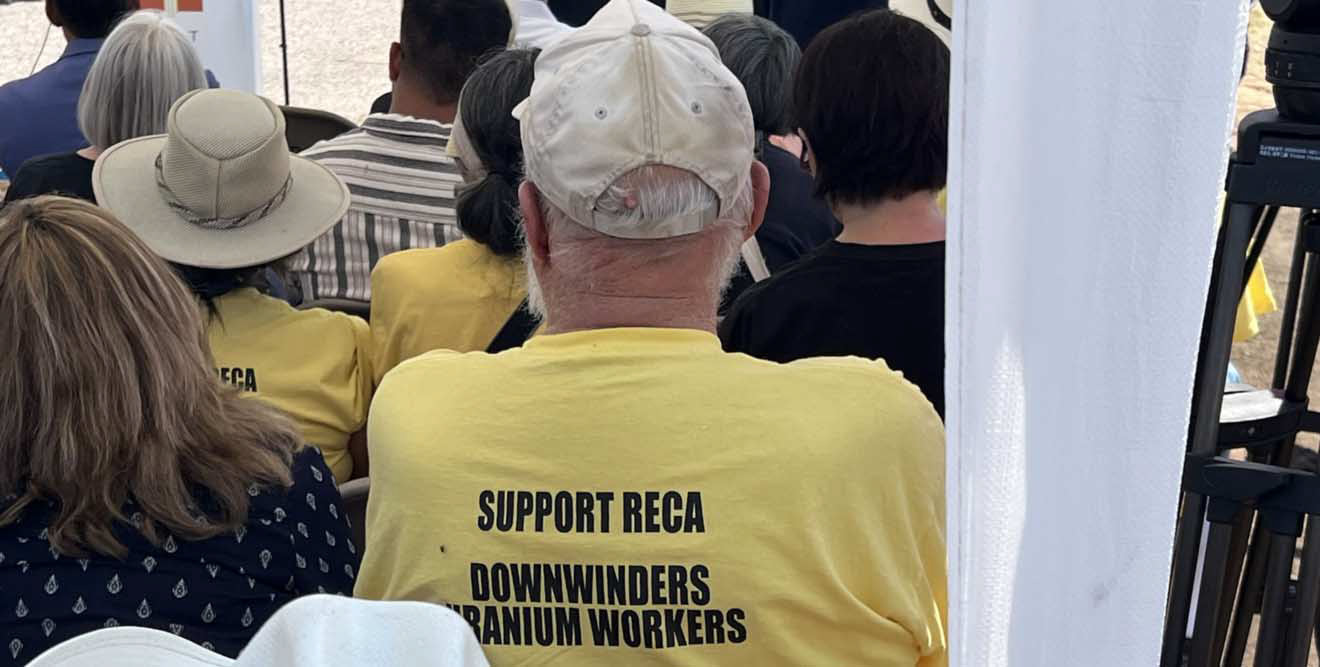
On July 3, Congress passed an expansion and extension of the Radiation Exposure Compensation Act that adds New Mexico to a previously expired RECA program and increases a one-time reparations payment to people exposed to radiation from nuclear testing, a group often referred to as “downwinders.”
The law allows for a lump-sum payment of $100,000 to qualifying individuals. The expanded eligibility covers those affected by certain cancers and diseases who lived in New Mexico during a specific time period in the mid-20th century.
Advocates have said the expanded law was a big win for New Mexicans affected by nuclear testing and uranium mining. But they’re also cautioning residents to not fall for potential scams that have popped up prolifically since the law was passed.
Congressman: Watch out for possible scams
U.S. Rep. Gabe Vasquez of New Mexico’s 2nd Congressional District said he’s had calls from constituents approached by people claiming to be attorneys and offering to assist with RECA claims for a fee.
“That is something we don’t advise anybody in New Mexico to do,” said Vasquez, a Democrat whose district covers much of Southern New Mexico.
Although it is not improper for claimants to contract with licensed attorneys to help file a claim, in exchange for a percentage of the potential financial reparations, processes aren’t in place on the federal level to start submitting applications, officials said.
Given the newness of the law, the Department of Justice hasn’t yet issued guidance about how to submit these claims to RECA. It’s completely premature for any RECA claimant to enter into any type of agreement with an individual or organization at this point, Vasquez said.
“What a lot of predatory folks are doing is they want a cut of this money that is rightfully due to RECA claimants,” he said.
As a delegation, New Mexico lawmakers are pushing the DOJ to put out the guidance as quickly as possible. When that is released, state officials will be making sure information and technical assistance is available to help fill out claims. Vasquez’s office will offer mobile office hours to help put claims together.
“Anybody who is being charged a fee for submitting an application that has no guidance yet is experiencing an unfair practice,” Vasquez said. “People can make that decision later on, but as of today, those folks should try to be patient.”
Deadline to file a RECA claim
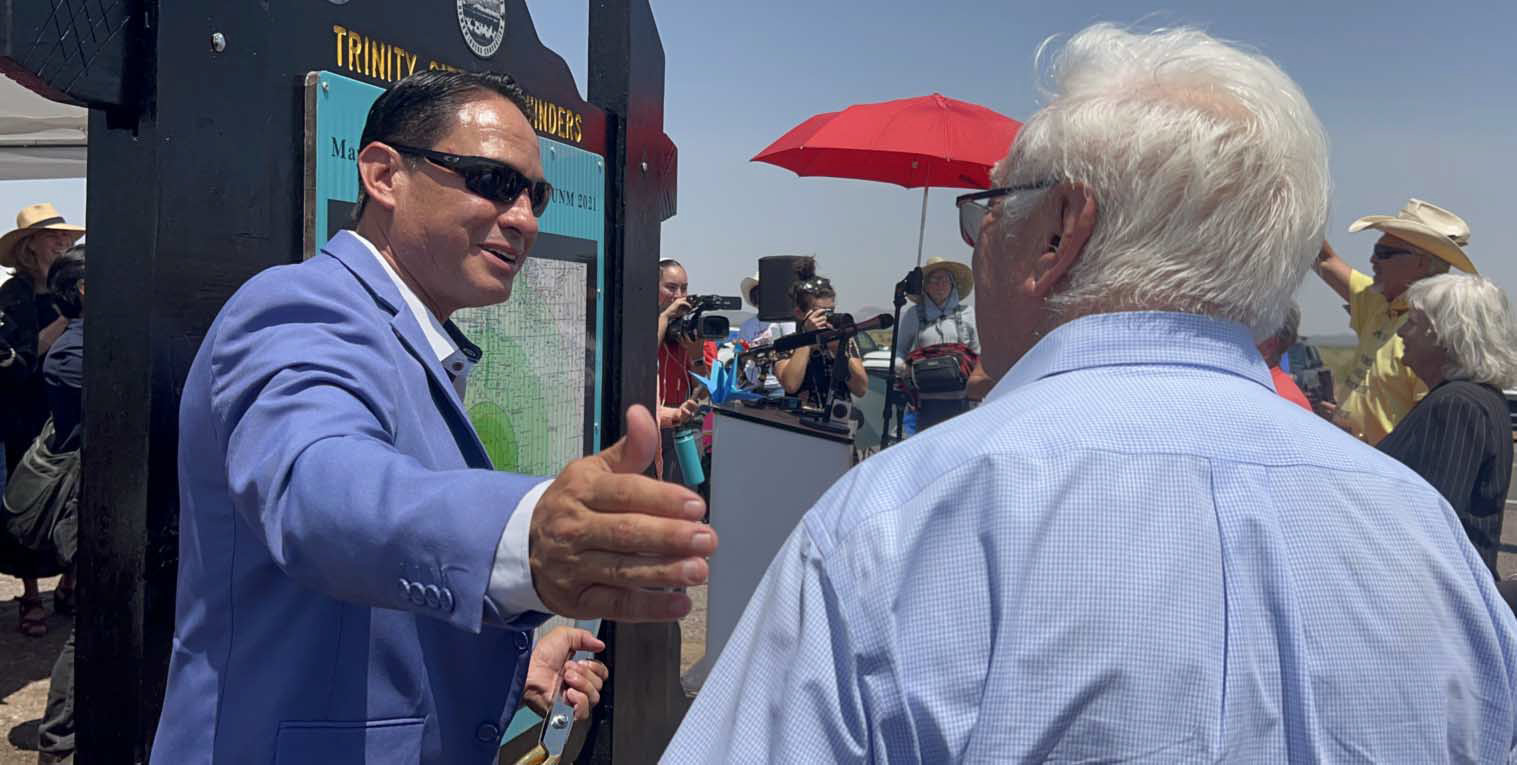
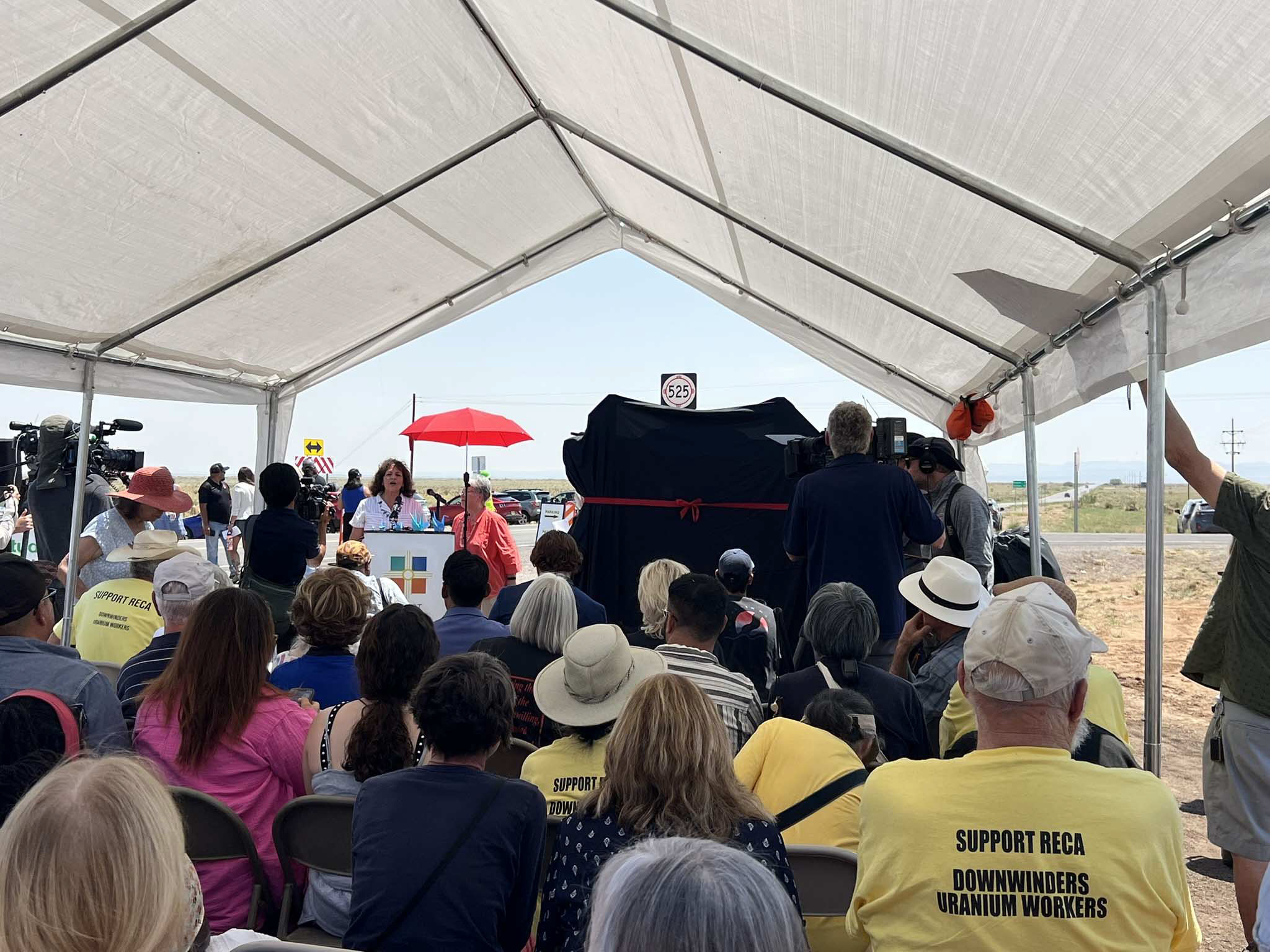
July 16 marked the 80th anniversary of the U.S. government’s detonation of the world’s first nuclear device at Trinity Site, located about 35 miles south of Socorro and 50 miles north of Tularosa.
RECA compensation for downwinders across New Mexico and other locations across the country was approved as part of the “Big Beautiful Bill.”
The expanded eligibility for filing a downwinders compensation claim covers people who lived in any county in New Mexico during the designated time frame and got one of the cancers listed in the bill. Eligibility is not limited to people who lived near Trinity Site.
Tina Cordova, cofounder of the Tularosa Basin Downwinders Consortium, explained the law’s extension allowing for New Mexicans to file claims lasts only through Dec. 31, 2027. Claimants must file before then to have a chance at receiving compensation.
People who are eligible as downwinders must have lived, worked or gone to school in New Mexico for at least one year between Sept. 24, 1944 and Nov. 6, 1962 and have had at least one of the 19 compensable cancers, according to a notice from U.S. Sen. Ben Ray Luján.
In addition to the downwinders, individuals in the northwest part of the state who worked in uranium mines also are included in the July 3 expansion. They qualify for a larger amount of compensation, and there are different ailments on the list for qualification.
Cordova said DOJ is in the process of re-establishing staff and setting up the system for people to apply for compensation, given that a prior version of RECA expired in 2024. In addition to New Mexicans, the new expansion adds a cohort of people in zip codes around St. Louis, Kentucky and Tennessee who aren’t downwinders of a test site but are downwinders of nuclear storage or waste sites. The DOJ has to set up a new program to address that cohort, as well, which holds up the process.
The DOJ website says it’s in the process of developing an online claims portal for the expanded RECA law. It’s expected to be available in December.
‘People need to sit tight and be patient’
One of the most important things to remember, Cordova said, is if you submit a claim right now, it will be turned down automatically. And that limits future chances to file a claim.
“If you submit a claim and it’s rejected, there are three opportunities, then you are never allowed to submit again,” she said. “People need to sit tight and be patient.”
She said people don’t need to hire an attorney or outside organization to file a claim. It’s about accessing documentation and filling out paperwork, and there will be people trained to help with the process.”
“It’s pretty straight forward,” she said.
Attorneys can charge a fee of 2 percent when they help with a claim, but if that claim is rejected (and it will be if filed before the process is opened), they can charge 10 percent on the next filing.
Cordova said she is hearing from people who are getting phone calls from people saying: “I understand you had cancer, and we can help you qualify for RECA.” She is concerned about how those companies are getting medical records. She advises using plenty of caution in accepting any offers. Scammers could be trying to take advantage of New Mexicans.
“If you turn over all this sensitive information, you don’t even know who you are turning it over to,” she said. “It could be people trying to steal identities, and you are likely going to get scammed. No one should be working with any organization outside of New Mexico.”
horrible’ Cordova and TBDC worked for more than 20 years to get compensation for the downwinders of the Trinity Test in southern New Mexico, and she is horrified about the apparent misdirection that is happening to people.
“It’s horrible because I think people feel like they have waited so long they just want to do it,” she said. “They are afraid that there will be no money. But there is going to be adequate resources, both in help to file claims and in the money that is available.”
Loretta Anderson is cofounder of the Southwest Uranium Miners Coalition Post-71 and an adamant advocate of RECA compensation for affected miners.
“I cannot believe it,” she said. “I am amazed how people have just jumped on this and they are just scamming out people. They are coming door to door (at Laguna Pueblo), harassing with phone calls and emails and even having meetings in the Grants area.”
Entities from out of state, including attorneys and home health organizations, are offering to share information and sign people up for RECA compensation. Home health organizations are trying to take advantage of the fact the compensation for the miners includes health care, she said. Anderson, too, emphasized the system is not ready to submit claims.
She said some people are being told the only way to apply is with a qualified attorney, which is not true.
“It’s just so disheartening, all these years we worked so hard,” Anderson said. “The ones (organizations) that are from New Mexico are not doing this. It’s coming from the outside. Help do it in the right way, that’s all I’m asking. Don’t deceive our people. They have already been deceived enough.”
If you’ve been targeted with fraud Potentially deceptive websites come up when searching Google and other search engines for keywords like “downwinders,” “RECA compensation,” and “uranium workers.” New Mexicans seeking information on the web should understand that no matter how professional those websites appear, they should not enter any personal information into them, advocates said.
“New Mexicans should be aware that claim filings in New Mexico are not yet available, and anyone claiming the ability to file a claim on your behalf is likely fraudulent,” New Mexico Attorney General Raul Torres said in a news release.
Anyone feeling they have been approached with a fraudulent offer or have encountered undue coercion should contact the Attorney General’s office through a portal at NMDOJ.gov/submit- a-complaint, or by phone at 505-490-4060.
Anderson can be reached at 505-274-1052 for questions regarding uranium miners issues.
The TBDC website is www.trinitydownwinders.co m and will be on track to let individuals know when and how to apply for RECA compensation.
Elva K. Österreich is a freelance journalist working with the Southern New Mexico Journalism Collaborative. For more info, visit www.southNMnews.org.