
Monday afternoon, the State of New Mexico took advantage of updated US Environmental Protection Agency rules that will allow the state to sue over the federal government mishandling and failures with “forever chemicals” such as PFAS that are having a negative impact to the local environment and local health of residents.
New Mexico had been working to address the PFAS health issues in the state, and with the new rules, the state can more forcefully push for the federal government to clean up the chemicals.
According to the National Institute of Environmental Health Sciences, PFAS is scientifically known as “Perfluoroalkyl and Polyfluoroalkyl Substances.” In a statement, NIEHS explained, “PFAS molecules have a chain of linked carbon and fluorine atoms. Because the carbon-fluorine bond is one of the strongest, these chemicals do not degrade easily in the environment.”
The amended complaint highlights several new elements to the state’s claims:
• Expanded Contamination Sites: The complaint now includes Holloman Air Force Base, Kirtland Air Force Base, White Sands Missile Range, and Fort Wingate, in addition to the previously listed Cannon Air Force Base.
• New Defendant: The U.S. Department of the Army has been added as a defendant for its alleged awareness of PFAS contamination.
• Seeking Relief: The complaint seeks costs, damages, and other relief from the Department of Defense under the latest U.S. Environmental Protection Agency (EPA) PFAS regulations.
“We applaud the EPA’s listing of certain PFAS, or 'forever chemicals,' as hazardous substances under the Superfund statute,” said Attorney General Raúl Torrez. “This enables us to pursue monetary damages and costs at federal facilities, as stated in our amended complaint. We are committed to holding all responsible parties, including federal agencies, accountable for their contamination to protect public health and safety.”
“For over five years, the U.S. Department of Defense failed to take accountability for PFAS clean-up in New Mexico – leaving New Mexicans with a legacy of toxic PFAS pollution to shoulder,” said New Mexico Environment Cabinet Secretary James Kenney. “Thanks to the U.S. Environmental Protection Agency’s science-driven leadership on PFAS, New Mexico will now hold the U.S. Department of Defense accountable for the monetary costs of clean-up and damages to our environment.”
“The releases of PFAS into the ground surrounding Cannon Air Force Base and other DOD facilities have injured the most valuable natural resource on Earth – our water. PFAS has now contaminated freshwater aquifers on which the communities and hardworking people of New Mexico depend,” said New Mexico’s Natural Resources Trustee Maggie Hart Stebbins. “Our residents suffer when they can’t use that groundwater and it’s time for the federal government to compensate communities that are bearing the burden of its pollution.”
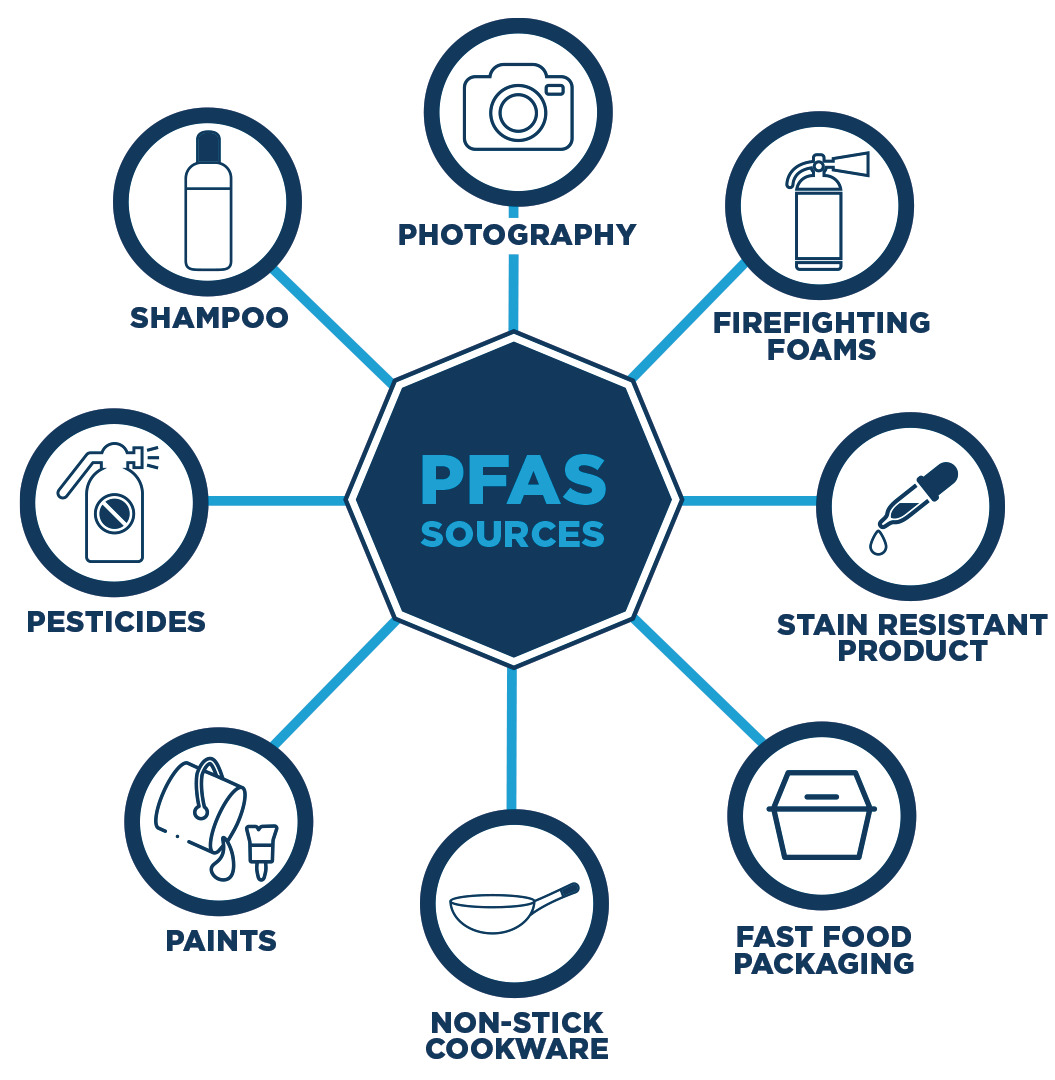
Developed in the 1940s, PFAS chemicals have been widely used for decades in firefighting foams and various water and grease-proof products like nonstick cookware, carpets, clothing, and outdoor gear. Because of their persistence in the environment and resistance to degradation, they are known as “forever chemicals.” PFAS contamination affects air, soil, surface water, groundwater, drinking water, wetlands, and other natural resources. Exposure to PFAS has been scientifically proven to increase the risk of liver damage, thyroid disease, obesity, infertility, and cancer.
The amended lawsuit, leveraging a newly finalized EPA rule effective July 8, 2024, allows New Mexico to recover cleanup costs and damages for PFAS contamination. The EPA rule designates two widely used PFAS chemicals, perfluorooctanoic acid (PFOA) and perfluorooctanesulfonic acid (PFOS), as hazardous substances under the Comprehensive Environmental Response, Compensation, and Liability Act (CERCLA). This ensures that polluters are responsible for cleaning up their contamination, protecting communities from the health risks posed by these chemicals.
The filing makes New Mexico the first state in the U.S. to utilize this new EPA rule, positioning the state to hold the Department of Defense accountable for paying for the cleanup of affected areas, including public and private water sources both on and near federal military bases. The continued PFAS contamination presents an imminent and substantial endangerment to public health and the environment unless immediate action is taken.
Editor’s Note: the following is the press release from the New Mexico Department of Justice about this issue and the rule change.
New Mexico seeks costs and damages for PFAS contamination from the U.S. Department of Defense under new U.S. Environmental Protection Agency rule.
The New Mexico Environment Department (NMED), New Mexico Office of Natural Resources Trustee (NMONRT), and the New Mexico Attorney General (NMAG) today [July 8] amended New Mexico’s lawsuit against the United States regarding per- and polyfluoroalkyl substances (PFAS) contamination present in and around military communities across New Mexico.
Notably, the amended lawsuit utilizes a newly-finalized U.S. Environmental Protection Agency (EPA) rule that went into effect on July 8, 2024, allowing the State of New Mexico to recover the costs of cleanup actions and monetary damages for natural resources.
“We applaud the EPA’s listing of certain PFAS, or 'forever chemicals,' as hazardous substances under the Superfund statute,” said Attorney General Raúl Torrez. “This enables us to pursue monetary damages and costs at federal facilities, as stated in our amended complaint. We are committed to holding all responsible parties, including federal agencies, accountable for their contamination to protect public health and safety.”
PFAS are a group of manmade chemicals used in various products, including food packaging, nonstick pans, and aqueous film forming foams (AFFF) used to extinguish fuel-based fires. Growing concerns about PFAS contamination are driven by evidence that exposure to some PFAS chemicals can lead to adverse health effects such as increased cholesterol, reproductive problems, and cancer. In addition to its effects on humans, PFAS have also been documented to affect wildlife, especially birds, leading to decreased hatching rates and overall destabilization of fragile ecosystems.