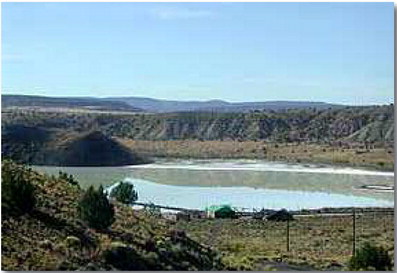
ZUNI SALT LAKE – The United States Congress is debating a $685 million bill to support and protect the heritage of Zuni Salt Lake, just south of Cibola.
The bill is a significant move towards ensuring water security and upholding tribal sovereignty, U.S. Representative Gabe Vasquez (D-N.M.) and U.S. Senator Martin Heinrich (D-N.M.) introduced the Zuni Indian Tribe Water Rights Settlement Act during a hearing in the House Natural Resources Committee. The legislation, co-sponsored by U.S. Senator Ben Ray Luján (D-N.M.) and U.S. Representatives Melanie Stansbury (D-N.M.) and Teresa Leger-Fernandez (DN. M.), aims to address long-standing water rights issues for the Zuni Tribe.
The bicameral bill, which proposes $685 million in federal funding, seeks to establish a trust for sustainable water management and infrastructure development.
According to a statement from Rep. Vasquez, this move not only upholds the federal government’s trust responsibility but also protects the sacred Zuni Salt Lake. The legislation ratifies the settlement between the Federal Government, the State of New Mexico, and the Zuni Tribe, affirming their water rights for various uses, including irrigation, livestock, storage, and domestic purposes.
“I will always advocate for our Tribal communities in Congress,” stated Congressman Vasquez. “I’m proud to work with the delegation on this settlement to provide essential resources to support the Zuni’s water infrastructure, protect Zuni Salt Lake, and uphold their sovereignty. This bill is a meaningful step toward honoring our commitments to the Zuni Tribe and ensuring all New Mexicans have access to safe water.”
Senator Heinrich echoed these sentiments, emphasizing the urgency of the legislation. “By approving this negotiated water settlement, we can finally unlock critical water infrastructure funding and resources that will allow the Zuni Tribe to access and use the water they own,” Heinrich said. “Especially as we confront the impacts of climate change on our water supplies, these water settlements are absolutely essential to deliver long-term water security to Tribes and all of our communities in New Mexico.”
Advocacy
Governor Arden Kucate of the Zuni Tribe and Congressman Vasquez testified at the hearing, advocating for the bill’s immediate passage. “The Zuni Indian Tribe Water Rights Settlement Act would help us restore our river, provide for our people, and build the necessary infrastructure for our future,” Governor Kucate said.
The Zuni Indian Tribe Water Rights Settlement Act outlines a comprehensive framework designed to ensure the sustainable management and development of water resources for the Zuni Tribe. The legislation is structured to provide both immediate and long-term benefits, addressing critical needs and future challenges. Key aspects of the bill include:
1. Establishment of a Settlement Trust Fund:
The bill mandates the creation of the Zuni Tribe Settlement Trust Fund, managed by the Secretary of the Interior. This trust fund is divided into two main accounts: the Zuni Tribe Water Rights Settlement Trust Account and the Zuni Tribe Operation, Maintenance, & Replacement Trust Account.
The trust fund will receive $685 million in federal funding, which will be used to finance various water infrastructure projects and operations essential for the Tribe's water management.
2. Funding Allocations for Water Infrastructure Projects:
The Zuni Tribe Water Rights Settlement Trust Account will finance the planning, permitting, designing, engineering, constructing, reconstructing, replacing, rehabilitating, operating, or repairing water production, treatment, or delivery infrastructure. This includes domestic, municipal supply, and wastewater infrastructure.
Additional funds will support irrigation, livestock, and agricultural improvements, as well as the acquisition of water rights and land, enhancing the Tribe's ability to manage its water resources effectively.
The Zuni Tribe Operation, Maintenance, & Replacement Trust Account is dedicated to covering costs related to the operation, maintenance, and replacement of water infrastructure. This ensures that the Tribe can maintain their water systems efficiently and sustainably.
3. Environmental Compliance Measures:
The bill emphasizes strict adherence to federal environmental laws, including the Endangered Species Act, the National Environmental Policy Act, and other relevant regulations. Both the Tribe and the Secretary of the Interior are responsible for ensuring that all water-related projects comply with these laws.
This includes preparing necessary environmental documents and conducting independent evaluations to safeguard environmental integrity during project implementation.
4. Protection of Zuni Salt Lake and Surrounding Sanctuary:
The legislation explicitly protects the Zuni Salt Lake, a site of immense cultural and spiritual significance to the Zuni people. Approximately 217,037 acres, including a mixture of private, Tribal trust, state, and Bureau of Land Management-managed lands, are designated as the Zuni Salt Lake and Sanctuary.
The bill withdraws around 92,364 acres of federal land within this sanctuary from public entry, mineral and geothermal leasing, and other forms of disposal to preserve its environmental and cultural values.
Management of these lands will be conducted in consultation with the Tribe, ensuring that activities do not compromise the sacred nature of the lake or the quality and quantity of its water resources.
5. Future Land Transfers and Trust Land:
On the enforceability date, specified federal lands will be taken into trust for the benefit of the Tribe, subject to valid existing rights and contracts. The Bureau of Indian Affairs will assume management of these lands, ensuring that any financial benefits from existing rights or leases are directed to the Tribe.
The bill also provides for the transfer of future acquisitions of land into trust for the Tribe, ensuring that these lands are free from liens and environmental hazards.
6. Waivers and Releases of Claims:
The bill includes provisions for the Zuni Tribe and the United States, acting as trustee for the Tribe, to waive and release claims to water rights within the Zuni River Stream System. This settlement resolves longstanding disputes and provides a legal framework for water rights and resources management.
These waivers take effect on the enforceability date, ensuring that all parties adhere to the terms of the settlement and that the Tribe receives the benefits outlined in the agreement.
7. Miscellaneous Provisions:
The bill clarifies that it does not waive the sovereign immunity of the United States and ensures that the rights of other tribes are not adversely affected.
In case of any conflict between the agreement and the bill, the provisions of the bill will prevail.
The legislation also stipulates that no per capita distributions will be made from the trust fund to individual Tribe members, and that the Tribe retains title to any infrastructure projects funded by the settlement.
The hearing also highlighted the Rio San José and Rio Jemez Water Settlements Act of 2023, which seeks to codify settlements for the Pueblos of Acoma, Laguna, Jemez, and Zia. Governor Randall Vicente of the Pueblo of Acoma provided testimony on behalf of his Tribe.