GRANTS, N.M. — The New Mexico Public Education Department is launching a 12-stop community tour this August to gather public input on its Martinez/Yazzie Action Plan, a court-mandated response to New Mexico’s failure to provide a sufficient education to Native American, English learner, low-income, and special education students.
According to PED, this public process— backed by strategic partners including the Los Alamos National Laboratory Foundation, the Legislative Education Study Committee, and research firm WestEd—intends to focus on and understand the lived experiences of those most impacted by the state’s systemic shortcomings.
It also comes as districts like Grants-Cibola County Schools (GCCS) continue working to close deep-rooted academic equity gaps.
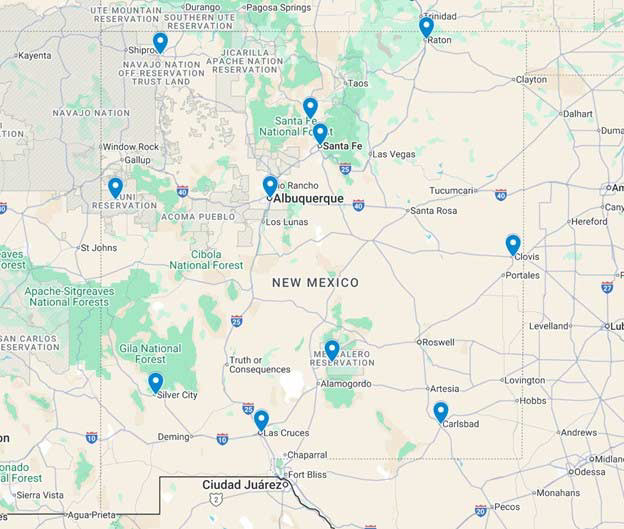
The regional tour includes meetings in Farmington, Las Cruces, Zuni, and Albuquerque (August 20), among others. Interpretation services, childcare, and meals will be offered to ensure broad accessibility. Importantly, PED has not announced where any of these meetings will take place.
What Is the Martinez/Yazzie Action Plan?
The plan stems from the landmark 2018 court ruling that found New Mexico in violation of its constitutional obligation to offer all students a “uniform and sufficient” education.
Based on years of data showing poor student proficiency in core subjects like reading, math, and science, the state judiciary declared New Mexico was failing to meet its constitutional obligations to its students, Article XII sec. 1, which states, “A uniform system of free public schools sufficient for the education of, and open to, all the children of school age in the state shall be established and maintained.”
Five key pillars guide the PED and LANL’s plan, according to their press release: 1. Equitable access to high-quality instruction 2. Access to culturally and linguistically responsive educators 3. Academic, social, and behavioral support services 4. Fair and effective funding 5. Data and accountability systems for improvement These five pillars were not selected by accident. These were the five areas specifically identified by the court to prove New Mexico was failing to meet its constitutional obligations to its students.
With the state again ranked 50th in education by the Nation’s Report Card and student proficiency well below national norms, PED says it is prioritizing transparency and public input.
GCCS 2024–2025 was a Mixed Picture of Progress
In Cibola County, those systemic challenges are visible—but so is momentum.
After a full academic year of testing, targeted intervention, and curriculum alignment, Grants-Cibola County Schools showed measurable student gains in math and reading.
District-wide, in GCCS, reading proficiency across grades K– 12 climbed from 26.6 percent at the start of the year to 33 percent by spring, and math jumped from 7.9 percent to 25 percent in grades 3–8 alone.
Kindergarten math proficiency grew from 19.8 percent to 44 percent, and in first grade, math jumped from 28.3 percent to 51 percent. Reading in kindergarten surged by nearly 13 points. However, second grade math remained low, improving only from 4.1 percent to 9 percent.
Among high school students, math proficiency soared from 27.5 percent to 53 percent over the course of the year, with 12th graders reaching 68 percent by year’s end. Reading across grades 9– 12 rose from 27.4 percent to 43 percent, although 12th grade scores dipped slightly after a strong midyear performance.
Equity Gaps Remain
Despite the encouraging gains, GCCS still reflects the very disparities the Martinez/Yazzie ruling aimed to address.
• American Indian students, who make up a large share of Cibola’s enrollment, ended the year at 20 percent math proficiency and 25 percent in reading, below district averages.
• Hispanic students, by contrast, reached 25 percent in math and 43 percent in reading.
• Caucasian students led all groups with 33 percent in math and 44 percent in reading.
At the tribal level, Laguna and Acoma high schoolers posted some of the strongest gains, finishing the year with math proficiency above 55 percent— a dramatic reversal from previous years.
The Cibola Citizen will continue reporting on the Martinez/Yazzie reform process, including the state’s upcoming release of 2024–2025 NMMSSA test results, which will offer further insights into how schools across the state—including GCCS—are meeting the needs of all students.
For more information or to attend a regional meeting, visit MartinezYazzieActionPlan. or g.
Help LANL understand what education means to you: https://web.ped.nm.gov/m artinez-yazzie-actionplan/ Take the LANL/PED survey: https://survey.alchemer.co m/s3/8382426/Martinez-Yazzie-Call-to-Action Note that to inform LANL and PED of opinions and suggestions, respondents must upload a Microsoft Word document or another type of document.