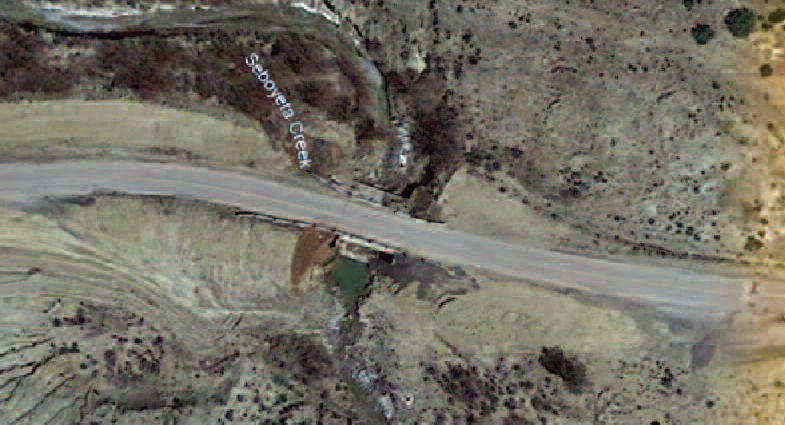
CIBOLA COUNTY, NM — The Moquino Bridge, a vital infrastructure link for the Village of Moquino, has been the focus of intense planning and repair efforts following its collapse in June 2022, and its construction has finally started.
The county discussed the Moquino Bridge construction during the August Coffee with the Manager’s, a monthly meeting between the three government managers in Cibola and the community that takes place the first Thursday of every month at Coyote Del Malpais at 9 a.m.
The Moquino Bridge project has been marked by early detection from passersby on the bridge, an informed county leadership of potential issues and allowed for subsequent swift action.
Moquino Bridge served as the only access point for the small, closeknit community of Moquino. In October 2021, a school bus driver noticed a hairline fracture in the bridge's surface and promptly reported it to Cibola County’s Road Department. This seemingly small observation set in motion a series of critical actions that would later prove essential in preventing a larger disaster.
Moquino is considered a “Census Designated Place” in Cibola County. The community is home to roughly 31 residents, according to US Census data from 2020.
Recognizing the potential risk, County Projects Manager Judy Horacek said the county’s road department quickly responded by creating a bypass road, ensuring continued access to the village while avoiding any immediate danger to the residents.
This foresight was crucial when, on June 27, 2022, a major rainstorm caused the bridge to collapse. Thanks to the earlier efforts, Moquino had a temporary alternative route, and no injuries were reported.
Securing Funding and Overcoming Challenges
After the collapse, Cibola County officials moved swiftly to secure funding for the bridge's repair.
The process, however, was anything but straightforward. The county applied for a state grant, but as is often the case with public infrastructure projects, the journey from application to receiving funds was long and filled with bureaucratic hurdles.
Horacek explained that the initial funding received—$ 2 million—was intended to cover both the design and construction of the new bridge. However, as the project advanced, it became clear that the original cost estimates were no longer sufficient.
“We thought the $2 million would cover design and construction, but it didn’t, so we had to go back to find additional funds,” Horacek said.
This realization led to further delays, as the county had to navigate another cycle of funding requests to secure the additional resources needed to complete the project. This extended the timeline significantly, as securing additional funding is a time-consuming process involving multiple layers of government approval.
Navigating the Procurement Process
Once the necessary funds were in place, the county faced further challenges in the procurement process.
The first bid for the bridge’s reconstruction came in at a staggering $4.7 million, far exceeding the available budget. This prompted county officials to reject the bid and reevaluate their options, underscoring the importance of fiscal responsibility in managing public funds.
The county then reopened the bidding process, eventually receiving five additional bids. Among these, a more financially viable option of $2.9 million was selected, allowing the project to move forward without compromising on quality or safety.
Wendy Self, the county’s Procurement Manager, explained the delicate balance required during the bidding process.
The procurement process is governed by strict laws designed to ensure transparency, fairness, and the responsible use of taxpayer dollars. Self explained one of the key steps in this process is a mandatory 30-day waiting period after bids are solicited, which is required before any proposals can be reviewed. This period is intended to give all potential contractors a fair opportunity to submit their bids, but it also means that progress can be slow, particularly when multiple rounds of bidding are necessary due to budget constraints or other issues.
Even after a bid is selected, the county must ensure that funds are encumbered—meaning they must be legally set aside through a purchase order or contract agreement— before any actual construction work can begin. This additional layer of financial oversight is crucial for maintaining accountability, but it adds more time to the process.
Self said that while these steps are necessary to protect public resources and ensure that projects are completed to the highest standards, they also contribute to the lengthy timelines often associated with public infrastructure projects.
“We have to respect the rules and laws because these are your taxpayer dollars,” Self said.
She also said procurement involves jumping through numerous 'hoops,' from securing bonds to ensuring compliance with every regulation, all of which are essential to avoiding legal challenges and ensuring that the project can proceed smoothly.
“We have to be careful about how much we discuss a potential proposal in a bid because if we get into too much detail, it could give an unfair advantage, which [would] require the process to start over,” Self explained.
County Manager Kate Fletcher said the vigilance from all departments in the county ensured that the government adhered to strict procurement laws, protecting taxpayer dollars and maintaining transparency while continuing the hard work to repair the bridge for residents of Moquino.
Current Progress and Future Outlook
As of July 22, construction on the Moquino Bridge is finally underway, marking a significant milestone in the county's efforts to restore this crucial infrastructure.
The project has been a collaborative effort, bringing together local government officials, engineers, and the community to ensure that the new bridge will be resilient against future challenges.
Fletcher emphasized the importance of careful planning and collaboration throughout the process. “Our job is to be the good stewards of the tax money,” Fletcher said, reflecting the county's commitment to using public funds wisely and effectively.
Moquino