
Within the hallowed halls of that great “Congress in the Sky,” two highly esteemed leaders from the 106th Congress sat staring into their morning beverages and shaking their heads.
“I sure didn’t see that one coming, did you, Pete?”
“Not in a million years, Orrin.” The Radiation Exposure Compensation Act of 1990, authored by the late Sen. Pietro Vichi “Pete” Domenici, RN.M., and cosponsored by the late Sen. Orrin Hatch, RUtah, was never a perfect product – even before it imploded June 7 in the U.S. House of Representatives like a plutonium bomb in the deserts of New Mexico.
The senators worked together on the bill from RECA’s enactment in 1990 through the amendments of 2000, and by mid-May 2001, they were back before the Senate pleading with colleagues to make technical corrections.
During its nearly 34-year history, the government program compensated thousands of individuals who became ill after being exposed to radiation, many unwittingly, while serving the national security interests of the United States.
RECA provided “partial restitution” – a point lawmakers tend to emphasize – in lump sums of $100,000 to uranium miners, mill workers, and ore transporters who were employed in the industry for at least 1 year and, in the case of the uranium miners, were exposed to specified levels of radiation.
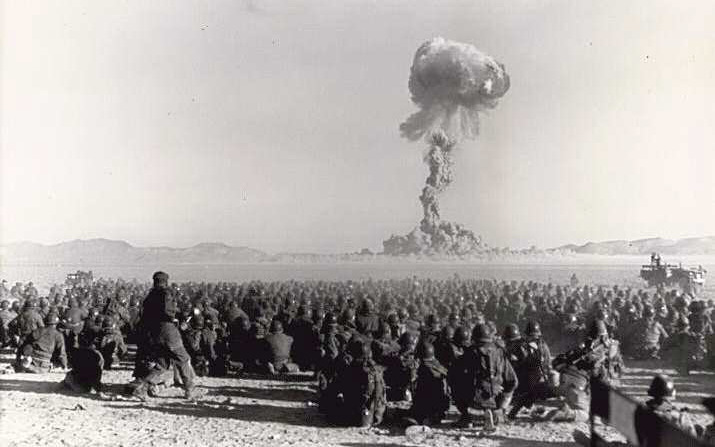
On-site participants present at a test site during an atmospheric atomic weapons test were eligible to receive $75,000. Persons who were present in certain areas north and west of Nevada Test Site during atmospheric atomic weapons tests through World War II and the Cold War were eligible for $50,000 as downwinders.
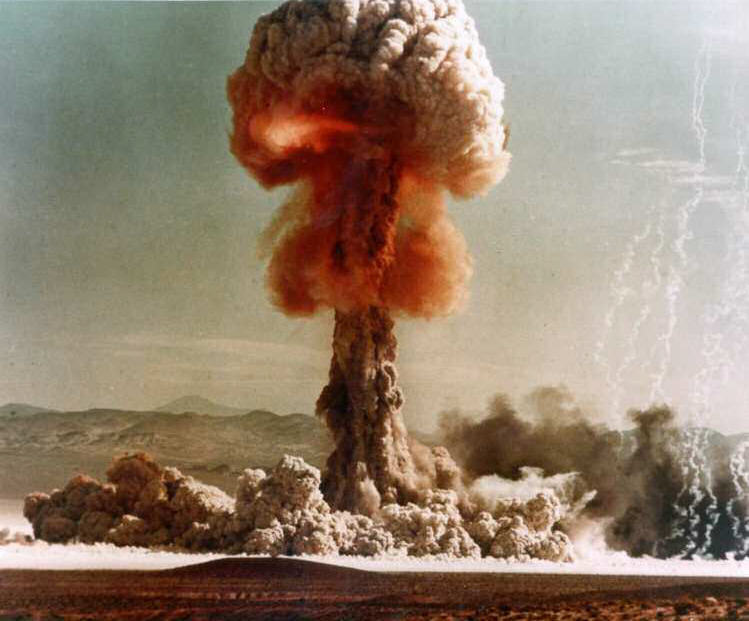
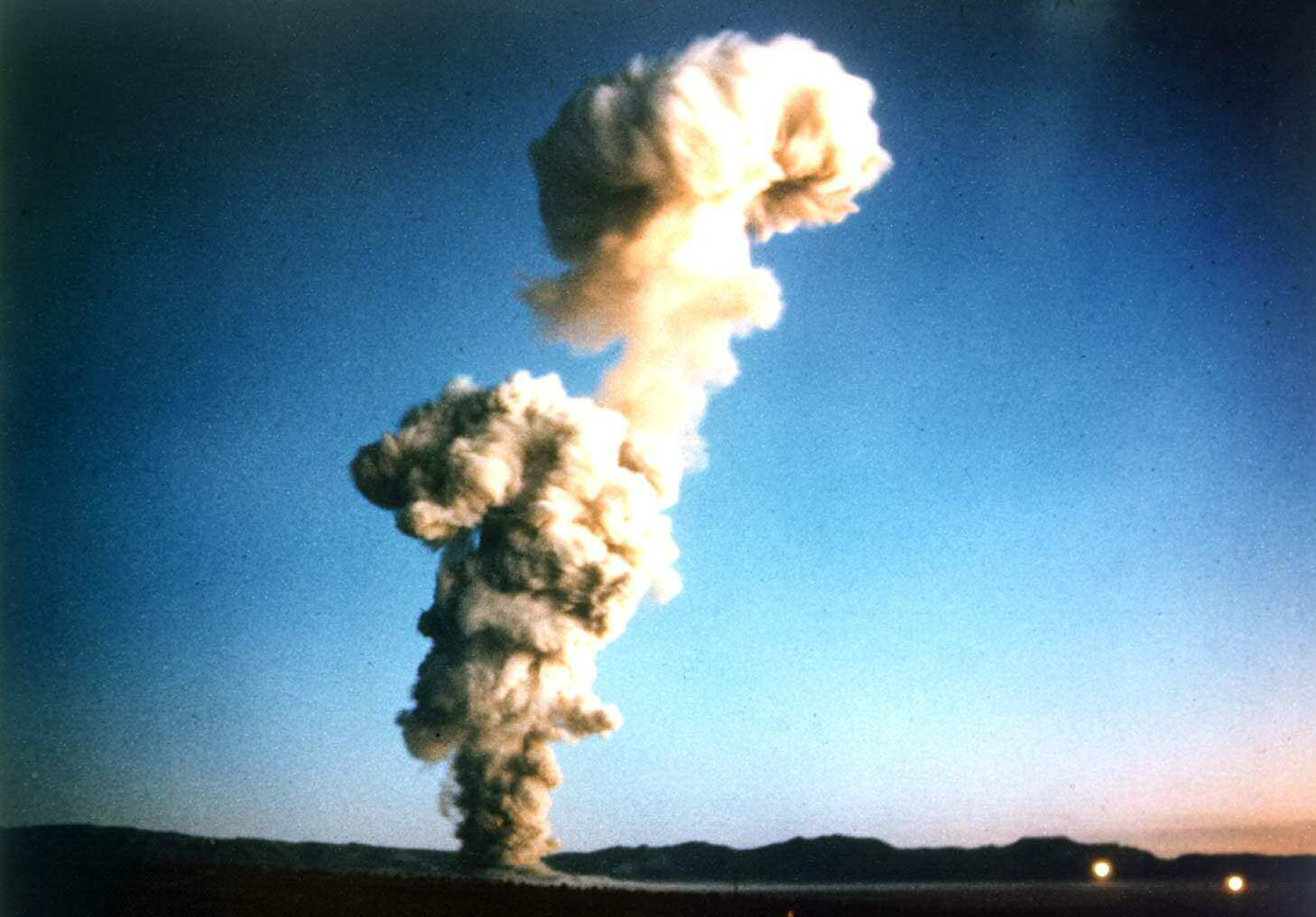
Workers at the Trinity Test Site in Alamogordo, N.M., where the world’s first atomic bomb was detonated July, 16, 1945, were covered by RECA. Downwinders were the exception. They weren’t even a footnote on the compensation page of history.
Don’t hold your breath
The RECA amendments enacted July 10, 2000, broadened the scope of eligibility for benefits to include the uranium mill workers and ore transporters who were not covered in the original law. It also expanded the geographic areas for downwinders and added compensable diseases, meaning more individuals were eligible to qualify, according to the Government Accountability Office.
Although the amendments fixed some problems, it became “painfully clear” that others required immediate or corrective attention, Hatch told the Senate in 2001.
“First and foremost is the fact that the RECA Trust Fund is depleted,” a situation lawmakers could not allow to continue, he said.
Eligible claimants had been receiving “nothing more than a fiveline IOU” from the Justice Department for more than a year, according to Domenici, an “injustice” he said he never imagined when he authored RECA.
He asked Senate colleagues to imagine a nightmare in which they have spent years in the uranium mines helping to build America’s nuclear programs, only to contract a debilitating and, too often, deadly radiation-related disease.
“Your only solace is that the government is going to pay you for this suffering. However, when you open the Justice Department letter that you have long awaited, it reads: ‘I am pleased to inform you that your claim for compensation under the Radiation Exposure Compensation Act has been approved. Regretfully, because the money available to pay claims has been exhausted, we are unable to send a compensation payment to you at this time. When Congress provides additional funds, we will contact you to commence the payment process. Thank you for your understanding.’”
Balancing the scales
In a GAO analysis of the Justice Department’s administration of the Radiation Exposure Compensation Program, released in September 2001, officials told GAO that as a result of the 2000 amendments, claims were being received at a record pace, far exceeding even the initial phase of operations that began in 1992.
On the other hand, the RECA Trust Fund had begun FY 2000 with a total of $11.6 million, which included carryover funds from the previous fiscal year. By May 9, 2000, claims exceeded the amount of funds available. At the end of the fiscal year, 227 claims totaling $19.2 million had not been paid.
Justice had requested $21.7 million be appropriated to the trust fund for FY 2000. Congress appropriated $3.2 million.
Another provision of the 2001 Hatch-Domenici bill dealt with “fairness for the RECA community.”
Hatch said their legislation would ensure that all individuals exposed to radiation as a result of the government’s nuclear weapons production program would be accorded the same level of benefits.
The Department of Defense Authorization Act of 2000, passed the previous fall, created the Energy Employees Occupational Illness
Photo courtesy of National Nuclear Security Administration/ Nevada Site Office Compensation Program. The program, which Hatch supported, established a compensation fund for Department of Energy employees and contract employees who were injured due to exposure to radioactive materials while working at DOE nuclear facilities and weapons testing sites.
Under the Energy program, individuals whose claims were approved would receive $150,000 plus prospective medical benefits.
“These benefits are considerably more generous than those provided under RECA,” Hatch said. “It seems blatantly unfair for the federal government to provide a richer level of benefits to its own employees than for innocent civilians who happened to live downwind from a test site or who worked in one of the mining operations.” Win, lose or draw with so many individuals left out of the original bill and the 2000 amendments, and with RECA’s impending demise on June 7 hanging over the House like so much dead weight, a bipartisan group of lawmakers intent on renewing and improving the public law, went for broke.
Enough kicking the can. They had been down that road.
They wanted the whole enchilada – H.R. 3853, the Radiation Exposure Compensation Reauthorization Act cosponsored by Sen. Josh Hawley, R-Mo., and Sen. Ben Ray Lújan, D-N.M., and they wanted it now – in this lifetime.
Hawley had written a letter to Senate colleagues in February, saying, “We’ve developed the most advanced nuclear weapons on earth, but we cannot forget the working people of this country who were sacrificed for it. If we can send hundreds of billions of dollars in security assistance to foreign nations, we can spend a fraction of that on our own constituents who deserve help.”
The bill passed the Senate March 7 by a 2-1 margin. All they needed now was for House Speaker Mike Johnson, RLouisiana, to call for a vote.
“Every member of Congress owes a debt for the sacrifices made by those impacted by nuclear fallout, including Speaker Mike Johnson, and should act now so RECA does not expire,” Lújan said at a press conference in late May.
Although $100 billion was eliminated from the total cost of the bill by deleting medical coverage for downwinders, Johnson still had a problem with the $50 billion price tag.
In the alternative, he scheduled a vote for the first week of June on a “clean” bill cosponsored by Republican Sens. Mike Lee and Mitt Romney of Utah that would have extended the program two years. The End. Period. No expansion.
Standing together, the lawmakers supporting the Hawley-Lújan resolution refused to back Lee’s bill. In turn, Johnson went toe to toe with lawmakers and settled the matter by refusing to call for a vote on Lee’s extension or Hawley’s expansion.
The Union of Concerned Scientists, a nonprofit organization that spearheaded lobbying efforts on behalf of the grassroots people, alleged in a news release that Johnson refused multiple requests to meet with individuals impacted by radiation exposure from nuclear weapons tests, production and waste.
“We’ve tried everything we could to meet face to face with Speaker Johnson to make our case, and he has put us off at every turn,” Dawn Chapman, co-founder of Just Moms STL (St. Louis), said. “We’ve spent thousands of dollars and weeks away from our families traveling to D.C. to try to meet with members of Congress to get them to care about us.”
As passed by the Senate, the Hawley-Lújan bill would have extended RECA five years, increased compensation for victims, and expanded the scope to include downwinders in additional Western states, including New Mexico. It would have compensated post-1971 uranium workers, as well as residents in Missouri, Kentucky, Alaska, and Tennessee who have suffered from exposure to improperly stored nuclear waste.
Still left out were other areas of the country such as Pike and Scioto County, Ohio; Armstrong County, Pennsylvania; and communities near the Hanford Site in Washington state which also have been adversely affected.
All or nothing
Lee tried, unsuccessfully, to introduce a separate, alternate bill in the Senate in April before resorting to the “extension only” bill to keep the RECA ball in play. His expanded version of the Downwinders Act, S. 4403, would have broadened the scope of RECA benefits to include Missouri residents harmed by Manhattan Project waste, while also addressing the historical oversights in New Mexico and parts of Utah.
Lee’s rationale for not including the other areas was that they needed to follow the science. He also wanted to make sure that RECA didn’t lapse. His father died of cancer in 1996 due to exposure to radiation from growing up in eastern Arizona and spending summers at a small sawmill camp in Reserve, N.M., so Lee knew a thing or two about the importance of those benefits to suffering families.
Lee made a unanimous consent request to the Senate May 23, to take up and pass his bill that very day; however, Hawley objected. “I want to be clear. I will not consent to any short-term stopgap, any half-way measure. It will not pass this floor with my consent,” he said.
“In other words,” Lee told colleagues, “unless you can have all of his bill passed, including the parts that are not scientifically backed – making it impassable in the House – he is not going to let even the victims in Missouri or the victims in New Mexico get covered. That is most unfortunate.”
Hawley said he had just listened to his friend from Utah describe this “eleventh-hour bill” after the Senate has spoken to the issue multiple times. Now his friend was saying they need a clean extension. “There is nothing clean about this bill. No, it leaves Missouri filthy dirty with nuclear radiation,” he said.
“Let’s just remember how it happened. All the way back in the Manhattan Project, the U.S. government used the city of St. Louis as a uranium processing site. And did the U.S. government clean up the nuclear radiation after the fact? No, it did not. Did the U.S. government warn the people of Missouri that they were, in fact, being poisoned by nuclear radiation? No, they did not.
“What they did instead is they lied to the people of Missouri while the nuclear contamination seeped into our groundwater, seeped into our soil. For 50 years and more, the people of St. Louis and St. Charles and large parts of my state have been exposed to nuclear radiation. We have the highest rates of breast cancer in the nation in North St. Louis County. Entire schools cannot go to school because their classrooms are filled with nuclear radioactive material,” Hawley said.
Lújan quoted Sen. Hatch: “Updating this legislation is a moral imperative. RECA, as it is currently written, extends benefits only to uranium miners, millers and transporters who worked until 1972. But an updated bill would extend benefits to those who worked after 1972, many of whom have developed cancer as a result of radiation exposure.”
“Let me repeat that,” Lújan said. “Senator Orrin Hatch said it was a moral imperative to provide justice to what are called post-’71 miners. And what does this (Lee’s) bill offer to these Americans who have suffered for our country?
Nothing. What does this bill offer to downwinders in Arizona, Nevada, Colorado, Idaho, Montana? Again, nothing. Instead, this exercise is an attempt to undermine the strong bipartisan coalition that passed historic RECA legislation.”
With just 18 days to go before RECA’s expiration, Lee noted that the Hawley-Lújan bill was “stalled out” in the House, where it appeared to have no hope of passage. While the expanded Downwinder Act was not the whole bill Hawley wanted, Lee said, “it is something, and it takes care of our three states.”
In most of the other jurisdictions mentioned in the Hawley-Lújan bill, “the scientific data isn’t of the same caliber,” Lee said. “And so until such time as the science catches up, I think it is going to continue to have difficulty passing in the House.”
To their credit, Lee and Romney successfully herded a RECA extension through Congress in 2022. Prior to a vote on that bill, the House Judiciary Committee’s Subcommittee on the Constitution, Civil Rights and Civil Liberties held a hearing in March 2021 to examine the need to expand RECA eligibility.
In his opening statement, Johnson – then the subcommittee’s Ranking Member – appeared to have a “Biden moment,” referring to “atomic” weapons as “automatic” weapons on three occasions. He corrected himself on the second slip.
Johnson referenced a study that had been done since Congress’s “last meaningful amendment” to RECA in 2000.
“This report examined a wide range of items previously identified by Congress and made recommendations, such as the application of a probability-based model for eligibility under RECA. As we consider proposals to expand and extend RECA, we should examine the conclusions of that report as well as expert testimony so as to accurately evaluate what steps should be considered by Congress,” Johnson said.
Due to what appears to be a hiccup in the House video of Johnson’s testimony, the name of the report to which he was referring, if named specifically, is missing from the recording and the transcript in the Congressional Record.