
Edith Iwan, Cibola-McKinley Master Gardener Xeriscape comes from
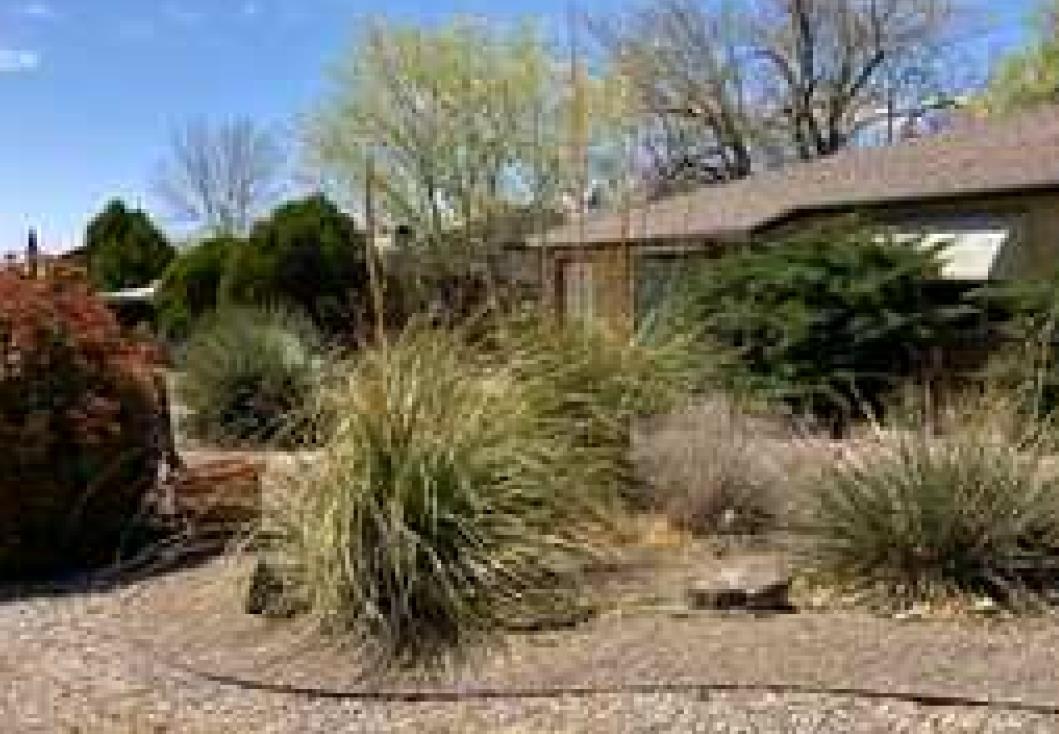
Xeriscape comes from the Greek word “Xeros” that means dry and “scape” refers to landscape – dry landscape. It does not mean a barren rock and gravel landscape. It does mean little supplemental water is needed to maintain the plants included.
Water is an increasing issue in this world and locally. The Rio Grande River is no longer able to provide all the water needs of the cities and farms. Water bills for homes go up every year. There are measures we can take to reduce water use:
1. Reduce the area that is watered regularly.
2. Use “gray water”.
3. Use efficient irrigation systems and scheduling techniques.
4. Use plants adapted to the local climate and survive on less water.
In a traditional yard or landscape in New Mexico, most of the plants and grass comes from regions that have much higher precipitation. Most come from the east or northwest coast of the United States. Others come from central and northern Europe or Asia. There are native or drought tolerant plants that can be used instead of the plants that use a high amount of water. A secondary benefit is that plants with low water requirements often are more adapted to alkaline soils that are typical of what we have in New Mexico.
The concept of Xeriscape is not a single landscape style. It is a concept of water conservation. Any style of landscape can be applied to Xeriscape. They can be formal or natural looking. They can be formal or natural looking: English, Japanese, Southwestern, & others. They all incorporate good horticultural practices and apply them to our unique desert surroundings.
It is spring and time to take a good look at your yard. We all want grass but there maybe an area that is hard to keep green that could be converted to Xeriscape. What about the “hot as hell zone” between the street and sidewalk? It doesn’t have to be just rock, gravel, or concrete. By using plants that are well adapted, mulches that suppress weeds and conserve water, and drip irrigation to make the most use of water, these landscapes can have color and fragrance with much fewer gardening chores. Over the next four
Over the next four weeks I will present more details on how to implement Xeriscape methods.
Edith Iwan is a Cibola-McKinley County Master Gardener who lives and works in Thoreau. As a Master Gardener she assists the County Cooperative Extension Service in providing accurate, research-based gardening information to county residents. If you have any gardening questions, please call the NMSU Cibola County Extension at 505-287-9266 or NMSU McKinley County Extension at 505-863-3432.