
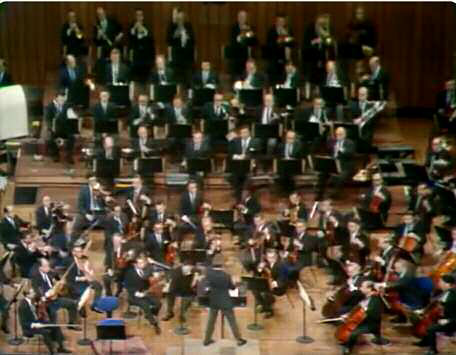
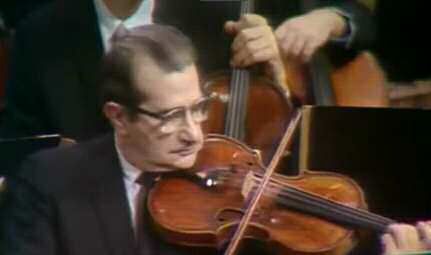
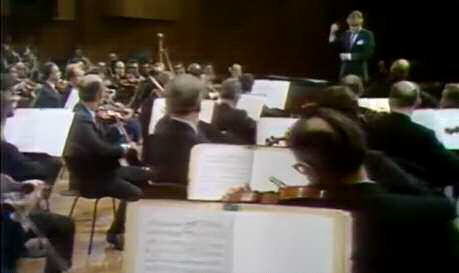
GRANTS, NMBernstein discusses and conducts excerpts from Richard Strauss' 'Don Quixote', subtitled 'Fantastic Variations on a Theme of Knightly Character,' and the variations are, in order: 1. Windmill 2. Sheep 3. Romantic idealism 4. Pilgrims 5. Night watch over armor 6. Dulcinea 7. Pegasus 8. Knight of the White Moon/death scene At the December 25, 1968 performance Bernstein announced this will be his final season as music director of the New York Philharmonic. He didn’t explain why, but it is recorded that his decision was influenced by both artistic challenges and health concerns.
Twenty-five years ago, when he was an assistant director, he stood in for the director Bruno Walter due to his illness. That began Bernstein’s directorial career. That same evening, he conducted the work by Richard Strauss, “Don Quixote”.
“Like the novel by Cervantes, on which it is based, it's funny, wise, romantically warm, and philosophically cool. Very up to date,” said Bernstein, feeling nostalgic. Then, in his love for international influences and connections he continued to explain, “Don Quixote, as the British like to say, or Don Quichotte, as the French and Germans say.”
Strauss’ composition, “Don Quixote”, is known as a tone, or symphonic poem which is intended to suggest the tone of a poem, or other piece of literature in a single movement.
“And what makes Strauss's Don Quixote so remarkable,” continued the maestro, “is the way he has succeeded in catching the literary and pictorial elements of the novel, in all their wit and variety. This tone poem is probably the most literary piece of music ever written. And in it, Strauss gives us a detailed musical picture of this marvelous madman that is almost more vivid than Cervantes's original picture, because of the special power that music has to reach so deeply into us.”
The woodwind section playing the six notes that compose the variations. In the beginning they portray the moments when Quixote is imagining becoming a knight. Some are long and meandering, illustrating musically that he is mentally unstable. Next we are given a section by the strings representing knightly courtesy, and then dignity on a flute, passion with strings again, and finally, the oboe portrays Dulcinea, the woman Don Quixote has fixated his intentions of knightly chivalry upon.
“In his declining years, has become obsessed by the idea of chivalry - that is, gallant knights on horseback, roaming the world, searching out evil, and finding causes to champion, especially the cause of purity, as exemplified by the pure, ideal woman” whom he imagines is Dulcinea.
Don Quixote, the mad knight, is portrayed by the solo cellist of the New York Philharmonic, Lorne Munroe. And he plays a sorrowful portrait of the old knight, but still noble and gallant.
Sancho Panza, Quixote’s “loyal squire, servant, groom, and companion is his master's complete opposite. Down to earth, practical, talkative, and with a certain peasant wisdom.” Panza is portrayed by three instruments; the tenor tuba, the bass clarinet, with “lumpish, oafish” sounds, and a solo viola depicting his “vocal, chattery” side.
All these portrayals are combined with another of Dulcinea, the lady whom Quixote chooses to honor with his chivalrous deeds. He fights a giant, actually a windmill, an army, actually a flock of sheep, and he “defends his knighthood and the principle of romantic idealism, the virtue of pure womanhood and all” of Quixote’s beliefs”.
The composition continues to tell of the knight’s exploits until finally reaching his “greatest disaster and final defeat. He is challenged to a duel by a rival knight, who is known as the Knight of the White Moon. And the conditions of the joust are that if the Don loses, he must give up his foolish wanderings and go home.”
Our hero does lose, not only the battle against the Knight of the White Moon, but also all his ambitions of chivalry and his knighthood. And as he travels home he gradually regains his senses and accepts his death.