
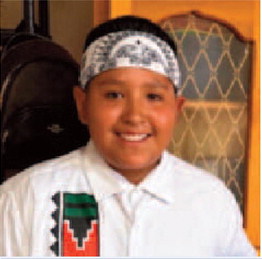
Acoma Pueblo is considered the oldest continuously inhabited Native American village in North America. In short,Acoma Pueblo families have been living on top of the mesa for about 1,200 years and sustaining. Every year, on September 2nd, the Acoma people come together as one to celebrate the annual Acoma feast day known as St. Esteban feast day. The Acoma village is located on top of a 350-foot mesa that has no running water or electricity.
St. Esteban is the patron saint of the church on Acoma. We not only celebrate the saint, but we also come together to celebrate the season's harvest and the continuance of our culture and traditions. We have lots of people dancing of all different ages, from young kids to grandparents. I am part of this tradition by not only dancing but also singing and helping all the dancers. My role is to learn all the songs that will be sung in my language, help the dancers with their attire, and make sure they are in the right formation. We start preparing for the feast weeks in advance by listening to songs and going to dance practices. Families go to their homes and start preparing by cleaning, hauling water in barrels to take up to the houses, and cooking lots and lots of yummy food. The day before the feast is the busiest with ladies taking out food to cook, dancers double-checking their costumes, and vendors setting up stands to sell their goods. I stayed the night in the kiva because I have to wake up early and start preparing the dancers for the feast. During all of this, the feelings I got were excitement, pride, and tiredness due to waking up early.
Then came the day of the feast. You can feel the emotions in the air of excitement and smell the good food that the families were preparing. In the kiva, when preparing the dancers, you can hear people talking our language and saying how excited they were. That morning, you can hear gunshots and the church bell making sounds telling us that St. Esteban is being taken to the altar that the people have made for him. Then started the dances, which were east side first, then west side, because the sun rises from the east and sets to the west. During the songs, you can hear the beat of the drum, rattles shaking, singers staying in sync, and the bells jingling. What I was doing was walking in the middle of the dancers, letting them know what to do next, and making sure none of their costumes came unloose. When we sing, it's not only for the people to dance, but it’s a form of prayers and stories in the form of a song. What I felt when singing was the feeling of amazement and the emotions floating in the air from everyone. It was so heartwarming seeing all our people, even the visitors, coming together to celebrate St. Esteban, and there were a lot of memories made and a lot of yummy food enjoyed.
The San Esteban feast is not only a tradition, but it’s a part of who I am today. Every year, no matter what I’m doing, singing, dancing, or helping everyone, it teaches me the value of our people, respect, and culture. To summarize my experience, it was a fun time. I enjoyed helping my people and others, too, no matter what the difference is. I am proud to come from Acoma and participate in our traditions, and I look forward to celebrating the San Esteban feast again.