

CIBOLA COUNTY, N.M. – A bill moving through the New Mexico Legislature that would bar state and local government agencies from signing or renewing agreements used to detain people for federal civil immigration violations has quickly become one of the most consequential measures of the 2026 session for Cibola County, where local officials say detention contracting is closely tied to jobs and the local economy.
House Bill 9, titled the Immigrant Safety Act, cleared its first committee stop last week and is scheduled next in the House Judiciary Committee. As the bill advanced in Santa Fe, Cibola County commissioners voted unanimously to oppose the measure, citing projected economic impacts if the legislation leads to major changes in detention contracting connected to the Cibola County Correctional Center in Milan.
What HB 9 Would Do if Passed
As introduced, HB 9 would prohibit “public bodies” – a legal term defined in the bill to include state and local/county governments, county sheriff’s departments, agencies and political subdivisions from entering into, renewing, or otherwise agreeing to be a party to an agreement used to detain individuals for federal civil immigration violations – people arrested by federal ICE agents.
The bill also directs any public body already party to such an agreement to terminate it at the earliest date permitted under the agreement’s terms.
HB 9 further prohibits public bodies from selling, trading, leasing, or disposing of real property to be used for detention related to federal civil immigration violations, and it allows the New Mexico Attorney General or a district attorney to seek injunctive relief in court to stop violations.
Language in the bill does not limit the ability of law enforcement personnel to detain individuals or perform brief investigative stops permitted under state law.
For House Bill 9 to be approved, it must pass two House Committees, then pass a House Floor vote. If successful on the House Floor, the bill will be sent to the New Mexico Senate where it will repeat the process. If successful in both chambers of the New Mexico Legislature, the bill will be sent to the governor for her signature. It would then become law.
First Committee Hearing and Vote
HB 9 received its first major public hearing in the House Consumer & Public Affairs Committee (HCPAC) the morning of Jan. 22, where lawmakers heard testimony from supporters and opponents before advancing the bill on a 4–2 “Do Pass” vote, sending it to the House Judiciary Committee.
During the committee hearing, supporters argued New Mexico should remove itself from civil immigration detention contracting done through local government agreements and raised concerns about detention conditions, due process and liability.
Opponents warned that the bill could disrupt rural economies in counties with detention facilities and argued that detention would continue elsewhere even if state and local governments cannot participate in certain contracting arrangements. Opponents argued this bill could close the detention facilities in Cibola, Otero, and Torrance Counties.
At the hearing, Rep. Angelica Rubio, a co-sponsor of the bill, said, “An economy built on cages is not development – it is dependency.”
Republican lawmakers raised economic and logistical concerns. Rep. Stefani Lord asked during committee discussion, “Would you accept an amendment to subsidize my district so that we don’t go bankrupt?” and later questioned where detainees would be held if contracts shift out of state.
HB 9 is now scheduled for the House Judiciary Committee on Wednesday, Jan. 28, 2026, at 1:30 p.m. (or 15 minutes after the House floor session ends) in Room 309 at the Roundhouse.
Cibola County in Opposition
Just hours after HB 9 passed its first committee, the Cibola County Commission unanimously approved Resolution 2026-16, opposing proposed legislation that would prohibit state and local governments from contracting for detention of people held for federal civil immigration violations.
Cibola County officials have framed their opposition primarily around local economic impacts and public revenues tied to facility operations.
In county materials shared by local officials, a modeled closure scenario tied to major changes in detention contracting projected $20.4 million in total economic loss.
This includes $16 million in direct annual payroll and $4.42 million in multiplier effects, along with a modeled $18.86 million reduction in economic output and 44.45 induced full-time equivalent job losses beyond direct facility jobs.
The Cibola County government also referenced projected losses in tax revenues across multiple levels of government under the modeled scenario, including $3.02 million in federal income and payroll taxes, $545,000 in state revenue, including smaller local salestax and property-tax changes in the modeled totals.
Separate materials focused on the Village of Milan. Estimates projected significant municipal impacts for Milan if facility operations were reduced.
Those materials stated a potential loss of $155,577.09 in property tax revenue – Milan Manager Candice Willams described in the loss as 53% of the village’s total annual property tax collections, a projected $20,000 per month reduction in water and sewer revenue $240,000 annually, and gross receipts tax losses estimated in a range of $720,000 to $1.08 million annually.
The Village of Milan’s executive summary in the report described, “The passage of this legislation would have severe and far reaching consequences for the village of Milan a potential facility closure would trigger significant job losses destabilize the local economy and place an unsustainable financial burden on a small rural municipality with limited alternatives the loss of this single operation would shift major fiscal and operational responsibilities directly onto local government threatening the villages long term financial viability and its ability to provide essential services.”
County GIS records also list the facility property in Milan with a 2023 property tax amount of roughly $808,657, reflecting the size of the taxable footprint associated with the site.
County Commission Meeting with Legislative Delegation
On Monday, Jan. 26, commissioners held a special meeting with the local legislative delegation focused on HB 9 and local impacts, the meeting room was well attended with local officials from each of the governing bodies including Milan Mayor Felix Gonzales, and leadership of local law enforcement agencies.
During that meeting, Sen. George Muñoz requested written totals describing economic impacts for Cibola County, the Village of Milan, and the City of Grants, and asked local law enforcement agencies to provide cost details.
Sen. Angel Charley requested more detailed breakdowns, including wage and turnover information as well as data related to deaths in custody and use-of-force incidents.
The commission voted to direct Cibola County Manager Kate Fletcher and county staff to compile the requested information for legislators on a rapid timeline.
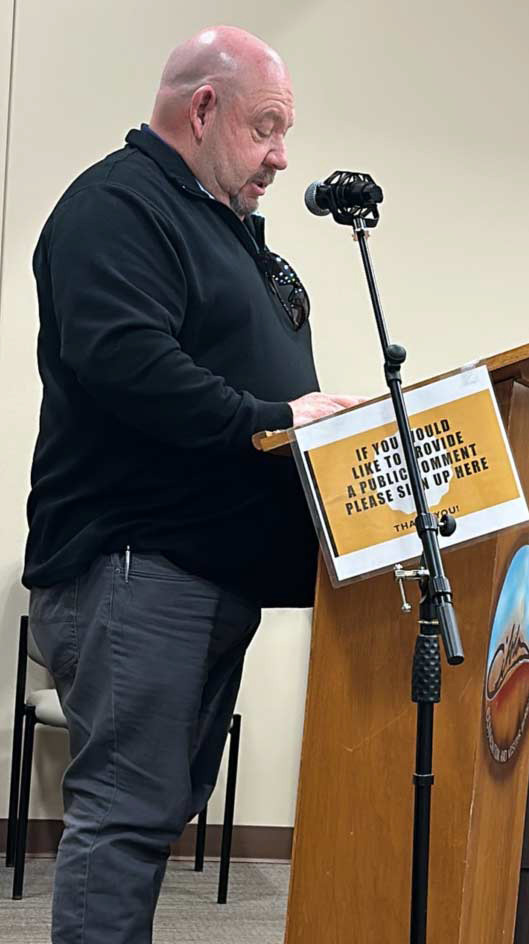
The commission did not take public comment during the meeting but did hear from multiple elected officials. Village of Milan’s Manager Williams, Mayor Gonzales and Trustee Virgil Brumbelow, City of Grants Manager Andrew Valencia and City Councilor Fred Rodarte spoke in opposition to House Bill 9, citing economic concerns.
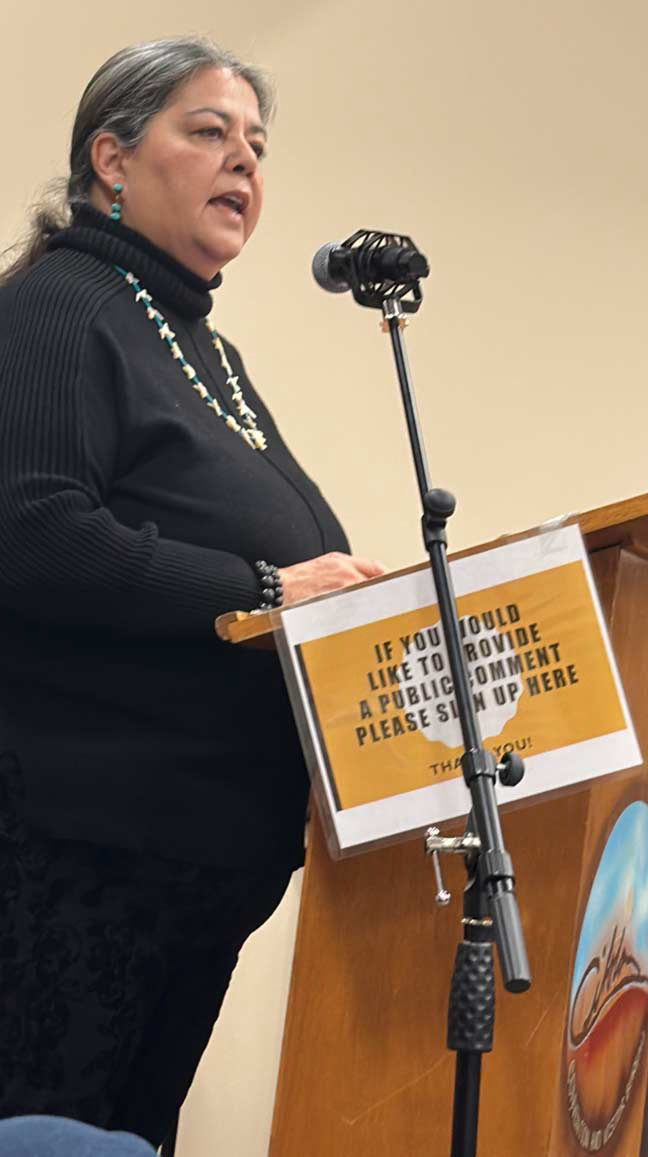
Grants City Councilwoman Beverly Michael spoke up, telling Cibola County Commissioners, “I do not oppose what the state is proposing in House Bill 9.”
Michael explained she believes conversation about the facility closing if this bill passes is “fearmongering” saying that she “doesn’t want to live in a county putting human lives behind the dollar.” The councilwoman returned to her seat to applause from the audience.
What’s Next for HB 9?
If HB 9 is approved in House Judiciary, it would continue through the committee process and could eventually move to the full House for a vote.
If passed there, it would then move to the Senate, where it would face additional committee hearings and a Senate floor vote before it could reach the governor.
For Cibola County, the bill’s next hearing is expected to draw continued attention from local governments. Both the Village of Milan and the City of Grants have posted public notices that a quorum of their governing bodies may be present at the Roundhouse on Jan. 28; the notices state no official action will be taken as part of those quorum gatherings. This is the kind of notice governments are legally required to post if half or more members of a governing body will be present in any given location.
As HB 9 advances, the core debate has remained consistent: supporters argue New Mexico should stop participating in civil immigration detention contracting through public bodies, while opponents in rural counties warn the change could destabilize local economies and reduce public revenues tied to facility operations.
Editor’s note: This report summarizes HB 9 as introduced and includes economic impact figures presented in county materials as modeled scenarios. The Cibola Citizen will continue tracking committee action as the bill moves through the Legislature.