
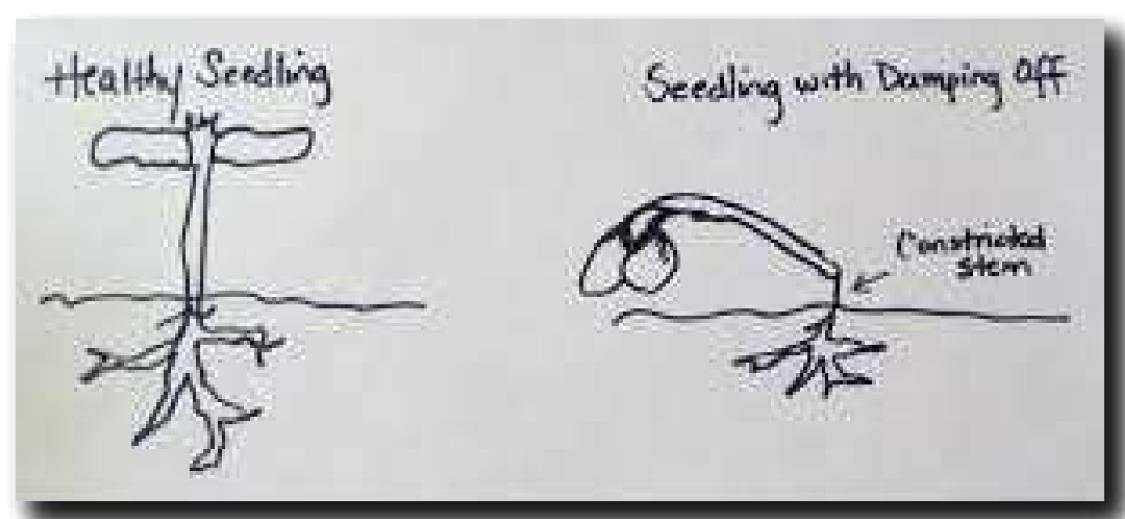
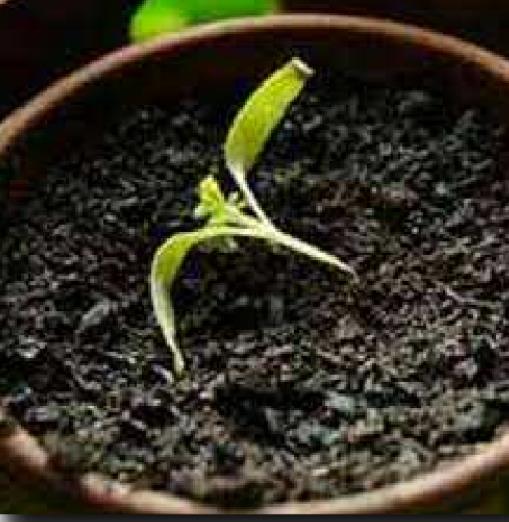
You’re excited to see how your seedlings are doing only to find half the seedlings you started have wilted. What happened? Maybe your soil is too wet. It’s easy to do. This is often from a condition called damping off and is a result of an attack from any number of possible soil fungi. This happens most often from seeds started in a pot but can happen in garden soil too. If beans or corn is planted before the soil has warmed up, the germination rate can be very erratic. The fungus attacks the seed and seedling, making stems soft, mushy, and water soaked. They collapse or fall over and die. When it attacks the seed, roots are absent or seeds fail to emerge from the soil. If you look at the stem closely you will see a brown shrunken area. No nutrients can move up this area of the stem and nourish the plant, so it dies. There is no way to save the seedling affected by damping off but you can save the rest of the unaffected seedling from the same fate by taking some simple actions.
The first thing is to remove the affected plants and some of their surrounding soil. If you are planting seeds in a pot, do not use this contaminated soil in any other pot. Secondly, increase the amount of oxygen in the soil by increasing ventilation, and letting the soil dry out. To prevent it happening again, use a sterile soil. You can buy seed starting soil or grow-pot or you can make your own pasteurized soil.
If you have been making compost, you have the start of good soil. Compost, however, can become waterlogged and not have enough air space for good plant growth. By adding coarse sand or perlite to your soil mix, plants have access to the air they need to grow. Another problem with compost is the possibility of disease organisms present in the materials used. If you know that a plant is diseased, put the leaves and stems of the plant in the garbage, not in your compost. The compost can be
The compost can be pasteurized to kill the plant disease organisms. This is only practical for seeds started in pots. Pasteurization is done by heating the moist potting soil to a temperature of 140 degrees F. for 30 minutes. In an oven, place a metal or glass pan with 4 inches of moist soil. Cover the soil with foil and place a meat thermometer in the center. Bake at 200 degrees until the moist potting soil reads 140 degrees for 30 minutes. At this temperature, insects, plant bacteria, and plant viruses are killed. Higher temperatures will kill most weed seeds but may also cause more noxious odors in the oven. You can also pasteurize soil in the microwave. Place two pounds of moist soil in a polypropylene bag—Ziplock, Hefty, generic— and put it in the microwave with a corner left open for ventilation. Heat the soil for 2 – 2 ½ minutes on full power. Close the bag and allow it to cool before removing from the microwave.
Use new pots if possible. If you reuse your pots, make sure they are clean. First wash out the dirt and plant material. Wash them well with soap and water and scrub off any mineral deposits. Finally soak the pot in 10 percent bleach for 10 minutes.
Growing plants from seed is a very rewarding process and very disappointing if not successful. By following these tips, you will have increased success with seed planting and growing.