
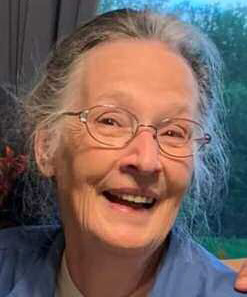
Rosanne Boyett In A Sunburned Country Author: Bill Bryson Broadway Books, 2000 ISBN: 0-7679-0385-4
“Reading is the sole means by which we slip, involuntarily, often helplessly in another’s skin, another’s voice, another’s soul,” author Joyce Carol Oates.
This is about two favorites - another book by Bill Bryson and visiting Australia.
Reading “In A Sunburned Country” offered an interesting overview of Australia before spending three weeks there last month.
Bryson, who wrote “A Walk in the Woods,” takes the reader on a memorable journey while exploring the world’s sixth largest country - the only island that is a continent, and the only continent that is a country.
The country’s 9.8 million square kilometers include New South Wales, Victoria, Queensland, Western Australia, South Australia, and Tasmania, plus two internal territories— the Northern Territory and the Australian Capital Territory, which contains Canberra. Southeast Asians, who arrived 48,000–50,000 years ago, were the continent’s first human inhabitants according to historians.
The author’s adventures take him to Sydney, the far-flung corners of Western Australia, the deep wilderness of the Northern Territory, and the remote saloon towns of the extreme rural and desolate Outback during his fifth visit to the Land Down Under.
His 1998 trip began with the purchase of a first-class ticket from Sydney to Perth on the Indian Pacific Railroad, which travels 2,720 miles across the bottom third of the country.
“Five hundred miles in Australia is not like five hundred miles elsewhere, and the only way to appreciate that is to cross the country on ground level,” Bryson said about the three day train ride. “You are totally at the mercy of nature in this country, mate. It's just a fact of life.”
From Perth he continued via auto on two-lane paved roads with a few side trips on dirt trails.
This included the Canberra museum which hosts a large collection of Aboriginal paintings, mostly done on curled bark or other natural surfaces and covered in colorful dots and squiggles.
“The Aborigines have the oldest continuously maintained culture on earth and their art goes back to the very roots of it,” Bryson said.
Some of the modern folk art features numerous giant fiberglass sculptures. These pieces are scattered across the landscape “like props from a 1950s horror movie. These objects are cannily set along a stretch of highway so astoundingly void and dull that you will stop for almost anything such as a monstrously large, reddish lifelike lobster rearing up beside the road,” recalled the author.
The U.S. and Australia share a common history of immigration. The first ship of European immigrants, British convicts, landed at Botany Bay, east coast of Australia, in January 1788. The last prisoner arrived in January 1868 but British residents continued to settle in Australia throughout the early 20th century. Europeans established colonies in the U.S. during the 1500s and immigrant numbers continued to increase through the early 20th century.
The author noted that the Melbourne Immigration Museum, which documents the country’s social history, details the story of modern Australia. The four most common surnames in the city are Smith, Brown, Jones, and Nguyen.
Australian officials recognized during the 1970s that geographically the country is an Asian nation and not European. In a single generation, Australia remade itself. The country went from being a half-forgotten British outpost to a nation definitely more sophisticated, confident, interesting and outward-looking. This was accomplished without major discord or disturbance, according to Bryson.
He was fascinated by the Daintree Rainforest, which is a remnant from when the world was one single landmass. The 3,018 miles from Melbourne to the Daintree Rainforest, northeastern coast of Queensland, took approximately 40 hours driving the two-lane highways. There he learned why cattle grazing in the rainforest began to mysteriously sicken and die. The reason was finally identified in 1972 with the discovery of Idiospermum australianse, which scientists had previously believed disappeared 100 million years ago.
The author describes some of the challenges he encountered while exploring the island nation like his journey from Sydney, NSW, to Brisbane, central South East Queensland.
“I was in Macksville owing to the interesting discovery that Brisbane is not three or four hours north of Sydney, but the better part of a couple days' drive. In fact, it is almost a thousand kilometers from Sydney to Brisbane, much of it along a cheerfully poky twolane road,” he wrote.
Days later while driving to Western Australia he commented that the Indigenous Whadjuk Noongar people have called the entire region their home for millennia.
“Perth [capital of WA] is far and away the most remote big city on earth, closer to Singapore [a city/island nation located in the South China Sea] than to Sydney. Behind you stretches seventeen hundred miles of inert red emptiness all the way to Adelaide, before you nothing but the featureless blue sea for five thousand miles,” he explained.
“Australia is mostly empty. It doesn’t have coups, recklessly overfish, arm disagreeable despots, grow coca in provocative quantities, or throw its weight around in a brash and unseemly manner. Australia is an interesting place. It truly is. And that’s really all I am saying,” concluded Bryson.
I agree. I have been there three times.
It’s a long flight - 14 hours across the Pacific Ocean - but worth it.
Sidebar:
Bill Bryson, a native Iowan, has written numerous books about his international travels, the English language, and science. His first book, “Notes from a Small Island,” chronicles the 20 years he lived in Britain. Bryson’s most recent is an audio-book,”The Secret History of Christmas,” which was released by Audible in November 2022.