
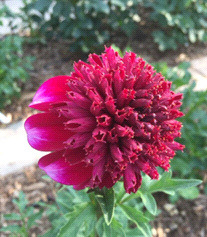
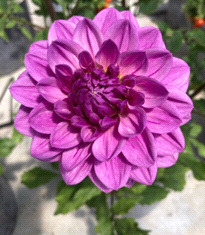
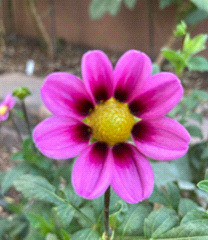
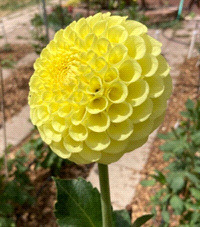
I have always been a gardener, but never had a favorite plant until eight about years ago. It was then I became a dahlia fanatic!
I avoid plants with thorns and ones that have to be dug and stored over the winter. Dahlias are in that second category. When a good friend gave be a bag of dahlias from Costco, I felt obliged to grow them. They were “beautiful” and the flowers kept coming from summer all the way to frost. Then came fall and I had to dig and store them. I followed instructions on the bag but in spring they were all shriveled and dried out. I was determined to try them again so I bought a collection from a garden catalogue and had my first Cactus type dahlia so I started learning about dahlias. The NM Dahlia Society had their Show when I was in Albuquerque and it was there that I fell in love with the perfectly round 2” Pompon dahlias. There is even a website for “Dahlia Addicts”. You can find any dahlia you are looking to buy at their site.
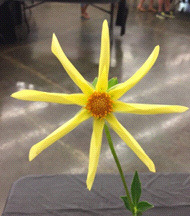
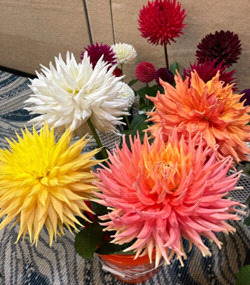
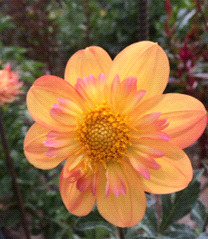
Dahlias originally came from Mexico as a flower with a single row of petals and was brought to Europe by visitors in the late 1800s. Under cultivation it produced flowers with many rows and variations of petals. Now we have 20 classes of dahlia varieties from Giants of 15” to those less than 2” and petal shapes given names like Cactus, Waterlily, Orchid, Ball, and Anemone.
The easiest way to grow dahlias is to plant a tuber. Find a place with 6-8 hours of sun and good rich soil. (You can also buy dahlia seeds for border dahlias and some places sell small plants). Plant your tuber in the ground after danger of frost is gone (1st week of June). Wet your soil, dig it to loosen the soil and plant the tuber 4” deep with the shoot of new growth facing up. Tubers look like a sweet potato and the eye of the sweet potato is the same new growth as in the dahlia. Plant the tubers 1 ½ to 3 feet apart. Giants need 3 feet and others less. Large dahlias will also need a stake to support the large flower on the stem. It is best to put it close to the growing eye before you cover the tuber. Now the hard part - WAITING. Don’t water again until the dahlia leaves appear (unless you have a hard crust of soil, then just enough to keep the surface soft enough for the new leaves to emerge).
Once the plant is up, water on a regular basis unless we get rain. A good soaking several times a week is better than a daily sprinkling. Fertilize the first month with a balance of nitrogen, phosphorus, & potassium. By July, they will be developing buds and the fertilizer needs the higher phosphorus of a “Bloom or flowering” formula. Your dahlias will start flowering in late July or August. Pick all the flowers you want! By picking the flowers you stimulate more flower production. Dead Head (pick dead flowers) if you don’t get around to using the flowers in vases. Continue to fertilize the plants for more blooms and give them plenty of water.
If you want more detailed information about dahlias (like how to dig and save them over winter), check out the American Dahlia Association website or contact the New Mexico Dahlia Society, Edith Iwan, President, 505-240-2698.
Edith Iwan is a Cibola-McKinley County Master Gardener who lives and works in Thoreau. As a Master Gardener she assists the County Cooperative Extension Service in providing accurate, research-based gardening information to county residents. If you have any gardening questions, please call the NMSU Cibola County Extension at 505-287-9266 or NMSU McKinley County Extension at 505-863-3432.