

Wendy Gordge, Lead Interpretive Ranger at El Morro National Monument
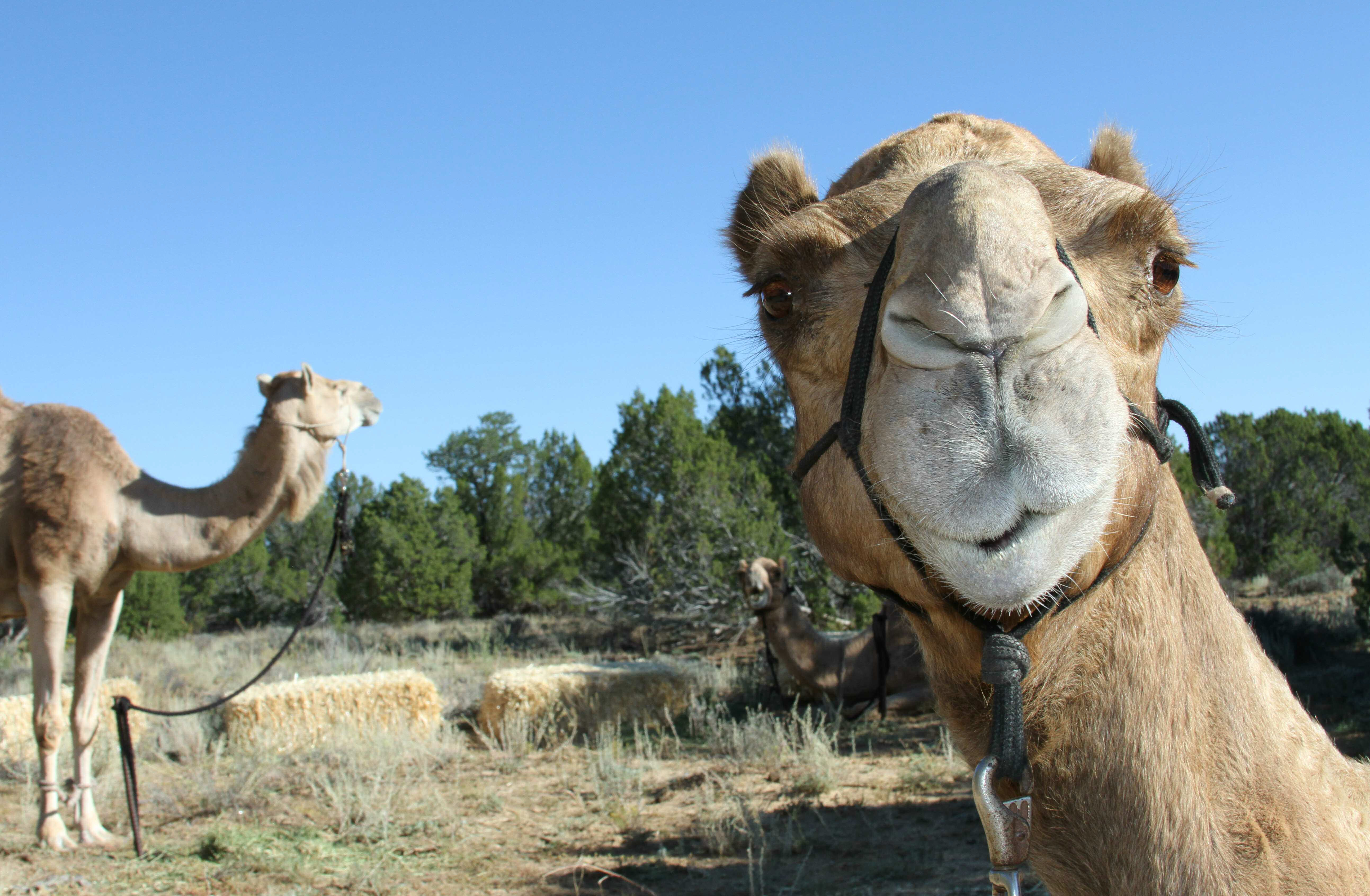
It was an improbable journey. In charge of the expedition was a young naval Lieutenant, operating far from any ocean. His job was to blaze a new wagon route through the bone-dry deserts of the southwest. Ahead was a landscape, often unforgiving and largely uncharted. In tow was an odd company of men and beasts. Included among them were 25 camels, loaded to the hilt, lumbering forward like walking mountains of gear.
The year was 1857 when this strange expedition, led by Lt Edward Beale, passed Inscription Rock in what is today El Morro National Monument. Names like Beale, PG Breckinridge, and E. Penn Long carved into the rock bear testament to this littleknown chapter of American history.
Their story, however, begins nine years earlier, when gold was discovered at Sutter’s Mill in California. In numerous ways, Beale would play a role in the gold rush. Returning from a trip to California in 1848, he brought back to Washington DC the first gold nugget, finally proving to a skeptical congress the existence of gold in the far west. This discovery would set off one of the largest migrations in US history. Within ten years, hundreds of thousands of Americans would take flight for the promised land. Between these western emigrants and their hope for new prosperity, however, stood danger, disease, and seemingly endless distance.
The United States government, responding to demands to create shorter and easier routes to California, commissioned Edward Beale to build a 1,000-mile wagon road from Fort Defiance, AZ to the Colorado River on the California border. While doing that, Beale would also test the use of camels as pack animals in the desert southwest. The question was – as a pack animal, could a camel rival a horse or a standard US Army mule?
On June 25, 1857, Beale and the U.S. Army Camel Corps got underway from their base at Camp Verde, TX. From the outset, the expedition was fraught with difficulties. Camels imported from the middle east were an unfamiliar sight. Their strange appearance terrorized horses and mules. Livestock initially reacted to them as if encountering some bizarre extraterrestrial lifeform.
In addition, American soldiers were clueless camel handlers. They packed cargo around the camel's awkward hump only to have these heavy loads tumble off, causing delays and flaring tempers. At first, the entourage barely progressed, day after tedious day. May Humphreys Stacey, a member of the expedition, recorded his discouragement. In his journal, he lamented, “It is my decided opinion that these camels will prove a failure…”.
At this point, it would be easy to assume the camel experiment was a dismal failure as Stacey predicted. Were the camels effective? The answer might surprise you. On September 26, Beale recorded in his journal, 'My admiration for the camels increases daily with my experience of them. The harder the test they are put to the more fully they seem to justify all that can be said of them. They pack water for others four days under a hot sun and never get a drop; they pack heavy burdens of corn and oats for months and never get a grain; and on the bitter greasewood and other worthless shrubs not only subsist but keep fat…”.
The expedition found camels could walk faster than horses and mules while carrying three to four times as much weight. The men’s misgivings gave way to admiration. Despite first impressions, even the party’s horses and mules grew accustomed to their dromedary neighbors.
Beale completed the road survey and arrived in Los Angeles to great fanfare on November 9. At last, with endless miles and countless setbacks behind him, Beale finally allowed the strain of the journey to drain away. His greatest achievement, he felt, was to have come so far, across a vast land where danger and discomfort were the only certainties, and to have not lost a single man.
The Beale wagon road was essentially the nation's first federally funded interstate 'highway'. In time, much of the route would become the “mother of all roads”, Route 66. And from there, it would grow to be today’s Interstate 40.
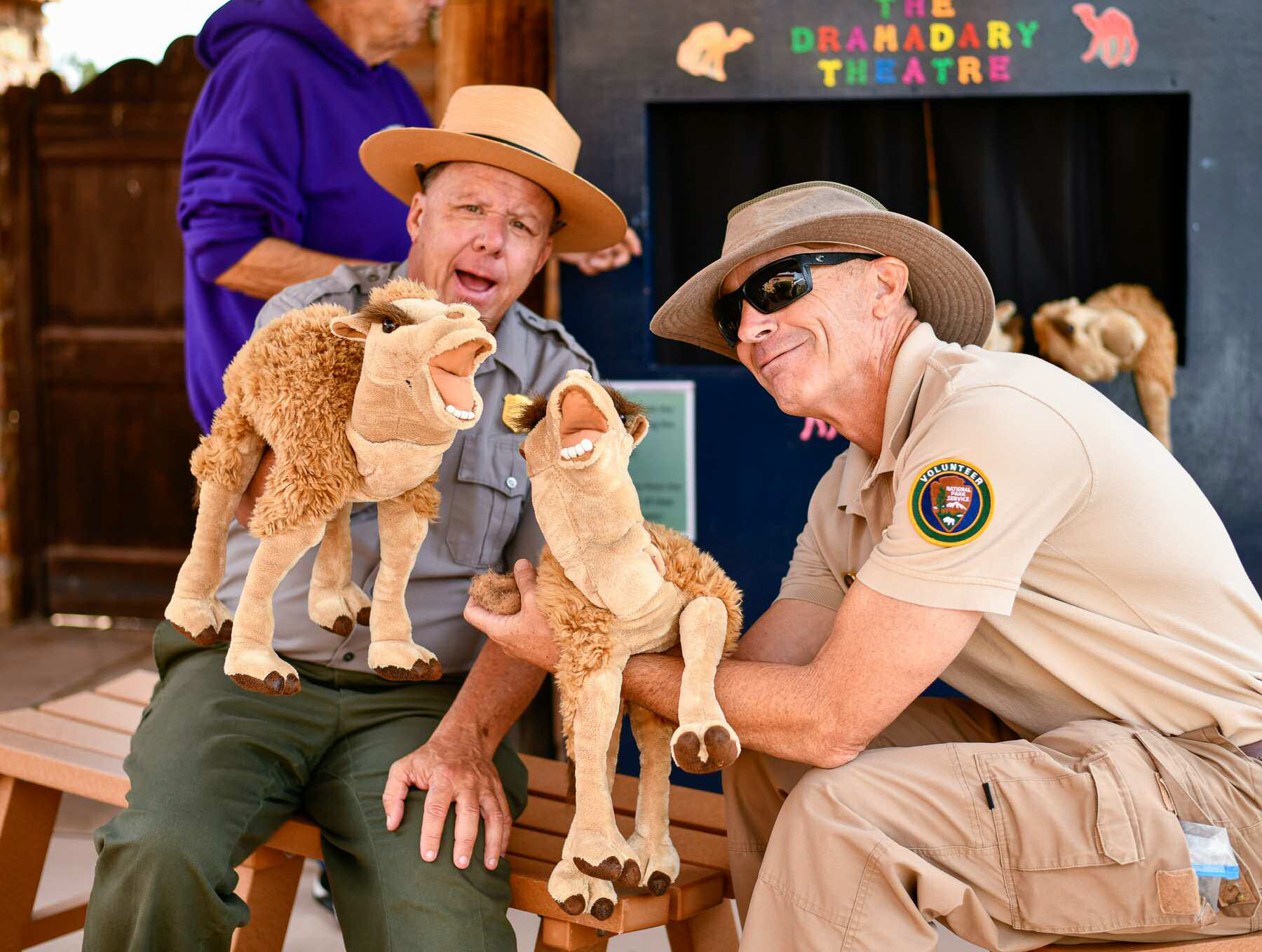
The Beale expedition is just part of the historic legacy evident at El Morro National Monument. To learn more about this odyssey of man and beast, join historic interpreter Doug Baum and the rangers of El Morro for a special event to commemorate the U.S. Camel Corps (September 14 & 15, 2024). On this weekend in September, there will be fun for the whole family with historic presentations, kids' crafts, hands-on activities, and yes, live camels. For more information, visit El Morro’s website at www.nps.gov/elmo.