

GRANTS, N.M. — In a candid and far-reaching discussion, local government leaders, community members, and representatives from various organizations gathered for the monthly 'Coffee with the Managers' meeting to address pressing issues affecting Cibola County and its municipalities, like funding and audit issues restricting governments from providing funding to nonprofit, non-government organizations.
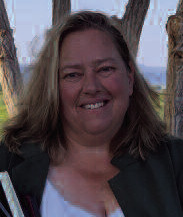
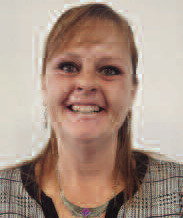
The meeting, held at Coyote Del Malpais Golf Course in Grants, featured County Manager Kate Fletcher, Grants City Manager Andrew Valencia, and Village of Milan Manager Candy Williams. The dialogue spanned several critical topics, including funding challenges, workforce development, collaboration with nonprofits, and the intricacies of audit compliance.
Engaging New Representation
The managers began by recapping their recent meeting with newly elected State Representative Michelle Pauline Garcia. The purpose of the meeting was to inform her about the region's needs, including infrastructure improvements, road maintenance, and concerns related to the local correctional facility.
'We definitely have a good long road ahead of us as far as how we will be represented,' said City Manager Andrew Valencia. “It's a new position for a new individual, so we wanted to ensure she understands the complexities we face.”
County Manager Kate Fletcher added, 'We need to educate our new representatives about the processes and challenges we have, especially when it comes to funding and being fiscal agents for various projects.'
The Struggle with Reimbursable Funding
A significant portion of the discussion focused on the nature of federal and state funding, which often requires local governments to front the costs before being reimbursed—a system that strains limited resources.
'Five million dollars is literally more than half of our general fund budget,” explained Village Manager Candy Williams. “We can't undertake such large projects within the time frames given because we have to phase them, stretching them out over several years.”
Valencia echoed the sentiment, “We're all in projects that have been four or five years old because we've had to phase them. Now it's costing us more because of the timing, and we're trying to get them to change the disbursement methods” Fletcher added, 'Smaller counties like ours find it very difficult to manage these funds when we have to pay first and then request reimbursement. It's a strain on our resources.'
The managers highlighted how this funding model leads to prolonged project timelines and increased costs, affecting essential infrastructure developments.
“We're going to have to pay more money because of what's happened here across the state,” Valencia stated. “It's a waste of tax dollars because we know what our project is, but we can't do it in one year now.”
Challenges with Nonprofit Funding and Compliance
A critical topic was the difficulties that arise when nonprofits receive funding without coordinating with local governments, leading to compliance issues.
'Sometimes we have small agencies requesting funds directly from representatives without us knowing,' Fletcher said. 'If we don't approve to be the fiscal agent, the money can't be dispersed. It's all about communication.'
Valencia emphasized the importance of following proper procedures. 'We have to go through a process to do the bid, and we have to go with the lowest bid,' he said. 'We want to have local people, but procurement laws require us to select the lowest responsible bidder.'
Williams pointed out the complexities involved in being a fiscal agent. 'When entities request us to be a fiscal agent, we have to ensure that everything is in compliance with state laws. Otherwise, we risk audit findings that can impact our ability to receive future funding.'
The managers stressed the significance of compliance with auditing standards to avoid financial repercussions that could hinder future projects.
'If there's a discrepancy in the money we give to other organizations, it affects our audit,' Fletcher explained. 'An audit finding can change our ability to request funding, whether it's grant money or capital outlay.'
Williams shared similar concerns. 'We have to ensure that every dollar is accounted for properly,' she said. 'We can't jeopardize future funding because of non-compliance.'
Open Dialogue with Community Organizations
Community members raised questions about how they could assist local governments, especially in bridging the communication gap with organizations like the Chamber of Commerce and MainStreet.
'What can we do for the governments? What can the people do to help you guys?' asked a community member.
Fletcher responded, “Thank you for asking that. We can communicate what we have control over, but we don't have control over what private companies charge. It’s market driven.”
Williams added, 'One of the things the schools are doing is creating vocational centers to develop local talent. We need more plumbers, electricians, and other tradespeople.'
Fletcher emphasized the importance of shared responsibility. 'It's not our responsibility to entities; it's entities' responsibility to our government and, therefore, to the citizens who are paying the bills,' she said. 'We need everyone to understand the obligations we have to the state.'
Addressing Labor Shortages and Workforce Development
A pressing concern discussed was the high cost of local labor and the shortage of skilled workers in the area, which impacts growth and development.
'The kids that graduate high school go to college... that's great, but they don't come back to Grants,' Williams said. 'We're trying to encourage the schools to educate that if you pursue vocational training, you're more likely to stay here.'
Valencia, a former restaurant owner in the city, highlighted the challenges businesses face. 'Our issue is getting people—a workforce— here,' he said. “Our plumbers are elderly. Our electricians are younger, but they don't have laborers because the rest left. Companies are forced to hire from outside, which raises costs.”
A community member added, “We do need new houses, but the cost of everything is so expensive. If the cost of local labor is higher, where is the disconnect?”
Williams explained, “It's market driven. People will go where they can make the most money. We need to make our community attractive for businesses and workers.”
The managers acknowledged the importance of working with outside agencies but highlighted the challenges related to compliance and accountability.
Valencia said, “We want to fund and help, but there are rules we have to abide by. If they're not following our procurement rules and auditing requirements, we have to make tough decisions.”
Fletcher added, 'We have to decide what's best for the citizen. Continuing support for a non-compliant nonprofit or cutting ties to stay in good standing with the state.'
Community members suggested more proactive engagement with nonprofits. 'Are you guys intentional about setting benchmarks like, 'Hey, we expect you to have A, B, and C'?' one attendee asked.
Williams responded, 'We do communicate guidelines. Every outside funding packet includes what you can and cannot do. But I don't think we always get the communication back.'
Debate Over Audit Findings and Compliance
A major audit issue Cibola County had to face arose because of funding previous governments had given to outside entities like CCEDF. Consistent and sustained failure to provide the correct reporting information at the right time led to the audit issues in all three of the local government, hitting the county especially hard. Serious efforts undertaken since 2018 when a new elected board of commissioners was formed, and strict financial controls were put in place to correct the failures. Today, and celebrated on Page A6 of today’s edition of the Cibola Citizen, Cibola County has an A bond rating from Moody’s.
To get Cibola where it is today, the county, city, and village have had to clamp down on financial policy. All three entities are doing better economically than they were eight years ago, each with cleaner audits than their governments have seen in upwards of a decade. This is important, as audits allow the local governments to apply for money, the better the audit, the better the chance to get the money.
Former Cibola Communities Economic Development Foundation Executive Director Eileen Yarborough raised concerns about statements made in the September Coffee with the Managers meeting regarding compliance and audit findings.
To help nonprofits understand what was required of them, the county, village, and city held a joint conference with each of the entity’s finance officers. This was a free training, and several were held. Each of these training courses received very poor attendance from area nonprofits, many of which have changed leadership several times since these were held.
“I just want to set the record straight that from the time we had that training with the new system put in place, and we knew specifically what we could and could not do, that's what we did,' Yarborough said. 'CCEDF would have never gotten paid for anything if we hadn't been compliant.'
Fletcher acknowledged that efforts were undertaken to ensure that CCEDF received funding to keep the entity afloat. She then pointed out issues with timeliness of turning in reports required by state law for Cibola County to give out money.
“We had to wait for all those reports the week before the end of the year,” she said. “That was difficult. That was not in compliance.”
Williams explained the broader issue. 'When an auditor comes and asks why this invoice wasn't here, we have to have an answer,' she said. 'If there's a finding, it affects our ability to receive funding.' She explained that one finding could have multiple issues within it. Further, she explained that auditors can make random report pulls from the whole audit they submit, if auditors find one issue, they will pull all of the records submitted and review them thoroughly to see if that is a consistent issue.
All three governments explained that they were having consistent audit findings specifically related to funding outside, nonprofit, entities.
At the time these audit issues had arisen, Cibola was undergoing a serious economic crisis. The county was near insolvent, it had lost its credit rating, banks refused to give the government money because of misuse and waste.
After pushback from Yarborough against the managers, County Commissioner Ralph Lucero argued that the new reporting requirements for nonprofits amount to micromanaging.
Williams highlighted the importance of following legal requirements. 'It's not micromanaging; it's the law,' she said. 'We have to ensure compliance to avoid audit findings.'
Lucero acquiesced, 'Maybe it wasn't micromanagement; maybe it was a failure to convey that information. Now I understand what she's saying.' He then asked, 'What can we do going forward? Because I believe we need strong economic development,' he said. 'How do we measure what we're getting for the money we're giving?'
Valencia agreed, explaining the complexity of assessing the value provided by outside agencies. “Building those deliverables, building that scope of work is important,” he said. “We've got to talk to them. Are we asking for too much? Are we not asking for enough?
Williams added, “We have to prioritize the basic needs first—sewer, water, infrastructure. If we don't have those, we can't support new [nonprofits] or events.”
Financial Uncertainties and Future Challenges
The managers expressed concerns about future funding, especially in light of potential state budget cuts and unfunded mandates.
'Every day we think about that,' Valencia said. 'Expenses are going to grow, and we have unfunded mandates again.'
Williams voiced worries about new legislation. 'We have unfunded mandates, just like you said, for law enforcement. Everything's going up,' she said. 'I'm very concerned about that. If [New Mexico passes] paid Family Medical Leave Act, it's going to kill me.'
Fletcher said, “Our balanced budget that we all have is set revenue. We're not going to increase our revenue, so we have to implement cuts or find new ways to fund essential services.”
Community Support and Appreciation
Les Gaines, Executive Director of the Grants-Cibola County Chamber of Commerce, expressed gratitude for the assistance provided by Valencia and the other managers. 'I couldn't do what I'm doing at the Chamber without his help,' Les said. 'Right now, you're my teacher... I have no one else to learn from to learn how to do the process.'
He emphasized the importance of patience and guidance from the managers. 'We need that process to learn the process,' he said. 'You have to be patient because I'm not the brightest bulb in the bunch,” he joked.
Denise Hanson, executive director at Grants Main-Street Project Inc., shared a positive outlook on collaboration. 'I think we have a lot of positive momentum,' she said. 'If we're communicating and collaborating, it's going to speak for itself, and that funding will come back at some point.'
OptimismAmid Challenges
Despite the complexities and hurdles, there was a shared sense of optimism about improving collaboration and communication.
“We are doing a good job, and I'm so proud of how we're getting to where we're at,” Fletcher concluded. “We've got to think of the positive as well. We're all going to make mistakes, but we're working together to find solutions.”
Valencia acknowledged the need for better communication. “I'm trying to help those outside organizations and fund them, yet still hold them accountable,” he said. “It is getting better.”
Fletcher summed up the collective effort: “It's taken years to be able to have this conversation in a respectful manner and to understand the problems we have. We are getting there. Other counties, other cities, don't have this.”
The meeting served as a microcosm of the broader challenges faced by small communities navigating the complexities of funding, compliance, and growth. The candid discussions highlighted both the obstacles, and the collaborative spirit aimed at overcoming them. As Cibola County moves forward, the emphasis on communication, accountability, and strategic planning appears to be the guiding force steering the community toward a more sustainable and prosperous future.