
Rosanne Boyett
“To read a book for the first time is to make a new acquaintance; to read it for a second time is to meet an old friend.”
- Chinese saying
Anita Shreve is one of my favorite authors. The storylines of her numerous novels are often set in New England and based on actual events.
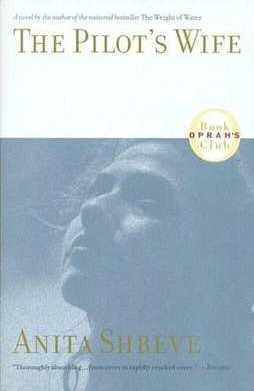
I first read “The Pilot’s Wife” almost ten years ago. I discovered deeper nuances when I read it again recently. This book explores the intricacies of generational connections, family relationships, and the tragic loss of life.
“She didn’t think that Jack had ever felt the coming and going in quite the same way she had. To leave, after all, was not the same as being left. ‘I’m just a glorified bus driver’, he used to say,” recalled his wife Kathryn.
And so begins the tale of two families separated by time, the Atlantic Ocean, and international politics.
Kathryn was raised by her paternal grandmother in a small mill town after the untimely death of the young girl’s parents. A chance meeting with Jack Lyons while working in her grandmother’s shop changed all her plans when she was eighteen. Their short romance led to marriage.
Kathryn willingly agreed to move to Santa Fe, New Mexico when Jack got a promising job offer from a small airline. Later they moved to the East Coast - again because of Jack’s career.
The young wife had always loved the huge old house at Fortune’s Rocks near her hometown of Ely, New Hampshire. The rambling structure was originally built as a convent for the Sisters of the Order of Saint John de Baptiste de Bienfaisance. Ownership of the house had changed several times during the following decades. The nearby shoreline was now filled with the vacation homes of the very wealthy.
Suddenly this historic building was her new home.
Jack bought it as a surprise Christmas gift when their daughter was four years old. There had been other surprises during the early years of their marriage - a trip to Mexico, a night at the Ritz when visiting Boston - but nothing of this magnitude. After settling in, Kathryn spent years searching the property for remnants of the wooden chapel where the nuns had once worshiped.
She returned to college and earned her degree while Jack’s career prospered. His new job as a pilot with a small airline required weekly trips between London and the U.S.
Kathryn was busy teaching music to high school students along with parenting their teenage daughter when an early morning explosion killed everyone aboard a trans-Atlantic flight.
Jack was the pilot. Kathryn had been vaguely aware of the long-standing animosity between Northern Ireland and Britain. The Troubles was a period of armed conflict in Northern Ireland that lasted about 30 years, from the late 1960s through the late 1990s. Its origins can be traced back hundreds of years, according to historians. (The author penned this story prior to the 1998 Good Friday Agreement between the Irish Republican Army and Britain.)
“If anyone had asked her, she would have said that her husband had never been unfaithful. It wasn’t like Jack,” thought Kathryn.
Could there be any truth to the increasingly disturbing rumors about a secret life?
She set out to learn who her husband really was--whatever that knowledge may cost. That search leads to shocking revelations. She had believed Jack when he told her that his parents were dead.
Learning that his mother was living in a nursing home in the Midwest was one of the many deceptions that she uncovered.
International conspiracies had led to that explosion over the Irish Sea, according to aviation officials. Those suspected of contributing to the incident were subject to imprisonment.
But investigators initially said the cause was “pilot error.” The newly bereaved wife flies to London in the aftermath of the fireball that had taken the life of her husband and more than 100 passengers.
Kathryn’s memories resonate with new meaning as she discovers new facets of Jack’s life. She is slowly forced to acknowledge that after 15 years of marriage, she had never really known her husband.
“The worst is that I can’t grieve,” Kathryn said. “How can I grieve for someone I may not even have known? Who wasn’t the person I thought he was? He’s gutted my memories,” she said in the aftermath of the plane crash.
SIDEBAR:
The American novelist Anita Shreve (19462018) was also a journalist and teacher. She received the 1976 O. Henry Prize for one of her first published stories, “Past the Island, Drifting.”
The O. Henry The award, established in 1919, is an annual American award given to short stories of exceptional merit. It is named after the American short-story writer William Sydney Porter, 1862 – 1910. Known by his pen name O. Henry. He also wrote poetry and nonfiction but remains internationally famous for his short stories.
Shreve wrote more than 20 books including “The Pilot’s Wife” and “The Weight of the Water.”
“The Pilot’s Wife” is the third in a trilogy that includes “Fortune's Rocks” and “Sea Glass.”
Shreve often used historical events as background settings for her novels, which explore change, loss, and troubled marriages. Her novels feature protagonists who learn to adapt to life’s challenges.
Title: “The Pilot’s Wife” Author: Anita Shreve Publisher: Little, Brown and Company; 1998 Paperback, 304 pages ISBN: 0-316-78908-9 (hc); 0316-60195-0 (pb)