
In just 15 minutes, the Cibola County Commission ignited a political firestorm, raising questions about representation, transparency, and constitutional compliance.
The swift meeting, held on December 3, ended after the Cibola County Commission nominated Harry Garcia, a sitting representative of District 69, to fill the legislative vacancy for District 6 left by the resignation of long-serving Rep. Eliseo 'Lee' Alcon.
With McKinley County delaying its decision until December 17 and questions swirling about the legality, transparency, and morality of the process, the nomination has sparked outrage and debate among constituents and political observers alike.
The Honorable RepresentativeAlcon
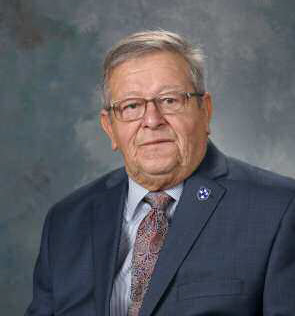
For over 15 years, Representative Eliseo “Lee” Alcon (D-Cibola, McKinley) has been a steadfast advocate for the people of District 6 and New Mexico as a whole.
On November 25 at 9 a.m., the New Mexico House Democrats released a statement about the departure of Alcon, who has served District 6 for nearly two decades, writing, “Rep. Alcon has been a champion for his community throughout his fifteen years in the Roundhouse. He helped deliver huge wins for veterans, active service members, and all the people of New Mexico,” said New Mexico Speaker of the House Javier Martínez (D-Albuquerque). “As a veteran and retired magistrate judge, Rep. Alcon brought a remarkably diverse perspective to lawmaking. We will miss him dearly.”
A Vietnam War veteran and Bronze Star recipient, Alcon brought his unique perspective as a combat medic and retired magistrate judge to his work in the New Mexico House of Representatives.
First elected in 2009, Alcon became known for championing policies that supported veterans, strengthened the state’s economy, and protected the environment. Most recently, two of Alcon’s bills were passed through the state legislature and approved by the people to amend the constitution, further ensuring veterans rights in the state.
Throughout his tenure, Alcon served in leadership roles on critical legislative committees, including as Chair of the Consumer and Public Affairs Committee and the Labor, Veterans, and Military Affairs Committee. His legislative efforts often centered on improving access to resources for New Mexico’s veteran community, addressing systemic inequalities, and ensuring environmental stewardship.
On November 25, 2024, Representative Alcon announced his immediate retirement to focus on his health after being placed on hospice care.
His departure marked the end of a distinguished career in public service and set the stage for the contentious nomination process to fill his seat in the legislature. There are no deadlines set by the constitution for filling this vacancy.
The Nomination Meeting
On December 3, at 5 p.m., the Cibola County Board of Commissioners convened a special meeting that lasted approximately 15 minutes to nominate a candidate for the District 6 legislative seat vacated by Rep. Alcon.
This meeting, which began with a prayer invoking wisdom and guidance, culminated in a unanimous decision to nominate Harry Garcia (HD69 – Bernalillo, Cibola, McKinley, San Juan, Socorro, and Valencia) sparking controversy over transparency, public engagement, and adherence to constitutional requirements.
Following the prayer and the Pledge of Allegiance, the agenda was amended to reflect minor procedural changes before moving to the primary item of business: the nomination.
The meeting commenced with a sense of gravity as commissioners recognized the significance of their task: to recommend a nominee to fill Alcon's seat.
Eight individuals submitted a resume to the Cibola County Board of Commissioners asking to be appointed to this seat. The eight applicants were: 1. Harry Garcia 2. Priscilla Benally 3. David Alcon 4. Ira Vanderburgh 5. Clemente Sanchez 6. Paul Spencer 7. Daniel Torrez These applicants represented a range of professional and political backgrounds, Fletcher said the Commission reviewed their credentials before ultimately nominating Garcia.
Cibola County Attorney Adren Nance provided a summary of the constitutional provisions governing the process. Article 4, Section 4 of the New Mexico Constitution stipulates that for districts spanning multiple counties, each county commission must nominate one candidate, and the governor will select from the names submitted.
“So it is up to this board,” Nance said, “whether we'd like to hear from individuals, or whether you'd like to just move off on the resumes that you've received, and that is up to this board, okay?”
Nance also emphasized adherence to the Governmental Conduct Act to avoid conflicts of interest and maintain public trust, advising commissioners to recuse themselves if necessary. No commissioner declared a conflict.
First Nomination: Paul Spencer (R)
Commissioner Robert Windhorst, the sole Republican on the commission, nominated Paul Spencer, a Bluewater resident and Republican who had run against Alcon in the November general election.
Windhorst praised Spencer's hard work during the campaign, citing his grassroots engagement and dedication to community needs, such as providing firewood to residents of the Navajo Nation.
The vote tally came close in this race: 5,946 votes to 4,156. Alcon won this contest.
Windhorst motioned 10 minutes and 45 seconds into this meeting to nominate Spencer for the seat.
However, 14 seconds later, Manager Fletcher declared the motion to nominate Spencer dead for the lack of a second.
Second Nomination: Harry Garcia (D)
“Commission,” County Commissioner Martha Garcia said 11 minutes and 11 seconds into the meeting, “I also have a nomination, I had to think this thoroughly. About the position that we would be appointing. Then how that position impacts Not only our County but the county of McKinley and what needs to be done and where we're at, at this point in time.”
She went on to say, “Right, I am not really looking at what party you represent, but the product of and if they can address the situation that we found ourselves in and we started working together. That's what we need to do. We need to work with one another and make things happen, and not just stick to parties, and whatever. We've never done that here within our commission. We always work together. And, uh, and have moved forward and have make a lot of progress based on that.”
Commissioner Martha Garcia then moved to nominate Harry Garcia (D), a sitting member of the House of Representatives currently serving District 69, the eastern half of Cibola, citing Rep. Garcia’s experience, legislative seniority, and established relationships in Santa Fe.
Commissioner Garcia stressed the importance of having a nominee who could 'hit the ground running' and advocate effectively for both Cibola and McKinley Counties.
Windhorst then seconded the motion.
The commission voted unanimously—four votes in favor—to nominate Garcia, who lives in District 69, to represent District 6.
The Decision and Its Implications
While commissioners expressed confidence in Garcia’s qualifications, the decision immediately drew criticism from residents and stakeholders.
Key concerns centered on Garcia’s eligibility, given that he had represented District 69 up until he changed his voter registration to District 6 on November 25— the same day Alcon’s resignation was announced.
Garcia has served since 2016 when he was appointed by former Governor Susana Martinez (R) to fill the seat vacated by former state Speaker of the House W. Ken Martinez (D) who previously held District 69.
Questions about the lack of public input and transparency further fueled dissatisfaction among District 6 constituents.
The meeting concluded with Chairwoman Lowery thanking the commissioners for their careful consideration and prayerful deliberation.
The decision to nominate Harry Garcia for the District 6 vacancy raises serious questions about the integrity of representation. Garcia is currently serving as the elected representative for District 69, which encompasses a different constituency. To meet the residency requirements for District 6, Garcia updated his voter registration on November 25, a move confirmed by the Secretary of State’s office. This change, while technically sufficient to establish residency under the law, introduces a glaring constitutional issue.
The New Mexico Constitution explicitly states in Article IV, Section 3: 'If any senator or representative permanently removes his residence from or maintains no residence in the district from which he was elected, then he shall be deemed to have resigned.'
By changing his voter registration to District 6, Garcia has potentially violated this clause, as he would no longer maintain his residence in District 69, the district he was elected to represent. While the legislative term for District 69 ends on December 31, this period overlaps with the time Garcia is being considered for District 6.
The commissioners unanimously agreed to forward Garcia’s name to Governor Michelle Lujan Grisham, leaving the final decision in her hands. The commission adjourned, but the repercussions of their nomination decision were only beginning to unfold.
An Attempt at Damage Control
The controversy surrounding the nomination of Rep. Garcia to fill the District 6 legislative vacancy has been compounded by significant public relations and transparency concerns.
On December 5, two days after the nomination, the monthly Coffee with the Managers meeting was scheduled to take place at the Coyote del Malpais Golf Course in Grants. This regularly scheduled meeting was officially canceled on short notice, without the ability to alert the newspaper and community in time.
Because of the lack of notice about the cancelled meeting, several officials, including County Manager Fletcher and Village of Milan Manager Candi Williams, attended to address lingering community concerns. Commission Chairwoman Christine Lowery also attended to answer questions.
During the informal discussion, constituents pressed officials on why the Commission did not consult District 6 residents before making its decision.
Fletcher emphasized the Commission’s legal obligation to submit a name quickly and defended Garcia’s nomination as compliant with residency requirements.
She explained that the Secretary of State’s office confirmed Garcia’s eligibility, noting his recent voter registration change to District 6. However, this explanation did little to assuage concerns about the legitimacy of the process or the optics of nominating a District 69 representative to represent District 6.
Fletcher acknowledged the complexity of the situation but maintained that the Commission acted in the county’s best interest.
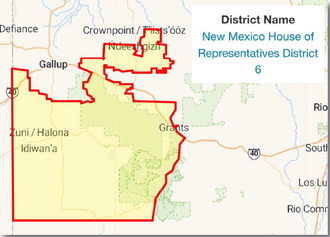
One of the most significant criticisms of the Cibola County Commission's handling of the District 6 nomination is its failure to consult the communities most affected by the decision. District 6 encompasses a diverse range of rural and Indigenous communities, including the Village of Milan, the Village of Bluewater, Pinehill, Zuni, Thoreau, and Ramah-Navajo, yet no public forum or outreach effort was made to solicit input from these areas before commissioners nominated Garcia.
The Village of Milan Manager, Candi Williams, acknowledged during the December 5 discussion that small communities like Milan are often overlooked. While Williams expressed support for Garcia’s nomination, she said, “Ultimately, this wasn’t our [decision]. I think the best way to say this is that the districts are so large that we could have run into somebody that had no interest for the village. We’re small. We fall off the map pretty easy. You know what I mean? We’re overlooked sometimes. So, in my opinion—and it’s just my opinion, I haven’t asked the governing body or anything about this—I think that it’s in our best interest to have somebody who has a stake and a claim to what happens in the village.”
The Cibola Citizen asked the county manager and chairwoman if these actions were fair to the affected communities. Lowery said, “If we start talking about what's right and what's fair, we're not going to get anything done, because we are local government. We're not legislators. If you want change in legislation, you need strong legislators to be there, yes, and have the knowledge of how legislation works.”
When is it Official?
Under the New Mexico Constitution, when a legislative vacancy occurs in a district spanning multiple counties, the respective county commissions must each nominate one individual for consideration.
The governor then selects one of the nominees to fill the seat for the remainder of the term.
While the Cibola County Commission moved quickly to nominate Garcia during its December 3 special meeting, McKinley County, the other county within District 6, took a different approach. The McKinley County Commission, which also scheduled its meeting for December 3, opted to table the decision, delaying their nomination until their next meeting on December 17.
This means that Governor Michelle Lujan Grisham cannot appoint a replacement until McKinley County submits its nominee, unless both counties agree on a single individual.
The delay in McKinley County’s decision-making adds an additional layer of uncertainty to the process. If McKinley County nominates a different candidate, the governor will be tasked with choosing between Garcia and McKinley County’s nominee. On the other hand, if McKinley County aligns with Cibola County’s nomination, Garcia’s appointment would become automatic.
Concurrently, questions surrounding Garcia’s eligibility and the Commission’s decision-making process have sparked debate among residents and political observers. Critics argue that the Cibola County Commission’s choice may jeopardize District 6’s representation if the governor selects McKinley County’s nominee instead.
The Cibola Citizen reached out to the Legislative Council Service – the attorneys for the New Mexico State Legislature – about the legalities and concerns of someone jumping from representing District 69 to District 6 in such a short span of time. The service informed the newspaper that they will only have jurisdiction over this matter when the seat is filled, not during the nomination process.
The governor’s decision, which must occur after McKinley County’s nomination, will ultimately determine the next representative for District 6.