
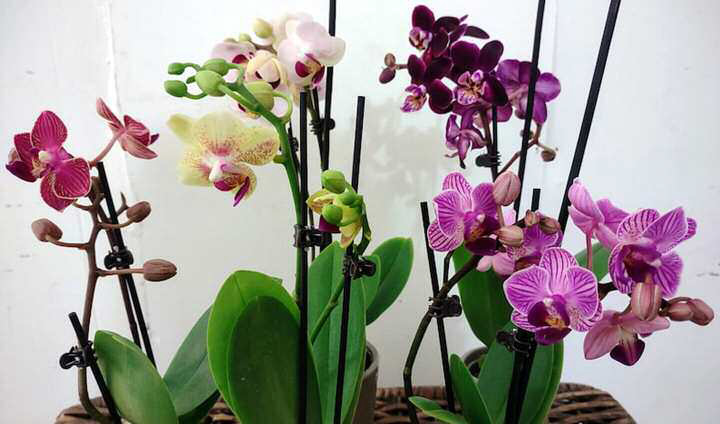
Orchids are one of the top selling flowing houseplants because they are so beautiful, bloom for weeks, and fit nicely into homes. The plant you received as a gift or bought yourself can easily be brought to bloom again and again.
The orchid family is very diverse but the orchid most people know is the “Moth Orchid” or Phalaenopsis. This is the orchid most often sold in grocery stores. Many types of orchids come from tropical rainforests but some come from dryer areas, and there are even New Mexico orchids that live along mountain hiking trails. Because they originate from many localities, you need to know the needs for each type of orchid to get them to flower. If you want more information, check out the internet or see the amazing orchids grown in New Mexico at the next Orchid Show May 3rd 9 am to 4 pm at the Albuquerque Garden Center, 10120 Lomas NE.
The Phalaenopsis, Moth Orchid is a good place to start with orchids. I have two friends who have had them bloom in their house for years just giving them a few ice cubes a week. I had not been successful with keeping my Moth Orchids alive maybe because I was a skeptic about putting ice on a tropical plant. Mine would either die from overwatering and the roots would rot or underwatering and the roots would turn brown and die. It was a very sad situation. It was time to check the science on watering Moth Orchids with ice cubes. Research has been done at two universities and they found no damage to the plant or roots by the cold from the ice. Best of all - flowering was just as good with ice as with regular care.
Here is what you do if you want to give this a try:
• Only the Moth Orchid (Phalenopsis) is recommended for the ice cube watering. It has not been tested on any other orchid. Because there are so many types of orchids with different growing needs, not all will respond to a weekly wetting from ice cubes.
• Typical recommendation is to use three regular size ice cubes every 7 – 10 days. This amount is designed to prevent overwatering and root rot which is the usual cause of plant death. (Three ice cubes is for a regular size pot. If the pot is small, use two cubes, if larger than normal, use four.)
• Place the ice cubes on top of the potting medium. Do not place the ice on the leaves or roots. Orchid soil is a combination of bark, pieces of charcoal, and twigs with a little moss. As the ice melts, it slowly releases water that seeps down through the roots.
• Monitor your orchid. If you notice signs of distress: buds dropping, wilting, or yellow leaves, evaluate where you have your plant located. The Moth Orchid wants bright but indirect light for most of the day. Put it close to a window without the sun shining on it more than a couple of hours a day.
• Fertilize with orchid fertilizer at 25% strength orchid fertilizer every other week from spring through fall.
• Repot your plant every two to three years. You can find orchid potting mix on-line or in nurseries.
Orchid specialists and fanatics will probably cringe at this article but the research has been done and I accept it. If you are a casual gardener and love the Moth Orchid, give the ice cube watering system a try.
Edith Iwan is a Cibola- McKinley County Master Gardener who lives and works in Thoreau. As a Master Gardener she assists the County Cooperative Extension Service in providing accurate, research-based gardening information to county residents. If you have any gardening questions, please call the NMSU Cibola County Extension at 505-287-9266 or NMSU McKinley County Extension at 505-863-3432