As Local Lawmakers Push to Protect Sacred Mountain, White House Pivots to Open Uranium Mines in Cibola
CIBOLA COUNTY— As Donald Trump reshapes the federal government, he is pushing the US Forest Service to focus on “energy priority” projects, like the reopening of uranium mines near Mount Taylor.
The 2025 New Mexico Legislative Session is nearing its conclusion, but before session could end, lawmakers moved to reaffirm Mount Taylor’s status as a protected Traditional Cultural Property. Passing resolutions in both the House and Senate, New Mexico lawmakers expressed concern about environmental risks and the potential for renewed mining activities under the Trump administration’s pro-mining policies.
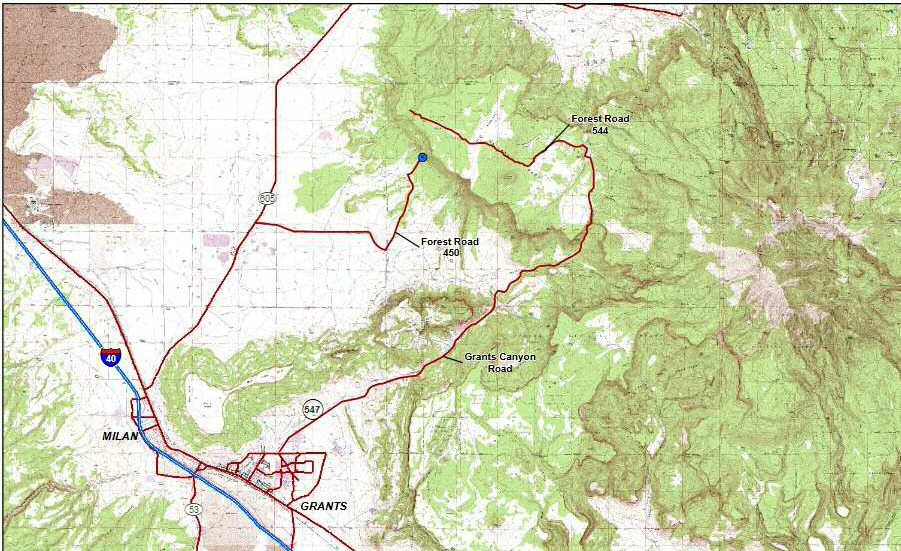
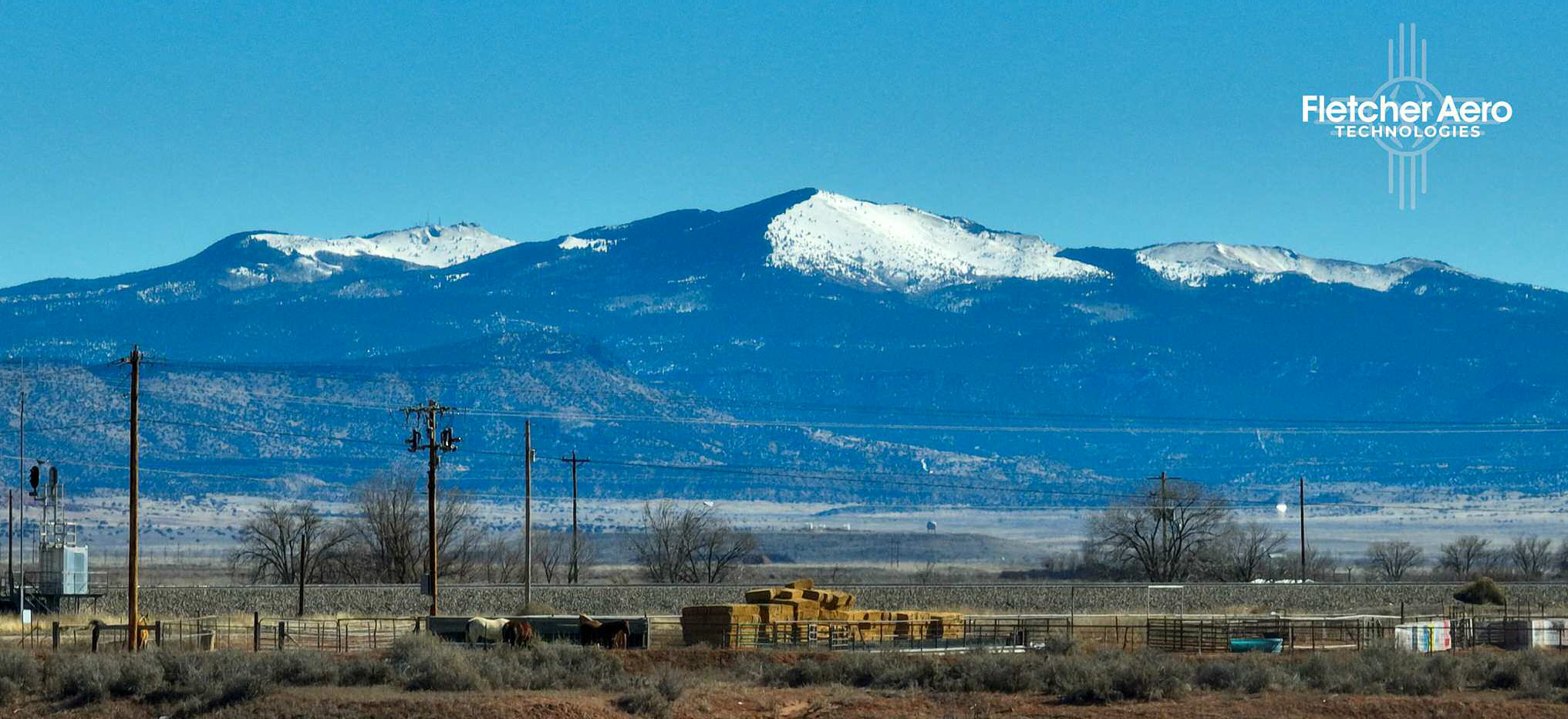
Mount Taylor stands 11,301 feet in elevation. The mountain towers over New Mexico, with the City of Grants and several small villages in her shadow.
A religious icon, Mount Taylor plays a major part in the traditions and cultures of Cibola’s indigenous communities. The Acoma people call the mountain Kaweshtima, the Hopi Tsiipiya, the Zuni know it as Dwankwi Kyabachu Yalanne, and the Navajo Nation refers to it as Tsoodzil.
Legislature Acts to
Protect Sacred Mountain
Two memorials were passed by the legislature last week which seek to prevent uranium mining near Mount Taylor. Memorials do not hold the same power as a law and do not require the governor’s signature.
On March 11, the New Mexico House of Representatives passed House Memorial 37, introduced by Representative Michelle Pauline Abeyta (D-To’hajiilee), affirming the state’s commitment to preserving Mount Taylor and opposing uranium mining projects that threaten its cultural and environmental integrity. The measure passed in a 39-23 vote, with Cibola’s other House representative, Martha Garcia (D-Pine Hill), voting in favor.
The following day, the State Senate passed Senate Memorial 14, sponsored by Senator Angel Charley (D-Acoma Pueblo), with a vote of 2114. However, Cibola’s other senator, George Muñoz (D-Gallup), opposed the resolution.
Both memorials focus on the sacred significance of Mount Taylor to Indigenous nations, particularly the Pueblos of Acoma, Laguna, and Zuni, the Hopi Tribe, and the Navajo Nation. The resolutions also cite concerns over uranium mining’s long-term environmental consequences, including water contamination, public health risks, and the destruction of sacred land.
The resolutions urge local, federal and state agencies to deny mining permits and call for reform of the General Mining Act of 1872 to ensure greater tribal consultation and environmental protection.
Uranium Mining Returns to the Forefront
Despite the legislature’s stance, uranium mining is once again becoming a major issue in Cibola County.
A leaked recording from a recent U.S. Forest Service meeting revealed that agency leaders have designated uranium mining as a “priority project” under President Trump’s latest executive orders. The Roca Honda and La Jara Mesa mines, stalled for over a decade, are now under active review, according to Cibola National Forest Supervisor Heidi McRoberts.
“If you read some of those executive orders on energy, they talk about uranium mining,” McRoberts told staff in the recording. “We have some pretty big projects on the Cibola that fall in that category, so those will be priority projects.”
The potential revival of uranium mining has ignited strong opposition from environmental groups and Indigenous advocates. Opponents warn that these mines, located near the Navajo Nation and within historic uranium mining zones that have already caused immense environmental damage, would deplete water resources and increase radioactive contamination.
The legacy of uranium mining in the region remains a painful chapter in New Mexico’s history.
Contaminated aquifers, abandoned mine sites, and the lasting health effects on Indigenous and local communities continue to serve as stark reminders of the industry’s dangers. Even a drive on Highway 605 North will reveal a ghost town in the making near Murray and Broadview Acres in Cibola County, between the Village of Milan and Village of San Mateo, where only a handful of residents remain.
While many in Cibola County oppose new mining projects, others view uranium as a potential economic lifeline. Grants and Milan were once hubs of uranium mining, bringing jobs and prosperity to the area.
Today, with the county struggling to attract new businesses, some residents see renewed mining as an opportunity to revive the local economy.
At the same time, Cibola is grappling with a severe drought crisis. According to the latest National Integrated Drought Information System report, 100 percent of the county is experiencing drought conditions, with 73.79 percent classified as severe (D2). Livestock, agriculture, and water security are all at risk, heightening concerns over the potential environmental impact of uranium extraction.
Trump’s History of Overriding Indigenous Claims to Sacred Mountains
As the debate over uranium mining near Mount Taylor intensifies in New Mexico, former and current President Donald Trump’s history with Indigenous sacred sites offers insight into his administration’s stance on cultural preservation versus industrial development.
One of the most high-profile examples of this came early this year when Trump, after being sworn-in to the office of president, in one of his first executive orders upon returning to office, restored the federal designation of Denali to Mount McKinley in Alaska.
The mountain, known as Denali for thousands of years by the Koyukon Athabaskans, had its original name reinstated by the Obama administration in 2015. Trump reversed this decision, arguing that the mountain should honor President William McKinley, despite McKinley having no historical connection to Alaska. The reversal has been met with opposition from Alaska’s congressional delegation and Indigenous leaders who viewed it as an erasure of Native history.
Trump’s actions regarding Denali align with broader policies that have prioritized economic development over Indigenous and environmental concerns.
During his first term, his administration drastically reduced the size of Bears Ears National Monument in Utah, a site considered sacred by several tribes, to open the land for potential mineral extraction. Now, his second administration appears to be taking a similar approach in New Mexico.
A Political Shift in Cibola’s Leadership
The passage of House Memorial 37 and Senate Memorial 14 marks a significant shift in Cibola’s political representation.
Both Abeyta and Charley are freshman lawmakers who won seats once controlled by Grants-based politicians. Charley’s election victory returned Senate District 30 to Cibola, after the seat was temporarily held in Valencia County. Abeyta won the seat held by Grants’ former Representative Harry Garcia.
The passage of these resolutions sends a strong message, but without legal weight, they serve as a formal declaration of the state’s position.
In the New Mexico Senate, lawmakers amended the initial memorial to update it so a copy of the memorial will be directly transmitted to the Grants City Council, the Milan Board of Trustees, and the Cibola County Board of Commissioners – a direct message to Cibola’s local leadership from Santa Fe.
As the legislative session concludes on March 22, Cibola County finds itself again at a crossroads—caught between the economic promise of uranium and the cultural and environmental imperative to protect its sacred lands.
The fight over Mount Taylor is only beginning.