

Fort Wingate’s Role in National Security
CIBOLA COUNTY — Tucked in the high desert just east of Gallup and only 53 miles from Grants, Fort Wingate is easy to miss. But in the quiet pines and mesas of this historic military depot lies a legacy that stretches from the Navajo Code Talkers of World War II to today’s cutting-edge missile defense tests. The US military’s mission at Fort Wingate continues to serve as a symbol of American strength, resilience, and innovation.
Its past is storied. Its present is strategic. And its future remains essential to U.S. defense.
Missile Defense Over Cibola
In recent months, Fort Wingate has seen a surge in activity.
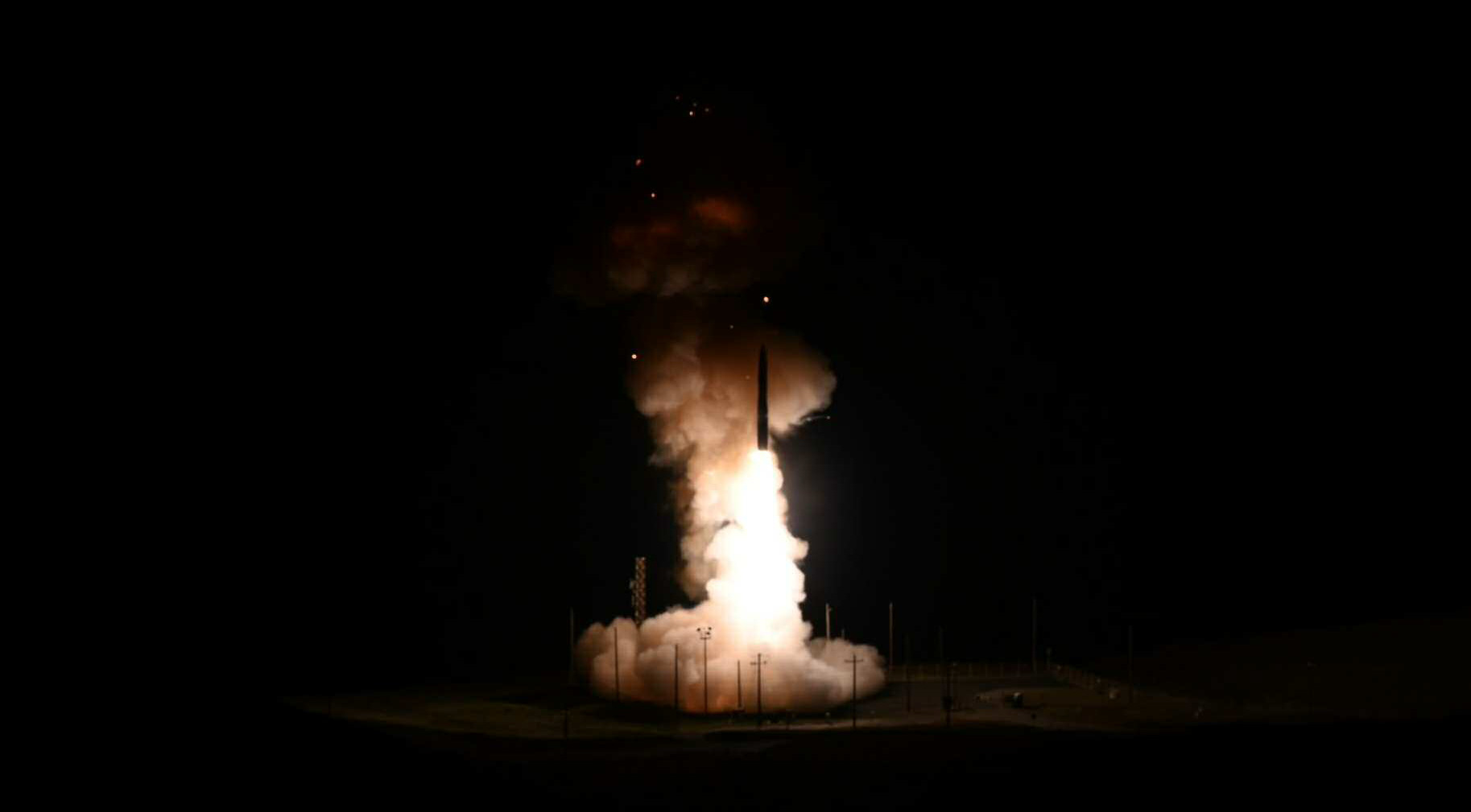
Missiles have launched from its testing complex toward White Sands Missile Range as part of a national effort to advance the Army’s missile defense capabilities. In December alone, Army teams launched both a Precision Strike Missile (PrSM) and a Black Dagger shortrange ballistic missile target. Another missile test occurred in February, closing parts of the Mt. Taylor Ranger District as rockets soared through Cibola County skies.
The December 11 PrSM test was especially significant— it marked the first time active-duty soldiers independently conducted a test using the High Mobility Artillery Rocket System (HIMARS). According to Sgt. 1st Class Maggie Vega, a U.S. Army test officer, the soldier-led launch allowed for real-world evaluation under combat-like conditions, and ensured that the system was tested with direct feedback from the warfighters who will ultimately rely on it.
Meanwhile, the Black Dagger tests served to evaluate the Army’s new Lower Tier Air and Missile Defense Sensor (LTAMDS). Chief test director Cain Crouch said the launch exceeded performance goals and helped bring the advanced radar system one step closer to deployment. “LTAMDS is one of the most advanced radars in the world,” he said. “It will help our warfighters become more efficient in detecting incoming threats, ultimately saving lives on the battlefield.”
Though officially declared inactive in 1993, Fort Wingate’s infrastructure, location, and proximity to White Sands Missile Range have made it indispensable in modern missile development.
A Place of Firsts
Long before missiles lit up the sky, Fort Wingate played a critical role in shaping the history of Native American military service.
According to the US National Archives, soldiers boarded a bus at Fort Defiance that morning, those recruits arrived at Fort Wingate, ate lunch in the dining hall, and stepped into history.
It was here, on May 4, 1942, that the original 29 Navajo Code Talkers swore their oaths and joined the United States Marine Corps.
These Code Talkers would go on to create and implement an unbreakable code based on the Navajo language, used to transmit military communications across the Pacific theater during World War II. Their work was so effective that U.S. commanders later credited them with saving lives and ensuring American victory in critical battles. “Were it not for the Navajos, the Marines would never have taken Iwo Jima,” said Maj. Howard Connor, a U.S. Marine Corps signal officer.
The program’s founder, Philip Johnston—a World War I veteran who grew up on a Navajo reservation— had proposed the idea to the Marine Corps, arguing that the Navajo language, with its complexity and unwritten structure, would be indecipherable to enemy forces. He was right. Between 350 to 420 Navajo men served as Code Talkers, and their efforts remained classified for decades.
Fort Wingate was the first stop on that journey. It was the place where young Navajo men, who had not even been granted full citizenship by the U.S. until 1924, began a chapter of heroism that would reshape the war and earn them the highest honors from Congress more than half a century later.
Honoring the Past, Protecting the Future
The land Fort Wingate sits on is older than the Army itself.
The area has long held spiritual and cultural significance for the Navajo Nation and the Pueblo of Zuni, both of whom inhabited it long before the United States federal government claimed it via the Treaty of Guadalupe Hidalgo in 1848.
The first military post near present-day Fort Wingate was established in 1860 as Fort Fauntleroy, later renamed Fort Lyon.
The installation was briefly abandoned and then reestablished in 1868 as Fort Wingate, named after Union Major Benjamin Wingate. Over the next century, it would serve various military purposes—from housing explosive ordnance to serving as a launch site during the Cold War for missile testing. In 1942, the installation supported the Allies’ war effort by employing Native Americans in logistical and operational roles.
Throughout the 20th century, the land changed hands between the Army, the Bureau of Indian Affairs, and the Forest Service.
It was even home to the C.H. Burke Indian School, which educated both Navajo and Zuni children. Portions of the land have since been returned to Native nations, but the military’s presence remains a central part of the area’s identity.
As Cibola County prepares to honor veterans and mark the anniversary of the Bataan Death March on April 9, Fort Wingate stands as a reminder of both past sacrifice and present strength. It is a place where Native soldiers once took an oath that would echo across decades, and where today’s Army continues to test and train with new technologies that aim to prevent future wars.
From its historic roots to its role in cutting-edge defense, Fort Wingate remains one of New Mexico’s most meaningful military landmarks— an intersection of heritage, sacrifice, and innovation that continues to shape the future from the high desert of the Southwest.