
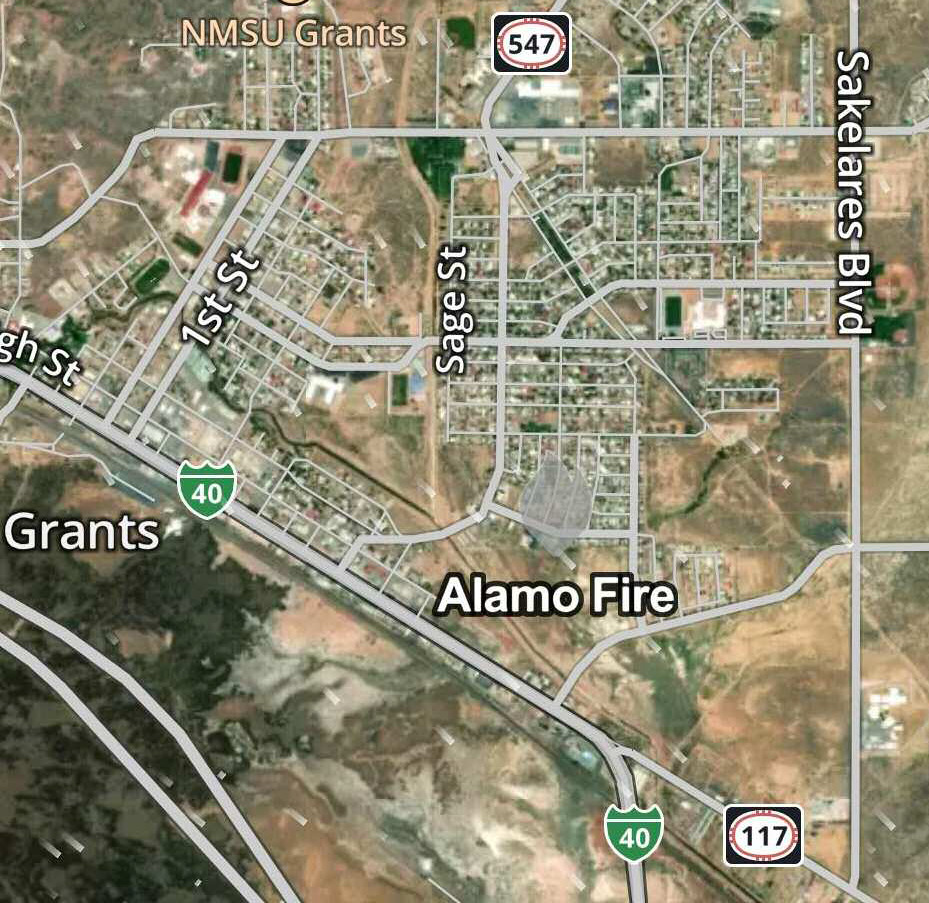
GRANTS, N.M. — A devastating fire broke out on the evening of April 27, tearing through a Grants neighborhood, destroying six homes, displacing families, and injuring two firefighters. City officials have called it one of the most dangerous and fast-moving fires in recent memory.
Dubbed the “Alamo Fire”, the blaze began as a brushfire fueled by dry conditions and strong winds. It spread rapidly into residential areas, leaving residents with only minutes to evacuate.
Six homes were destroyed, including that of Ernesto Fernandez, a U.S. Forest Service wildland firefighter who responded to the blaze. Fernandez, despite seeing his own house engulfed in flames, joined the firefight to prevent further devastation.
'Talk about duty — that's commitment,' Fire chief Mike Maes said during the May 1 Coffee with the Managers meeting. A Go-FundMe campaign has been launched to help Fernandez recover from the loss.
The community's response has been swift and compassionate. Local restaurants, organizations, and volunteers immediately brought food, water, and support to evacuees and firefighters. Pizza 9 pledged statewide profits on May 5 to support fire victims. @ The Elks, Roberta's Place Domestic Abuse Shelter, and local churches also provided critical assistance.
The fire triggered a massive emergency response.
Twenty-three units and 41 personnel, including mutual aid from neighboring jurisdictions, worked to contain the flames. Heavy equipment, including two graders and a backhoe, stopped the fire's advance. Firefighters faced exploding ammunition and fireworks inside burning homes, forcing them to dodge projectiles.
Two firefighters were injured — one from overexertion and another from falling amid debris. Both were treated and released but remain on leave as they recover.
Questions over chain of command and interagency communication dominated the post-fire briefing. Officials from the Mount Taylor Ranger District, City of Grants, Village of Milan, Cibola County Sheriff’s Office, Cibola County Fire Marshal, Cibola County Manager, and Red Cross emphasized the importance of mutual aid and outlined how incident command was shared during the chaotic night.
Issues over notification and jurisdictional coordination also surfaced after another unrelated fire that same night went unreported to law enforcement. Officials stressed work is underway to improve communication protocols, particularly in rural and forested areas.
'This was not Grants' fire alone,' County Manager Kate Fletcher said. 'It was mutual aid in action. Every agency, from city fire and police, to county deputies and the Forest Service, worked together to stop this from being worse.'
Red Cross officials praised the community's response and reminded residents that while donations are appreciated, they must be coordinated through official channels during emergencies. Homemade food and unsolicited donations cannot be accepted due to health regulations.
Officials from the USFS explained the need for residents to adopt “Firewise practices” and create defensible space around homes. Although the Mount Taylor Ranger District’s forest health is considered 'generally fair,' drought conditions and dense vegetation have increased fire danger. When asked about the health of the forest in the Mount Taylor Ranger District, Forest Ranger Ryan Washum explained that the forest health is doing fine on a 1,000-year timeline.
As of press time, the cause of the fire remains under investigation. Officials confirmed it was human-caused, but whether accidental or reckless has yet to be determined.
A community debriefing meeting is planned to discuss lessons learned and improve response strategies. Meanwhile, Grants continues to rally around those affected.
'We will recover, rebuild, and move forward — together,' said Grants Fire Chief Mike Maes. 'This community is amazing, and when tragedy strikes, we stand up for one another.'
Timeline of the April 27 Alamo Fire Response
(Times approximate, based on conversation with fire chiefs, fire officials and official communications.)
7:05 p.m. (1905) — First report of fire in a field received by dispatch.
7:07 p.m. (1907) — Secondary call comes in reporting fire spreading to trailers and grill area.
7:10 p.m. (1910) — First fire units arrive on scene (Rescue 7 and Engine 12).
7:11 p.m. (1911) — Explosions reported on site; multiple structures already involved.
7:13 p.m. (1913) — Fire spreads rapidly. Additional units, including Milan and other agencies, are dispatched.
7:19 p.m. (1919) — Brush trucks and additional units arrive to assist as the fire intensifies.
7:21 p.m. (1921) — Grants Fire and Rescue 6 arrives on scene.
7:31 p.m. (1931) — Ladder truck and County Volunteer Fire Departments arrive. Operations begin to divide as fire impacts multiple structures.
7:33 p.m. (1933) — Additional engines and mutual aid resources arrive.
7:37 p.m. (1937) — Red Cross requested to assist displaced residents and emergency responders.
7:51 p.m. (1951) — Engine 22 logs on scene. Incident command fully established. Focus remains on protecting nearby homes and preventing the fire from spreading beyond immediate block.
Throughout Evening — Exploding ammunition and fireworks complicate suppression efforts. Fire jumps briefly to a neighboring yard but is caught quickly before additional structures ignite.
Two firefighters suffer injuries. One treated for overexertion and another for a fall in debris. Both are released later and placed on temporary leave.
Red Cross and local volunteers provide immediate support to evacuated residents.
By Midnight — Fire largely under control after aggressive effort involving dozens of local, county, state, and federal responders.