
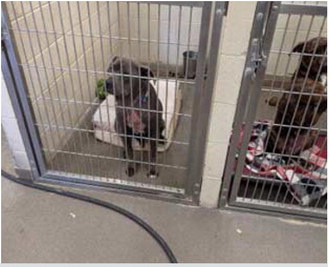
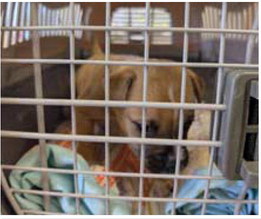
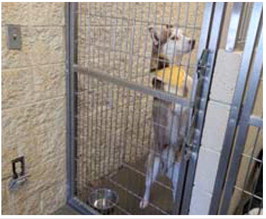
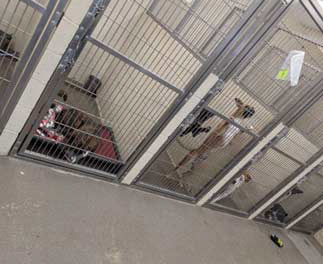
The Grants Animal Care Center currently employs two full-time staff members and one part-time employee, along with several applicants and volunteers. Rowe explained that they work seven days a week, and despite the shelter’s design to accommodate forty animals, as of August 7th it housed one hundred eleven, which is less than their usual capacity.
Volunteering & Fostering
“A fifteen minute walk for a dog is huge in their life.” Rowe explained. Volunteering for even that short duration would make a positive impact.
Rowe highlighted the need for an administrative assistant, emphasizing the importance of someone “to sit and answer the phones, and even if you just take messages and I come in every hour, look through the messages to see what's pertinent… That is help[ful]. Every conversation on the phone is 5 to 30 minutes… probably closer to 30 minutes.”
Rowe also expressed the need for fosters. The current situation is challenging due to the limited resources of two employees. To make the most of their time, it’s crucial to have individuals who “may just come get the dogs out on the leash… It gives them a new face, a new interaction, a new experience.”
Keeping the Shelter Clean
“[Floors] are kept wet near the chemical area to prevent us from walking through them and spreading the chemicals to the facility. [Kennels] are cleaned either [at the start of the work day] or [the end], usually [the end] to avoid spreading the chemicals on our clothes. We spray down with Lysol, hand sanitize, and wash our hands until they bleed.”
The workers take approximately 45 minutes to clean a row. They scoop everything, remove all the blankets, food, and water, degrease the walls, floors, bars, doors, rinse it all, and then apply disinfectant before letting it sit.
Last Chance Program
The Last Chance Program, a 12-week program, takes some dogs to a prison program and they don’t return to the shelter because they’re trained and adopted out from New Mexico prisons. Last week, on July 27 and again on August 3, about five adult dogs and nine puppies went to the program.
Currently, only one prison is participating in the program, in Los Lunas, but soon, a second one is expected to join in.
The shelter, though a no-kill shelter, does euthanize animals. But it was emphasized that the shelter does not euthanize to make space for more animals, only when it is necessary for the quality of life of the animal.
Rowe explained “It’s not something we want to do, but if it’s in the dog’s best interest, it’s the fairer thing to do, it’s the right thing to do. So [euthanasia is] still happening, but not for space. It’s because quality of life… That’s what our goal is.”
Dogs Feel Safe at the Shelter
Rowe explained that one of their dogs had been at the shelter for about two years. “She was an amazing dog and she deserved a chance.” Recently, she went into foster care, but she kept escaping and returning to the shelter. She would either wait for Rowe by the gate or the shelter door. She would continue to return. The moment the shelter doors were opened, she would run inside and look for the space she used to use.
During her time in foster care, when she would return to the shelter, the employees noticed she had developed an intense fear of leashes and would be at the very back of her kennel, which was unlike her. When her owners didn’t return for her, she would stay in a crate behind the desk and get to interact with people. Eventually, they didn’t need to worry about getting her to be on a leash. They would simply open the shelter door and say, “Let’s go,” and the dog would run to the grass excitedly and play with them. That dog is one of the ones that got adopted through the Last Chance Program.