
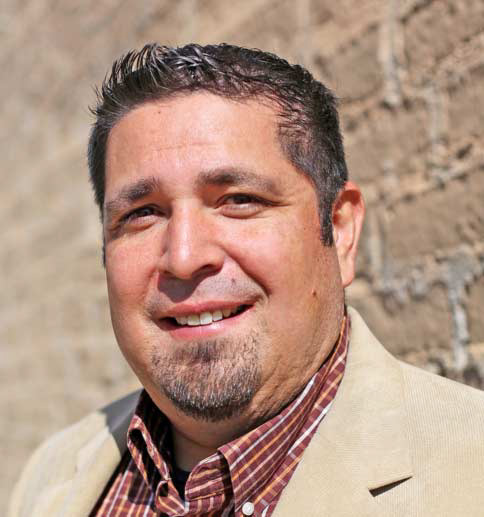
In October 2001, at 22 years old, I began my career with the New Mexico Judiciary.
I had graduated from Los Lunas High School in 1996, attended New Mexico Highlands University, and ultimately earned my degree in Criminology from the University of New Mexico. Before entering public service, I had worked various jobs, run my own business installing foundations for manufactured homes, and even earned a contractor’s license.
I grew up watching my parents work hard—my father running a septic installation company that’s been in business for over 40 years, my mother raising three children while managing the books and earning a master’s degree in Social Work. Construction was good work and paid well, but I felt called to something different: serving the public. That path led me to the courts.
Early in my career, I worked in the Court Clerk’s Office and was assigned to be the jury clerk and monitor for the Grand Jury. Even before being hired full-time, I served as the Grand Jury Bailiff once a week in Valencia County. On my first day, I stood before District Court Judge William A. Sanchez and took an oath to keep all grand jury matters confidential. It was then that I began to understand how vital jurors are to both the court and the community.
Most people have seen courtrooms on television— everyone rising as the judge enters. This tradition is a sign of respect for the court and the law itself. But what’s less known is that the only people a judge will stand for are the jurors, as they enter to take their seats. This is a quiet but powerful tradition, honoring their role as the voice of the community in our justice system.
Over the years, I’ve learned that for many, receiving a jury summons is their very first interaction with the courts. Some approach it reluctantly, armed with every reason they can think of to be excused. But once they understand their legal obligation—and the value of their service—most serve willingly. In fact, many finish their service saying they found it far more interesting and rewarding than expected. A few have even asked to serve again right away.
In New Mexico, a jury of one’s peers—as guaranteed by the Sixth Amendment of United States Constitution—means a jury randomly selected from the community where the trial is held. It must represent a fair cross-section of the local population, reflecting its diversity of race, national origin, gender, and life experience. That diversity matters because jurors bring their own perspectives, shaped by where they grew up, their culture, their values, and their everyday experiences.
A jury’s work is much like making an important life decision—you weigh facts, listen to others, and consider different viewpoints. In the jury room, twelve people with different backgrounds must evaluate testimony, review the judge’s instructions, and examine the evidence to reach a verdict. They may see the same facts differently, but together, they decide what is fair and reasonable.
That’s why it’s so important that juries reflect the community. We need people from all walks of life— urban and rural, college-educated and self-taught, employed, self-employed, homemakers, parents and non-parents, Spanish-speaking, Navajo-speaking, and English-speaking. Each perspective adds depth to the decision-making process.
So if you ever find yourself in court—whether facing criminal charges or involved in a civil dispute— ask yourself this: Who do you want deciding your case? A jury of strangers with no connection to your community? Or a jury of your peers—your neighbors— bringing their shared values, fairness, and common sense to the table?