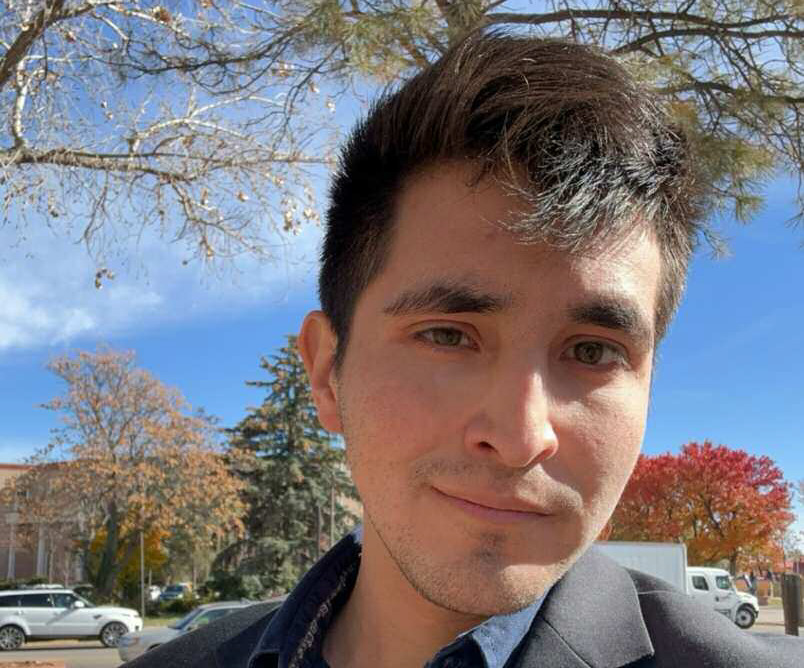
I am a Yazzie-Martinez student.
Or rather, I was a Yazzie-Martinez student who graduated from Grants High School, went off to college only to realize I was behind my peers.
On July 20, 2018, Judge Sarah Singleton ruled that the State of New Mexico had violated the constitutional rights of its students. In her decision, she declared that the state had failed to provide a “sufficient” public education—especially to Native American, Englishlearning, economically disadvantaged, and disabled students.
That ruling, in many ways, followed me. I was part of the data set used by the court. I sat in classrooms that the state used as examples. My scores—and those of my peers/friends in Grants-Cibola County Schools—were used as evidence that New Mexico had failed its children.
But no one ever told us. No one ever came to us, the students at the center of it all, and explained that our school system was under the scrutiny of the judiciary. That experts were tracking our progress year after year. That our names—though anonymized in reports and graphs—were forming the foundation of a landmark ruling. I didn’t realize it until years later, in 2023, when I started combing through state education data and saw the truth.
We were the data—but no one ever told us we mattered.
When I showed some of my friends the court documentation, they were stunned. Colorful graphs, black-and-white charts… the faceless numbers represented us. We knew who they were about. That was our cohort.
And it was criminal.
The data showed that in SY 2013-14, the year I started high school, only 45.7% of students at Grants High could read at grade level. By 2017, that number had only climbed to 54 percent. Still an “F.” And yet, class after class graduated without the basic skills we are promised in the state constitution. A high school diploma should be earned—not handed out to make the statistics look good.
Judge Singleton was clear. The issue wasn’t just about money. In her words: “Despite their sweeping claims, Defendants did not prove that school districts fail to manage their finances properly. To the contrary, school district witnesses repeatedly testified that they take great care to budget their resources responsibly and effectively.”
In other words, it wasn’t just about funding—it was about leadership. About priorities. About adults doing their jobs.
“Student outcomes won’t change until adult behaviors do.”
That’s what a banner at Albuquerque Public Schools says, and I believe it’s true. Because while many point fingers, what we’re seeing today—especially the rise in youth violence, like this weekend’s mass shooting in Las Cruces and the recent killing in Albuquerque—cannot be separated from years of educational neglect. We’ve raised generations without the tools they need to succeed. And illiterate, unsupported children become illiterate, unsupported adults.
Where were the parents? Where were the teachers? More importantly: where was the leadership?
And that brings us to the present. In 2025, despite all the lawsuits, funding increases, and leadership shakeups, Grants-Cibola County Schools remains largely unchanged. If anything, it’s worse. We still graduate students who can’t read at grade level.
The progress is not fast enough, and the community is still not informed enough.
Educational standards aren’t set in D.C. They’re not even fully set in Santa Fe. They are set right here—by our locally elected school board. These are government officials with the power to improve or fail our kids.
I’m grateful that Superintendent Lane Widner and Dr. Delton Martin are implementing changes. But Cibola deserves to see rapid, measurable results. Because education is not just a right—it is a lifeline. And reading is not just a skill—it is freedom.
According to the most recent official proficiency data from the state department of education, only 36 percent of students in GCCS can read at grade level; according to the most recent data from the school district’s STAR reading results, 33.73 percent of students can read at grade level.
If we want to change our future, we must first accept that we failed our past. And then get to work—fast. This should take an all of community approach, the education of our kids is on all of us.
They are the future of Cibola: the mayors and doctors, the laborers and gardeners, the ranchers and law enforcement. For them—for us—for the future of Cibola—we must do better.