
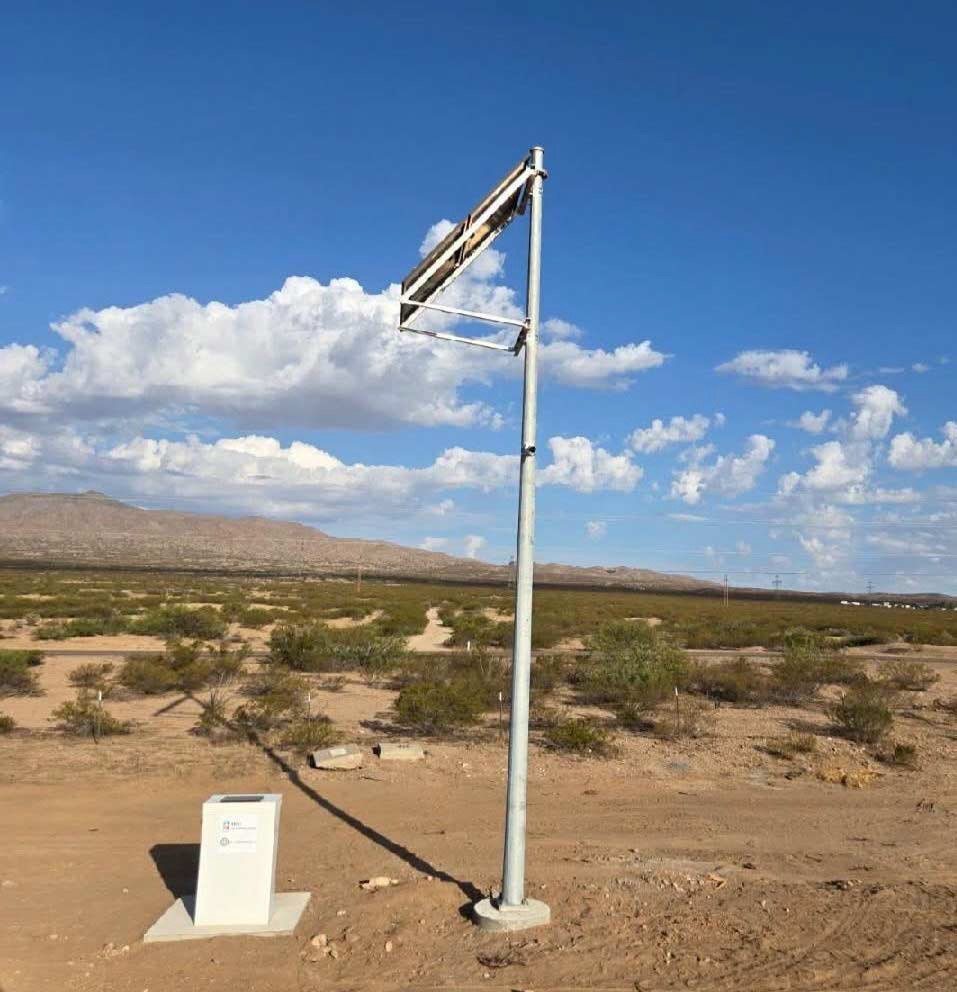
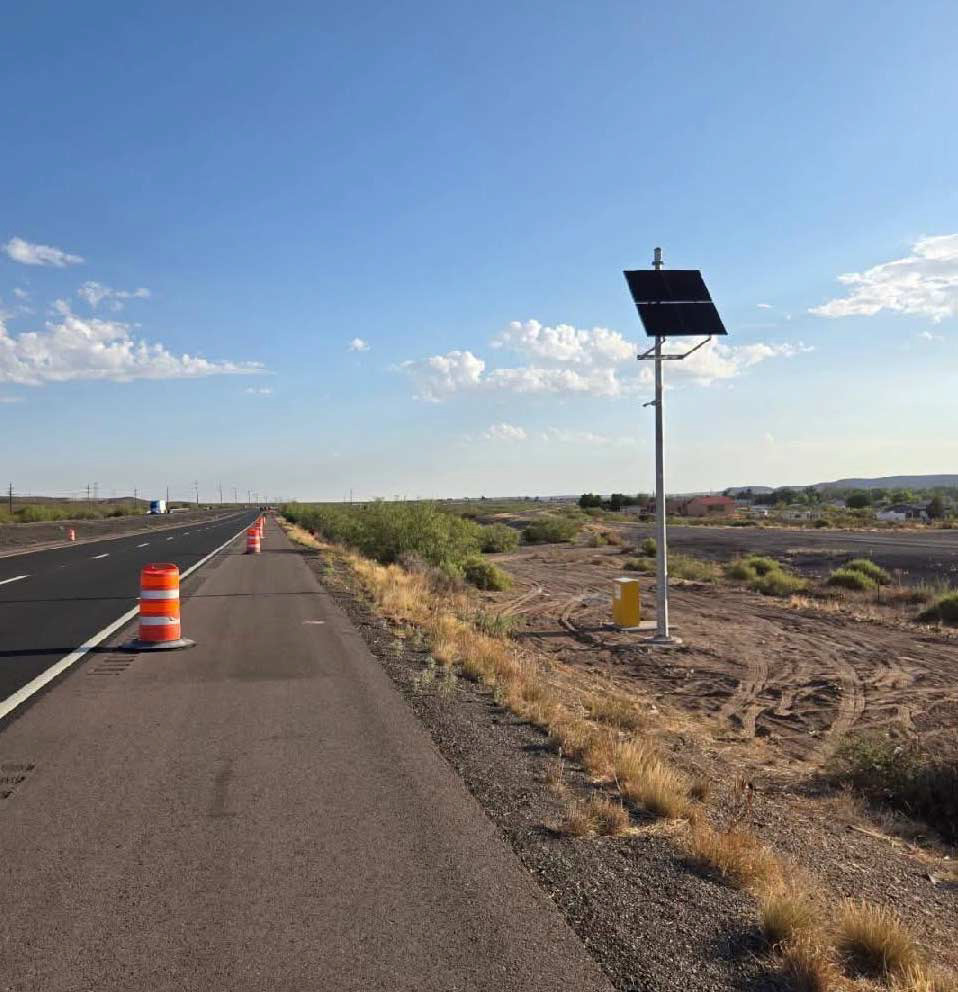
CIBOLA COUNTY, N.M. – A new camerabased traffic monitoring system is operating along Interstate 40 near milepost 97 in Cibola County, replacing an in-pavement traffic counter that had been in service for more than two decades.
The New Mexico Department of Transportation confirmed Tuesday that the camera near milepost 97 is currently the only permanent trafficmonitoring camera operating in Cibola County.
Although the equipment may resemble a surveillance camera, NMDOT says it is used strictly to count and classify traffic and does not collect license plates, driver information or other personally identifiable information.
The new system replaced an in-pavement counter installed in 2005 that had malfunctioned, according to NMDOT District Six Public Information Officer Jenny Gallegos.
No new permanent monitoring locations were added in Cibola County as part of the upgrade.
NMDOT said the camera technology is less expensive and easier to maintain than the older roadway-based equipment. It also allows crews to install and service the system without closing interstate lanes.
“That is part of the reason for switching to cameras,” Gallegos said. “We can simply attach the camera to the existing pole and existing counter box.”
She said the change saves the state money, reduces traffic disruption and, most importantly, helps keep NMDOT workers safer.
In addition to the permanent camera near milepost 97, NMDOT occasionally deploys portable camera counters at other locations. Those temporary systems typically remain in place for three to four days and are used on high-volume or high-speed roads where placing pneumatic tube counters across the roadway could pose a safety risk to employees.
The permanent camera classifies passing vehicles into one of 13 vehicle categories established by the Federal Highway Administration.
NMDOT does not store continuous video or still photographs as part of the traffic-counting process. The system may conduct a brief image review for quality-control purposes, but NMDOT said those verification images are deleted immediately after the review.
Traffic-volume information collected by the stations is publicly available through NMDOT’s online Traffic Monitoring System.
The data serves purposes well beyond simply determining how many vehicles travel a stretch of highway.
NMDOT uses traffic counts along I-40 for roadway planning, engineering and future project development. The information helps transportation officials determine how heavily the corridor is used, identify changes in traffic over time and evaluate congestion and traffic flow.
Traffic volumes can also be compared with crash information during safety studies and used to determine whether improvements such as additional lanes, turn lanes or signal changes may be warranted.
The information feeds into statewide and regional transportation models used to forecast future traffic conditions and analyze how proposed developments or roadway projects could affect the transportation network.
Traffic counts and classifications are also used when NMDOT prioritizes projects and funding.
Vehicle classifications are particularly important on I-40, where commercial truck traffic makes up a significant part of the highway's use. NMDOT said vehicle classification and axle information help pavement engineers determine pavement thickness, materials and maintenance strategies, while truck percentages help the department anticipate freight impacts and longterm infrastructure needs.
The information is also used for required federal transportation reporting.
NMDOT recently publicly clarified the purpose of the new equipment after motorists began asking questions about similar cameras being installed along Interstate 25.
Gallegos said the department has received questions about whether the cameras were connected to law enforcement, surveillance or license-plate collection.
“Because cameras have become a highly discussed topic in media and public forums, some drivers have asked whether they are related to law enforcement, surveillance, or license-plate data collection,” Gallegos said.
NMDOT emphasized that the systems are not used for law enforcement, incident detection, traffic surveillance or tracking motorists.
The equipment itself can resemble older trafficcounting installations, particularly when the station is powered by a solar panel. Rather than replacing the entire roadside setup, NMDOT can mount the camera on an existing pole and continue using the existing counter box.
For motorists passing the installation near milepost 97, the camera may be new, but the traffic-counting station itself is not.
NMDOT has been gathering traffic information at that location since 2005.