Former Interior secretary discusses health care access, Chaco protection and challenges facing rural communities during Grants visit
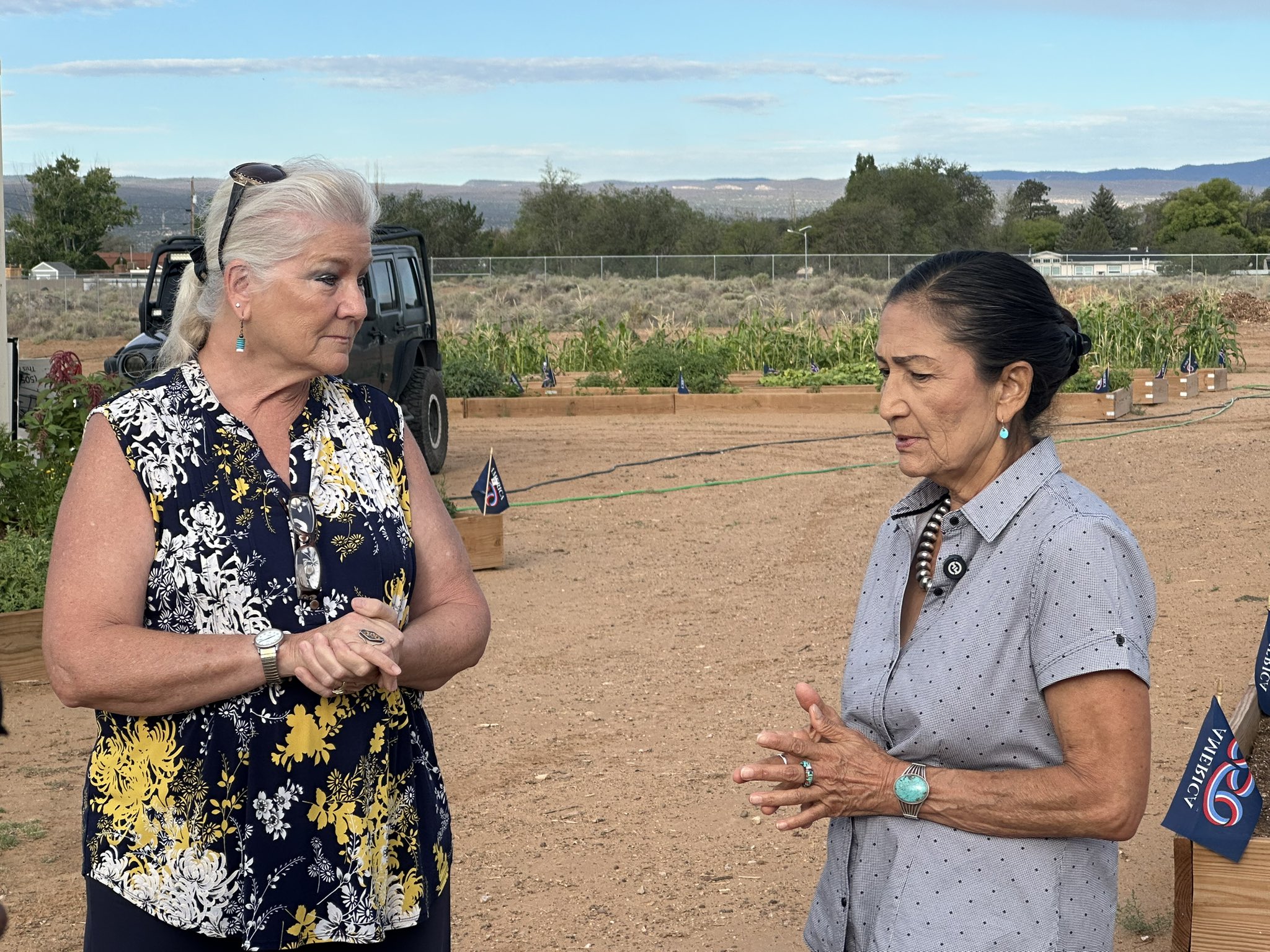
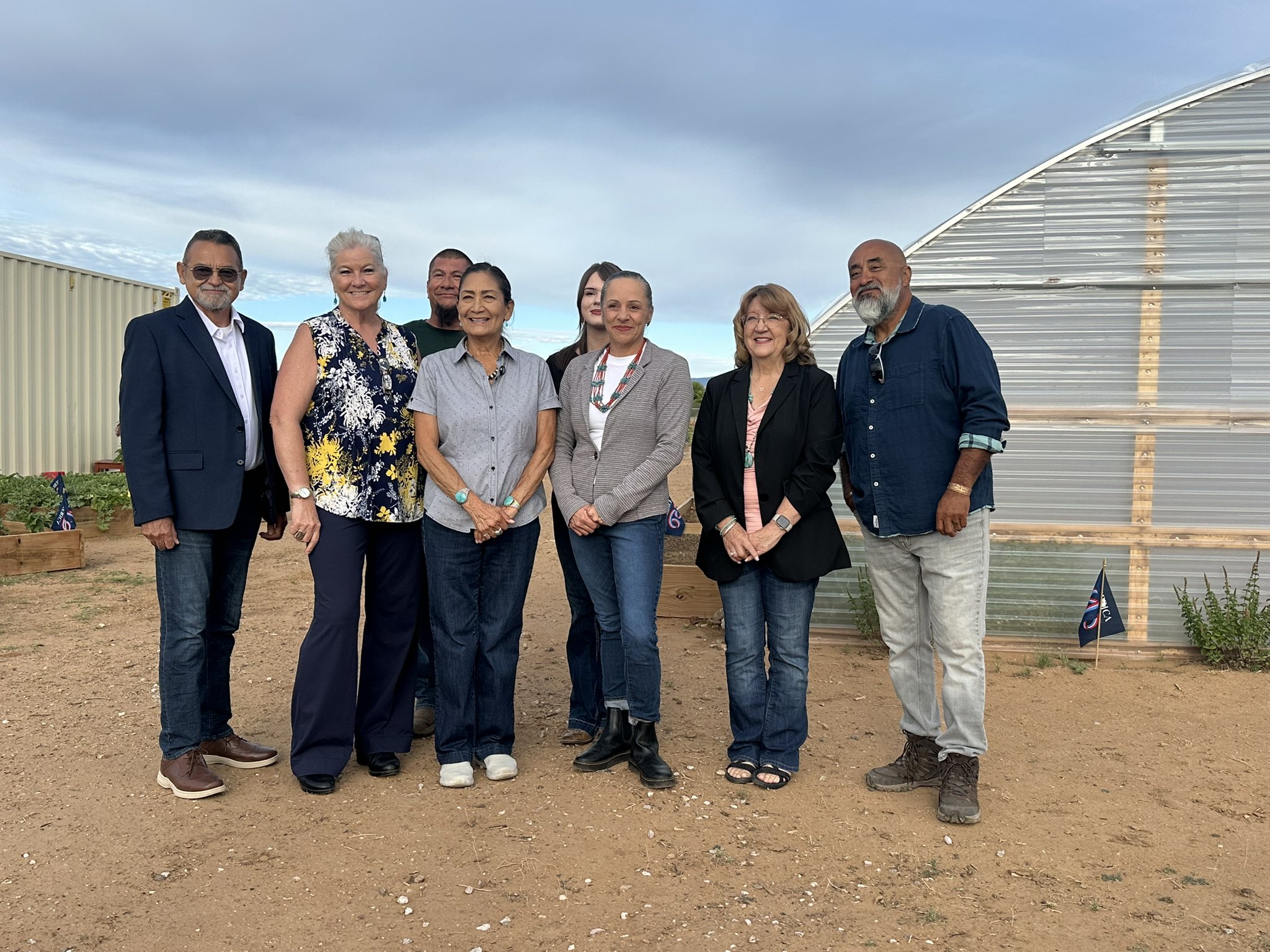
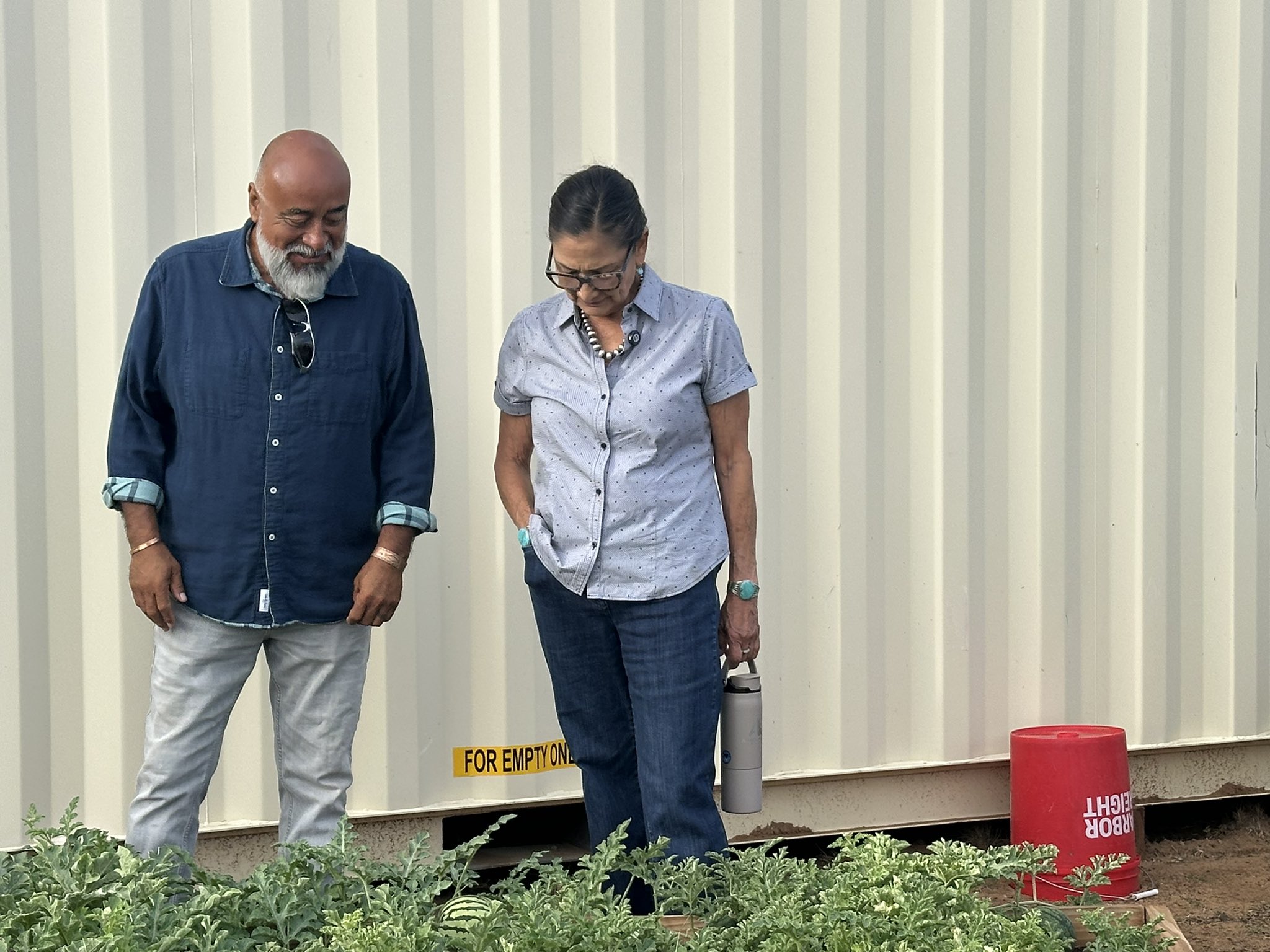
GRANTS, N.M. – A tour through the Grants Community Pantry Friday morning became a broader conversation about what it takes to live – and stay healthy – in rural New Mexico.
Former U.S. Interior Secretary, and current Democratic Gubernatorial candidate Deb Haaland visited the pantry Aug. 21, where Executive Director Alice Perez and garden master Donald Jaramillo walked Haaland and members of her team through the facility, its gardens and the work being done to get food into communities across Cibola County and western New Mexico.
During the roughly hourlong visit, Haaland heard about the pantry’s operations, the people it serves and the logistical challenges of reaching residents across a sprawling rural region. Pantry officials said the organization supports 14 mobile distributions, including distributions serving communities on Laguna Pueblo, the Zuni Reservation and the Navajo Nation, and an ever-fluctuating list of locals suffering food insecurity.
Haaland Tours Grants Community Pantry
The tour began inside, where Perez was able to show off the complex’s warehouse and freezer that holds the food before distribution. A team of volunteers help to accomplish the work of bagging, boxing, and ensuring each family receives the assistance it will need to get them through the week.
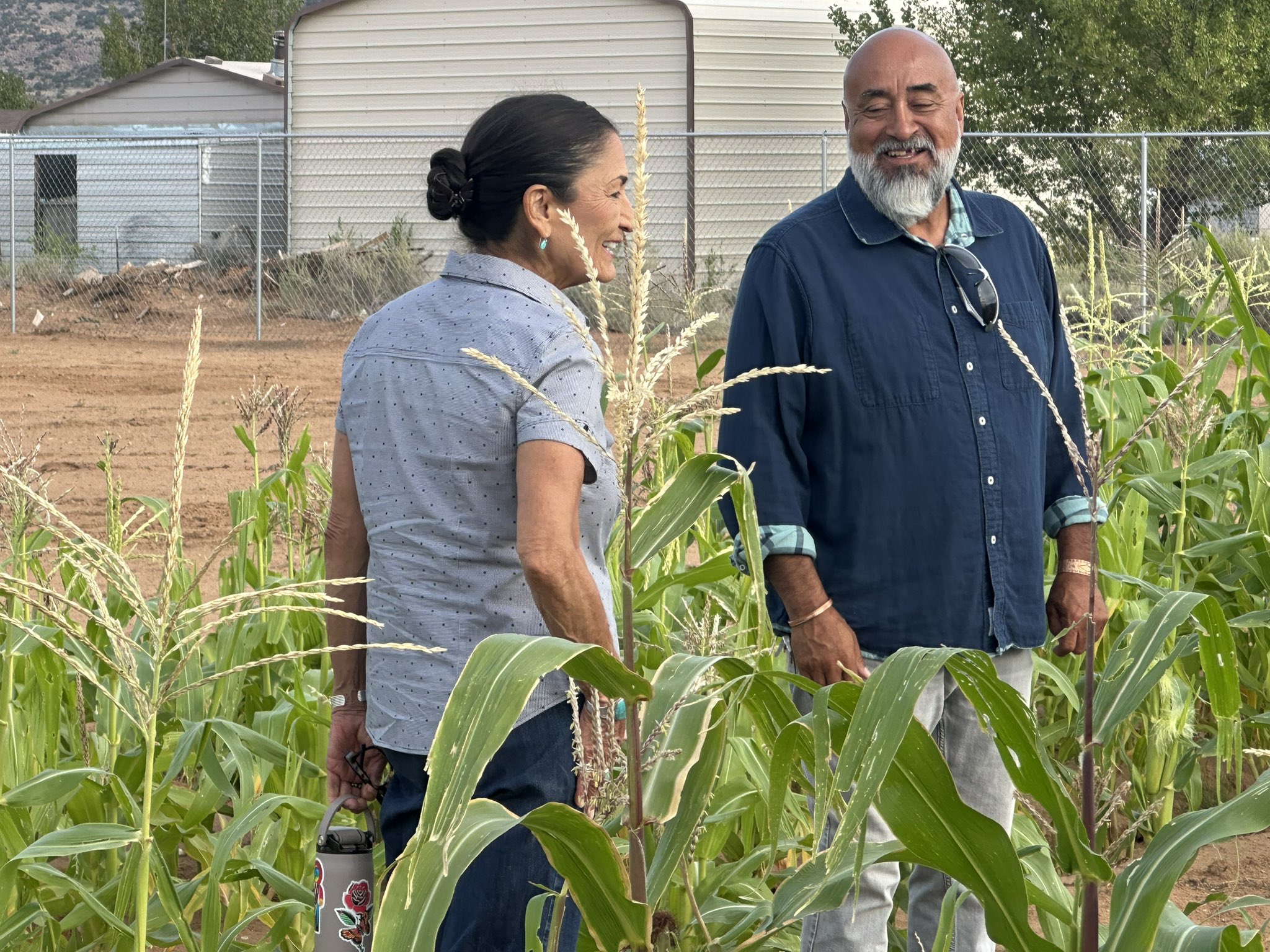
Perez and Jaramillo walked Haaland to the Grants Community Pantry’s growing Community Garden and described how the property had developed from largely unused ground into a working source of fresh produce. Jaramillo walked with Haaland through the garden beds, identifying plants and explaining how the garden had expanded as the pantry’s work grew.
Perez was asked if the Grants Community Pantry has seen an increase in food-need as a result of recent changes and cuts to SNAP funding. Perez explained that the pantry’s clients are not limited to people who are chronically unemployed or without an income. During periods of sudden financial hardship, she said, the organization has seen people from across the community turn to it for help – including doctors affected by a government shutdown. She said, “food insecurity, no one is immune to it. No one, because life can change on a dime.”
Health and Public Lands in Cibola
Speaking with the Cibola Citizen afterward, Haaland was asked what she would do as governor to improve health care access in communities such as Grants, including a shortage that has left Cibola County without a local optometrist for years.
Haaland said improving rural health care would require addressing both insurance coverage and the difficulty of recruiting professionals to communities outside New Mexico’s larger cities.
“We want everyone to have health care regardless of where they live,” Haaland said.
She said one component would be exploring a public health insurance option while also strengthening programs intended to recruit and retain doctors and other medical professionals.
Haaland specifically pointed to expanding student loan repayment programs for graduates who practice in New Mexico and finding additional incentives to help medical professionals establish themselves in rural communities.
That could include help with housing costs for physicians and other health professionals beginning their careers, she said.
“If you graduate from medical school or if you graduate from optometry school and you can do your residency here or practice here in New Mexico, we’re ensuring that we can help you pay off your student loans,” Haaland said.
She also proposed putting more resources into the state’s site-readiness efforts so vacant or underused buildings could be prepared for use as medical clinics and offices, the effort would include ensuring properties have broadband, fiber and other infrastructure needed by modern medical practices.
But Haaland said recruiting a doctor to a community involves more than providing an office.
A physician or optometrist considering a move to New Mexico may also be thinking about where their children will attend school, whether housing is affordable and what kind of community they would be joining.
“Everything’s intertwined,” Haaland said.
She pointed to public education, housing, public safety, affordability and environmental quality as factors that can determine whether professionals choose to build their lives in rural New Mexico.
The challenge is already familiar to Cibola County residents who routinely travel to Albuquerque, Gallup or even outside New Mexico for specialty medical care.
“I’ve talked to a lot of people who actually have gone out of state for doctors’ appointments because they couldn’t get in here,” Haaland said. “What’s more disheartening are the folks who could never afford to go out of state for a doctor’s appointment.”
Haaland said she would make recruitment of medical providers to Grants part of that effort.
“We are not leaving the people of Grants without the medical care that they need,” Haaland said.
The pantry itself offered another example of how quickly families can become vulnerable. “No one – everybody can be vulnerable at one point or the other in their life,” Haaland said.
She spoke briefly about raising her children as a single mother and said her own experience influenced the way she views the interconnected nature of government programs and household needs.
In discussing the need for more medical professionals, Haaland turned toward the natural beauty of New Mexico and said, “What New Mexico has going for it, right? You look out there. It’s so beautiful here. We have amazing outdoor spaces. We’re the Land of Enchantment. And so also protecting our environment, for me, that’s an important piece of the puzzle as well.”
Haaland looked toward Chaco Culture National Historical Park, where federal protections surrounding the culturally significant landscape have again become the subject of debate.
As Interior secretary, Haaland finalized a 20-year withdrawal in 2023 preventing new federal oil and gas leasing and mining claims on public lands within approximately 10 miles of the park. Today, the US Department of the Interior is discussing the options of either eliminating the protection altogether, reducing it to only five miles, or keeping the protection in place. Public comment period on this issue closed July 5, Haaland said she submitted a comment.
She described Chaco as part of her own ancestral homeland and as sacred ground for Pueblo people.
“The bones of my ancestors are buried there,” Haaland said.
She called the earlier protection of the area one of the proudest moments of her tenure at the Department of the Interior and said the effort followed decades of advocacy from tribal communities and conservation supporters.
“It was a community-led conservation effort to protect a 10-mile radius around Chaco,” Haaland said. “I was able to get that across the finish line as secretary of the Interior.”
The Trump administration is now considering reversing that withdrawal. Haaland strongly criticized that effort, saying protections should remain in place for future generations.
“It’s a birthright of every New Mexican,” she said. “Every child of this state, into future generations, should be able to visit Chaco and feel the power of that landscape.”
Addressing Epstein
Haaland was also asked about her name appearing in records released as part of the federal government’s Jeffrey Epstein files.
“My name, yeah. My name is on the Epstein Files.”
She confirmed that her name appears in the records and referred the Citizen to a statement previously released by her campaign.
Haaland said the reference stems from a flight arranged while she was running for lieutenant governor on a ticket with then-gubernatorial candidate Gary King. She said she has never met Epstein and that Epstein was neither aboard the flight nor the owner of the aircraft.
“I was running for lieutenant governor. It was Gary King -- the governor candidate is the one who arranged the flight.”
Haaland said, “I’ve never met Jeffrey Epstein. I’ve never seen him.”
The brief exchange came near the end of a morning that was otherwise focused largely on the problems rural communities confront every day.
Haaland’s visit to Cibola County culminated in a visit to El Cafecito before she continued on her Roadrunnin’ Tour to visit multiple New Mexico counties this week.