

Four Mile Fire grows to 10 acres while Frio and L Bar Ranch fires remain largely contained north of Mount Taylor
CIBOLA COUNTY, N.M. – Several wildfires remain active in and around Cibola County this week, underscoring the complicated role of the summer monsoon as rainfall improves drought conditions while lightning and dry fuels continue to produce new fire starts.
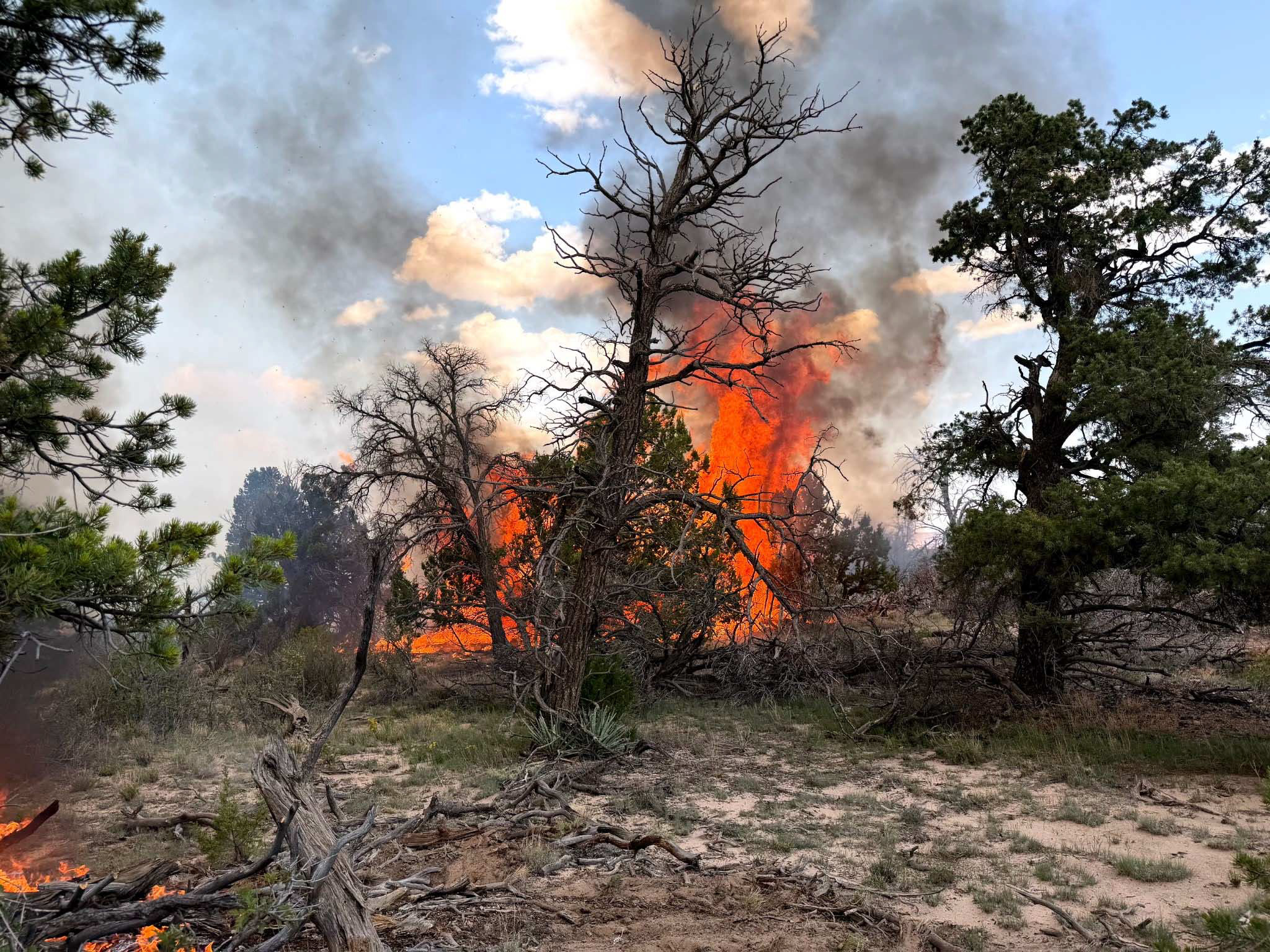
The newest incident is the Four Mile Fire in the northwest Zuni Mountains, which had grown to approximately 10 acres by Monday evening after being reported Aug. 9 south of Jamestown and Interstate 40, southeast of Fort Wingate and north of McGaffey.
The fire was initially estimated at six acres and was described by the U.S. Forest Service as winddriven and actively spotting through grass and piñon-juniper fuels. Ground crews have been working to establish control lines while aircraft conduct targeted water drops. No communities were threatened and no evacuations were in effect in the latest Forest Service update.
Two larger fires are also burning north of Mount Taylor.
The Frio Fire, which started Aug. 1 in Cibola County, had reached approximately 152 acres and was 90% contained as of Aug. 10. Sixteen personnel were assigned to the naturally caused fire.
The L Bar Ranch Fire, reported July 31 in neighboring McKinley County, had burned approximately 148 acres and was 80% contained as of Aug. 10. Eight personnel were assigned to that incident.
New Mexico Forestry Division Public Information Officer George Ducker said Aug. 10 that both fires were burning in challenging terrain, but credited crews with making significant progress.
Ducker said the L Bar Ranch Fire initially threatened structures, but firefighters were able to contain the portions presenting the greatest danger and no structures were currently threatened. Asked whether bark beetle-killed trees were a major source of fuel, Ducker said he could not confirm that beetle kill was a significant factor on the Mount Taylorarea fires, although dead timber remains a concern in wildfire conditions elsewhere in New Mexico.
The cluster of fires comes after one of the most active stretches of monsoon weather of the summer.
July thunderstorms brought repeated flash flooding and enough rainfall to improve drought classifications across much of Cibola County. U.S. Drought Monitor data valid Aug. 4 show 89.83% of the county in Severe Drought and 10.17% in Extreme Drought, a dramatic improvement from early July, when more than 95% of the county was classified in Extreme Drought.
The improvement, however, has not eliminated fire danger.
Bluewater Lake continues to decline, and recent precipitation data show relatively little rainfall across much of the Grants and El Malpais area during the first week of August. Temperatures also ran approximately 6 to 8 degrees or more above normal across much of Cibola County according to the National Weather Service.
Another surge of monsoon moisture is expected this week, with portions of western New Mexico forecast to receive substantial rainfall. That moisture could help firefighters and further improve drought conditions, but thunderstorms may also bring lightning, gusty winds and renewed flash-flooding concerns.
Residents may see smoke from active fires in portions of the Zuni Mountains, around Jamestown, Thoreau, Ramah, El Morro and areas west of Bluewater.
Officials continue to ask the public to avoid active fire areas and keep drones away from wildfire operations. Unauthorized drones can force firefighting aircraft to stop flying.
The Cibola Citizen will continue to monitor active fires in and around Cibola County as conditions change.