

“When I look back, I am so impressed again with the life-giving power of literature. If I were a young person today, trying to gain a sense of myself in the world, I would do that again by reading, just as I did when I was young.” Maya Angelou, American poet and memorist, 1928-2014 American corporations have been major players in international politics since the 1950s.
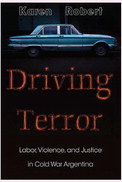
Early in the twentieth century, Henry Ford revolutionized the manufacturing industry by developing the first automobile assembly line in Dearborn, Michigan in 1903. Seven decades later the Ford Falcon symbolized terrorism across Latin America, according to author Karen Robert.
Numerous U.S. companies became directly involved in armed conflicts in Central and South America during the Cold War, 1947-91, which was an intense geopolitical, economic, and ideological rivalry between the United States and its Western allies and the Soviet Union and its satellite states.
The Falcon passenger car debuted in 1959. Henry Ford II, Chief Executive Officer (1945-79) and Chairman of the Board (1960-80), was responsible for the marketing campaign that made the Falcon into an emblem of modern progress in Third World countries during the 1950s and 60s. Fordism and the Cold War were essential components of Argentine consumerism.
“In the 1950s, the United Fruit Company [global headquarters in New Orleans, Louisiana; later changed its name to Chiquita Brands International] played a central role in the U.S. aggression against the democratically elected government of Jacobo Arbez in Guatemala, which culminated in the US-backed coup,” wrote the author.
Guatemalan and Venezuelan paramilitary forces were using the Falcon to kidnap, torture and murder political activists by the early 1960s. That trend expanded into other Latin American countries by the 1970s.
During that same decade, autoworkers in France, Italy, South America, and the U.S. had begun asserting their rights to safe working conditions and defining management’s control over production.
The authoritarian junta that governed Argentina from 1976-83 relied on Falcons in their search for “Red” influencers. The car became a major tool in surveillance stake outs and in monitoring suspects’ activities before the advent of cell phones and digital communications. The unmarked green cars symbolized the kidnapped (disappeared) citizens.
At the Ford plant in Pacheco, Argentina: “Workers were not allowed to talk to each other . . . had to fill out a form for each bathroom break, recording the precise length of absence, and carry an internal passport to keep them from wandering beyond their immediate [work station] sector,” explained Robert.
The Intelligence Bureau of Buenos Aires Provincial Police declassified records later confirmed that undercover police agents had been employed to monitor politics inside the Ford Pacheco plant. Attacks against union members accounted for 30.2 percent of the 8,960 documented cases of military detention and disappearance between 1976-83, according to the 1983 Argentine National Commission on the Disappearance of Persons. These factors along with the assasination of prominent labor activists contributed to the national trauma, which influenced Argentine’s attempts to establish a democracy during the last quarter of the 20th century.
For more than 40 years Ford Motors and the U.S. government collaborated to inhibit workers’ rights activities in Latin America, Eastern Europe, and Asian countries. The Falcon evolved from being a sign of social status into an emblem of fear.
“The contrast with the early years of Falconmania was unmistakable,' commented Robert. “Grand promises of high employment, social mobility, and ‘PROGRESS’ had accompanied the Falcon’s launch [in Argentina] in the early 1960s. But the last Falcon rolled out of the factory three decades later into an atmosphere of [financial] austerity and insecurity.”
In the early years of the 21st century, national nostalgia turned the Falcon into a representation of “the good old days.”
But in 2018 the Argentine courts ruled that two Ford Argentina executives and one military commander were criminally responsible for the disappearance and torture of Ford workers. It wasn’t until 2021 that the international judicial system ruled that corporate employees could be tried for crimes against humanity.
“ Driving Terror tells the story of how Argentina’s anticommunist military regime in the 1970s turned an object associated with middleclass pleasure and working-class pride into an instrument of terror. . . .” commented Greg Grandin, author of Fordlandia: The Rise and Fall of Henry Ford’s Forgotten Jungle City.
Closer to home - in January 2026, the U.S. removed (kidnaped) Venezuelan President Nicolás Maduro who was elected in 2013. Since 2015, Maduro has governed Venezuela by decree through the powers granted to him by the ruling party legislature. Our recent military actions in the Middle East and Latin America plus U.S. naval attacks in the Caribbean and Pacific Ocean bring into question America’s role in international affairs.
SIDEBAR
Karen Robert earned her Bachelor's degree at York University, Toronto, Canada, and her Master's degree, at the University of Toronto. She earned her Ph.D. at the University of Michigan, Ann Arbor.
She is an associate professor of history at St. Thomas University, in Fredericton, New Brunswick, Canada, and has served in that position for more than 20 years.
She teaches courses on Latin American history, world history, research methods, and global automobility.
Robert recently translated Memories of Buenos Aires: Signs of State Terrorism in Argentina, a comprehensive guide to hundreds of memory sites relating to Argentina’s last military dictatorship.
Title: “Driving Terror: Labor, Violence, and Justice in Cold War Argentina” Author: Karen Robert Paperback, 296 pages, one map, and eight black-and-white photos Published: 2025 Publisher: University of New Mexico Press, unmpress.com One of the Dialogos Series, Latin America History ISBN: 978-0-8263-6761-7