CIBOLA COUNTY, N.M. – Visitors heading into the Cibola National Forest can now collect a digital badge for the trip through a new nationwide Forest Service passport program.
The U.S. Forest Service and National Forest Foundation launched the National Forests and Grasslands Passport this week, giving visitors a way to check in at national forests and grasslands across the country and build a collection of digital badges.
Any check-in made within the boundaries of Cibola National Forest can qualify for the Cibola National Forest badge.
That includes the entire Mount Taylor Ranger District.
The Forest Service told the Cibola Citizen that visitors who check in while physically inside the forest receive a green checkmark showing that the visit was geographically verified.
Not every location commonly associated with the forest will qualify, however.
The Mount Taylor Ranger District office itself is outside the forest boundary, meaning a visitor checking in from the office would not receive the geographically verified mark. Likewise, not all of the Zuni Mountains fall within Cibola National Forest.
Visitors need to be within the actual forest boundary when checking in if they want the certified green checkmark.
How to Use the Passport
The passport is free and available through the OuterSpatial mobile app.
Visitors can join the National Forests and Grasslands Passport, find the Cibola National Forest entry and check in when they are inside the forest.
Each of the Forest Service’s 154 national forests and 20 national grasslands has its own badge.
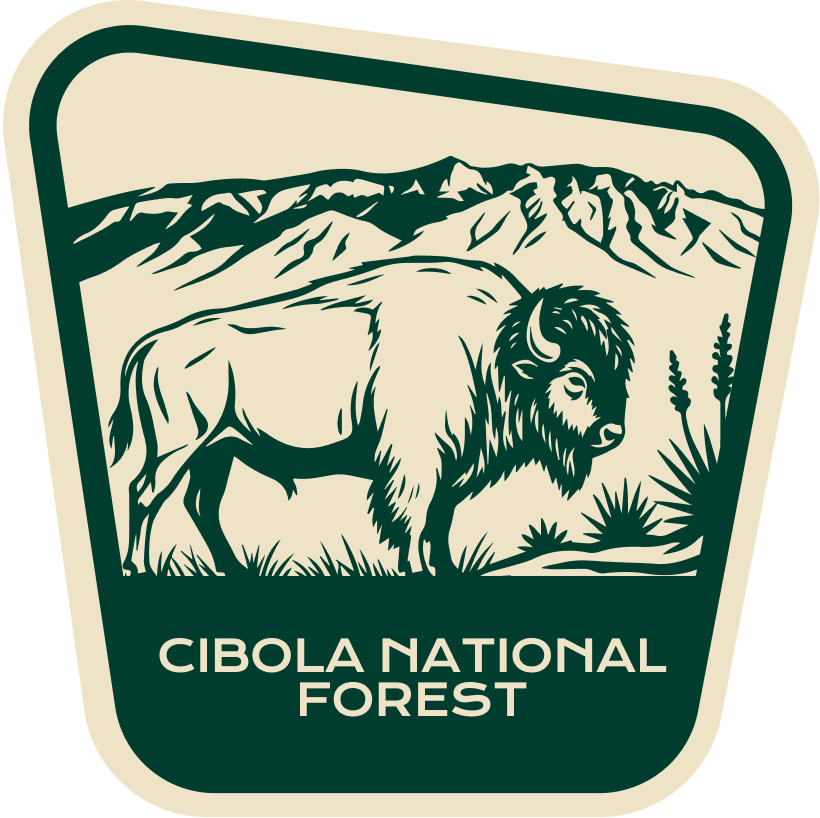
The Cibola National Forest badge features a bison set against a mountain landscape. According to the Forest Service, the bison reflects the forest’s namesake: “cibola,” the Spanish word for a female bison.
Visitors can also add previous trips to their passport collection. Those visits can still be recorded, although they will not receive the green checkmark reserved for visits verified while a user is physically within the forest or grassland.
What if There is no Cell Service?
The Forest Service said users need an internet connection when they first join the passport and when downloading challenge information that is not already stored on their phone. After that, a visitor can save a check-in while offline.
The check-in remains pending until the phone reconnects to the internet, at which point it can be submitted and the badge is officially earned.
That means visitors do not necessarily need cell service while they are hiking, camping or traveling through more remote parts of the forest.
The new passport is not the same as the National Forests & Grasslands mobile app launched by the Forest Service in June. The Forest Service app provides practical visitor information including maps, trails and reservations.
The passport is more of a digital travel log, allowing visitors to collect badges, record visits and compare their total number of visits with other users through a leaderboard.
Forest Service Chief Tom Schultz said the program was inspired in part by the longstanding National Park Service passport program.
“More than 164 million people visit our 154 national forests and 20 national grasslands each year bringing back with them stories, family memories and oftentimes plans to return or explore a new Forest Service destination,” Schultz said.
The Forest Service said the passport is intended to encourage people to explore more public lands while giving visitors another way to keep track of the places they have been.
For Cibola County residents, earning the local badge does not require a cross-country trip. A visit into Cibola National Forest – including the Mount Taylor Ranger District – is enough.
More information and access to the free passport are available at nationalforests.org/passport.